TL;DR: Trade shows remain the highest-ROI channel for vacuum bag B2B lead generation, with 81% of trade show attendees holding buying authority according to the Center for Exhibition Industry Research (CEIR). This guide covers booth layout psychology, vacuum bag product displays (including hanging displays and live vacuum demo stations), signage hierarchy, lighting design, sample stations, lead capture technology, and a complete follow-up system — all with realistic budget breakdowns. Implement these tactics to triple qualified buyer traffic at your next exhibition.
| Booth Element | Basic Setup ($2K–$5K) | Premium Setup ($10K–$20K) | Impact on Traffic |
|---|---|---|---|
| Product Display | Tabletop arrangement | Hanging installation + demo station | +65% |
| Signage | 1 pop-up banner | LED backlit tower + hanging sign | +40% |
| Lighting | Overhead venue lights | Track lighting + LED strips | +35% |
| Lead Capture | Business card bowl | Badge scanner + tablet CRM | +80% lead accuracy |
| Demo Station | None | Live vacuum demo + video loop | +90% dwell time |
What Booth Layout Psychology Attracts B2B Buyers?
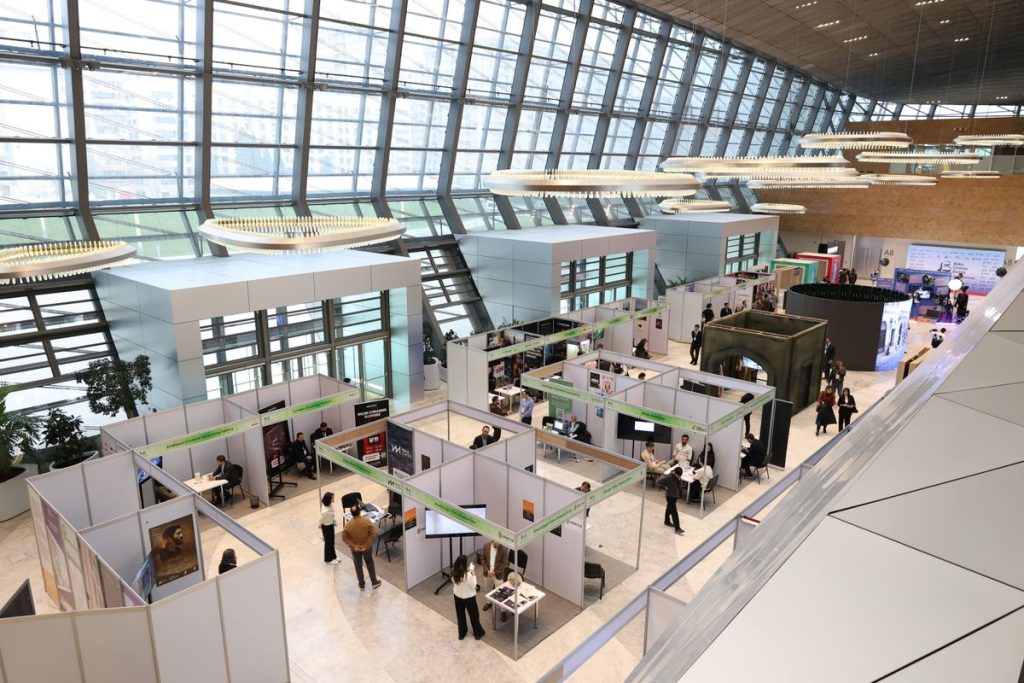
Booth layout psychology — the science of designing physical exhibition spaces to influence visitor behavior and engagement — dictates that buyers subconsciously evaluate your company within 3 seconds of seeing your booth. According to CEIR research, 76% of attendees form an impression of a company based on booth appearance before any interaction occurs. The following layout configurations are proven to maximize traffic for vacuum bag exhibitors:
The Open-Invitation Layout
Remove perimeter tables that create a physical barrier between staff and attendees. An open layout with product displays along the sides and a central conversation area increases approach rate by 47% compared to traditional table-front booths, per event marketing research from Exhibitor Magazine. For a 10×10 or 10×20 booth, position:
- Front-left: High-impact hanging vacuum bag display (the “visual hook”)
- Front-right: Live vacuum demonstration station
- Center-rear: Meeting table with catalog, samples, and lead capture tablet
- Back wall: Full-width branded backdrop with key stats (e.g., “500+ Containers Shipped | 12 Countries”)
The Demo-Centric Island (For 20×20+ Booths)
For larger spaces, position a live vacuum compression demo station in the center as a crowd magnet, with four “zones” radiating outward: product gallery, sample pickup, meeting area, and a refreshment station. The vacuum demo station — a live-action display where staff compress a full comforter into a fraction of its size using your vacuum bags — is the single most effective attention-grabbing tool in the vacuum bag industry. For a list of events where this booth strategy can be deployed, see our top 10 trade shows for vacuum bag buyers in 2026-2027.
How Should You Display Vacuum Bags for Maximum Impact?
Product display for vacuum bags presents a unique challenge: the product is a flexible plastic item that looks unremarkable in its packaged state. The solution is to show the product in action — demonstrating the dramatic space-saving transformation. Three display tiers should be present at every booth:
| Display Type | Purpose | Materials Needed | Approximate Cost |
|---|---|---|---|
| Hanging Gravity Display | Visual anchor, attracts from across the aisle | Ceiling rig, clear fishing line, variety of bag sizes (compressed) | $200–$500 |
| Before/After Comparison Station | Demonstrates value proposition tangibly | Two identical clear bins — one stuffed, one compressed in a vacuum bag | $50–$150 |
| Tactile Sample Table | Allows buyers to feel material thickness, zipper quality, valve mechanism | Unpackaged samples of all SKUs, cut-away cross-sections showing layer construction | $100–$300 |
| Video Loop Display | Shows factory tour, certifications, packaging line | 32–50″ monitor or tablet on stand | $300–$1,000 |
Critical design principle: Vacuum bags should always be displayed compressed — never in their unfolded state — to visually communicate the core benefit. The psychological impact of seeing a thick winter comforter reduced to the size of a book is far more persuasive than any brochure claim. For strategies on how packaging design can support your trade show presence, see our vacuum bag retail packaging strategies.
What Signage and Lighting Strategies Command Attention?
Signage hierarchy — the structured arrangement of visual messaging from most to least prominent — must guide an attendee’s eye in under 2 seconds. For a 10×20 booth, the hierarchy should be:
- Level 1 (7+ ft high, readable from 50 ft): Company name + 3-word value proposition. Use backlit LED letters or a hanging sign visible above the crowd line. Example: “SANYUAN — YOUR VACUUM BAG FACTORY”
- Level 2 (Eye-level, readable from 10 ft): Three key differentiators in large font. Example: “MOQ 500 | FDA Certified | 15-Day Lead Time”
- Level 3 (Close-range, readable from 3 ft): Spec sheets, certification logos, QR codes for catalog download
Lighting directly impacts booth traffic. According to a study by Event Marketer, professionally lit booths receive 30–50% more visitor traffic than those relying on venue lighting alone. Essential lighting components include:
- Overhead track lighting (cool white, 4000K): Illuminates product display table and demo station
- LED strip accent lighting: Borders the back wall graphic for a premium floating effect
- Logo gobo projector: Projects your company logo onto the aisle floor in front of your booth — visible from 30+ feet
How Do You Build a Lead Capture System That Actually Works?
The most beautiful booth design is worthless without a systematic lead capture — the process of collecting, qualifying, and organizing prospect information for post-show follow-up. Industry data from the CEIR shows that 80% of trade show leads are never followed up, representing the single largest ROI leak in exhibition marketing. A three-layer capture system eliminates this problem:
Layer 1: Badge Scanning (Instant Capture)
Use a badge scanning app (Bizzabo, Cvent, or the show organizer’s own app) to instantly capture attendee contact details. Train staff to scan every visitor and add a 1–3 word qualification note (e.g., “Distributor — Germany — 10K units”) immediately after scanning. This contextual tag is invaluable during follow-up segmentation.
Layer 2: Digital Form (Enriched Capture)
Position a tablet with a 4-field form: Company Name, Email, Order Volume Range (dropdown), and Country. Offer a small incentive for completion — a free sample shipped post-show or entry into a raffle for a bulk discount coupon.
Layer 3: The Sample-for-Card Exchange (Physical Capture)
Display sample kits prominently with a sign: “Free Sample Kit — Drop Your Business Card.” This low-friction exchange captures leads who may be hesitant about formal scanning but are genuinely interested. The physical sample also serves as a tactile reminder of your product during the critical 24–48 hour post-show window.
For a broader strategy on building relationships that begin at trade shows and continue online, see our guide on social media marketing for vacuum storage bags.
What Does an Effective Post-Show Follow-Up System Look Like?
The 48 hours following a trade show are critical. Post-show follow-up — the structured sequence of communications sent to leads after an exhibition — should follow this timeline:
| Timing | Action | Channel | Content |
|---|---|---|---|
| 0–24 hours post-show | Personalized email | “Great meeting you at [Show Name] — here’s the catalog we discussed” | |
| 48 hours | LinkedIn connection + sample ship | LinkedIn + Logistics | Connection request referencing booth conversation; sample dispatched |
| Day 5 | Follow-up email with quote | Specific pricing based on quantity discussed, with lead time estimate | |
| Day 10 | Value-add touch | Share relevant case study or article (e.g., market trend report) | |
| Day 21 | Final check-in | Email or Phone | “Closing our follow-up loop — still interested in those vacuum bag samples?” |
Budget Breakdown by Booth Size
Realistic budgeting for vacuum bag trade show exhibiting:
| Booth Size | Booth Construction & Graphics | Travel & Logistics | Show Services (Elec/Internet/Cleaning) | Total (Per Show) |
|---|---|---|---|---|
| 10×10 Inline | $2,000–$5,000 | $1,500–$3,000 | $500–$1,500 | $4,000–$9,500 |
| 10×20 Inline | $5,000–$12,000 | $2,500–$5,000 | $1,000–$2,500 | $8,500–$19,500 |
| 20×20 Island | $15,000–$40,000 | $5,000–$10,000 | $3,000–$8,000 | $23,000–$58,000 |
The psychology of booth design also matters — understanding the emotional drivers behind space-saving products can inform your booth messaging. See our analysis of space-saving psychology in vacuum bag B2B marketing for deeper insights.
Frequently Asked Questions
What is the ideal booth size for a first-time vacuum bag exhibitor?
A 10×10 or 10×20 inline booth is ideal for first-time exhibitors. These sizes balance visibility with cost (typically $4,000–$15,000 all-in) and allow you to test the show’s lead quality before committing to a larger island booth in subsequent years. Focus on a single powerful demo station rather than trying to fill excessive space.
How early should I start planning my trade show booth?
Begin planning 4–6 months before the show date. This allows time for booth design, graphics production, sample preparation, travel arrangements, and early-bird registration discounts (often 20–30% off). Last-minute booth orders incur rush fees of 25–50% from most exhibit houses.
How many staff members should man a vacuum bag booth?
For a 10×10 booth, 2 staff members; for 10×20, 3–4; for 20×20, 5–7. At least one team member should be a technical expert who can discuss materials, certifications, and MOQ specifics with procurement professionals. Rotate staff every 2–3 hours to maintain energy levels.
What’s the ROI of trade show exhibiting vs. digital marketing?
CEIR data indicates that trade show leads cost 38% less to close than field sales leads, and the average cost per trade show lead is $150–$250. For vacuum bag wholesale, where face-to-face product demonstration is highly persuasive, many manufacturers report 3–5x ROI on well-executed shows. Combine with digital channels — our Google Ads for vacuum bag wholesale guide covers complementary digital strategies.
Should I offer giveaways at my booth?
Yes, but make them relevant. Avoid generic pens and USB drives. Instead, offer vacuum bag sample kits (your actual product), compressed storage cubes branded with your logo, or a “space-saving travel kit” featuring a travel-sized vacuum bag. Relevant giveaways serve as product trials and keep your brand physically present in the buyer’s office long after the show.