TL;DR: Mexico’s vacuum storage bag import market is entering a high-growth phase in 2026, powered by a USD 54.4 billion e-commerce ecosystem, a rapidly expanding middle class of 47 million households, and privileged USMCA trade access to the North American market. With 80 million e-commerce users and a 13.92% CAGR projected through 2034, Mexico represents the second-largest vacuum bag opportunity in Latin America after Brazil. Its proximity to the U.S. market, competitive logistics infrastructure, and young, digitally engaged consumer base make it a strategic priority for Chinese vacuum bag manufacturers targeting Western Hemisphere distribution.
Why Is Mexico’s Vacuum Storage Bag Market Accelerating in 2026?
Mexico’s vacuum bag import market is benefiting from a convergence of powerful macro trends. First, Mexican e-commerce has exploded: the market reached USD 54.4 billion in 2025 and is projected to hit USD 175.8 billion by 2034 at a 13.92% CAGR, according to IMARC Group. With approximately 80 million e-commerce users in 2025, platforms like Mercado Libre, Amazon Mexico, and Liverpool.com.mx have become primary channels for home organization products, including vacuum storage bags — defined as compressible, airtight bags that reduce textile volume by up to 75% through manual or electric air extraction.
Second, Mexico’s self-storage market reached USD 943 million in 2025 and is expected to grow to USD 1.39 billion by 2034, per IMARC Group. This parallel industry growth signals a structural shift in Mexican consumer attitudes toward space management. Urbanization — with 81% of Mexico’s 129 million population now living in cities — is compressing living spaces. The average Mexico City apartment is just 65–85 m², driving demand for space-saving storage solutions.
Third, Mexico’s middle class expansion is creating millions of new households with disposable income for home organization products. According to the U.S. International Trade Administration, Mexico’s e-commerce market value is projected to reach USD 70.4 billion by 2027. The country’s median age of 29 years means a digitally native consumer base that discovers and purchases home products primarily through online channels — a perfect environment for vacuum bag brands with strong digital marketing.
Mexico’s e-commerce warehouse market is projected to expand from USD 1.01 billion in 2025 to USD 1.38 billion by 2031, according to Mordor Intelligence. This logistics infrastructure buildout directly benefits vacuum bag importers by reducing last-mile delivery costs and improving fulfillment speed to Mexican consumers.
How Does USMCA Shape Vacuum Bag Import Opportunities Through Mexico?
The United States-Mexico-Canada Agreement (USMCA) — the trilateral trade pact that replaced NAFTA in 2020 — is undergoing its scheduled joint review in 2026, which will shape North American trade architecture for the next decade. According to Rice University’s Baker Institute, the 2026 USMCA review represents a strategic inflection point for cross-border commerce in consumer goods.
For vacuum bag manufacturers, Mexico offers two distinct strategic pathways under USMCA:
1. Direct-to-Mexico Import Distribution: Chinese-manufactured vacuum bags enter Mexico under standard MFN (Most-Favored Nation) tariffs. Mexico applies relatively moderate duties on plastic consumer goods (HS Code 3923), typically 5–15%. Importers then distribute domestically through Mexico’s modern retail infrastructure including Walmart Mexico, Soriana, Chedraui, and Liverpool department stores.
2. Mexico as a Nearshoring Gateway to North America: This is the higher-value strategy. By establishing assembly/packaging operations in Mexico’s maquiladora zones (manufacturing-for-export industrial parks, primarily along the U.S. border), vacuum bag brands can leverage USMCA Rules of Origin to qualify for duty-free access to the U.S. and Canadian markets. This nearshoring model — moving production closer to end consumers to reduce shipping time and costs — has gained momentum as companies diversify supply chains away from China-only sourcing.
U.S. goods imports from Mexico totaled USD 534.9 billion in 2025, up 5.8% year-over-year, according to the U.S. Trade Representative. Mexico has overtaken Canada as the largest U.S. export market, underscoring how deeply integrated North American supply chains have become. For vacuum bag brands, Mexico-based fulfillment enables 2–3 day delivery to major U.S. markets like Texas, California, and the Southwest via ground logistics.
What Consumer Segments Drive Mexican Vacuum Bag Demand?
Understanding Mexico’s consumer segmentation is essential for B2B importers selecting product specifications and retail channels:
Mexico City Metropolitan Consumers (22 million population): The Valle de México represents the single largest concentration of vacuum bag demand. Residents in vertical housing (apartment buildings) face acute storage constraints. This segment shops at Walmart Express, City Market, and online via Mercado Libre. They prefer mid-range to premium vacuum bags with clear Spanish-language instructions and trusted brand positioning.
Northern Industrial Corridor Households (Monterrey, Tijuana, Ciudad Juárez): Higher income levels (Monterrey’s per-capita GDP is 2x the national average) support premium product demand. Consumers here are influenced by U.S. retail trends and frequently cross-border shop. Amazon.com.mx penetration is highest in this region, and vacuum bags sold with electric pumps command a 30–40% price premium over manual-pump sets.
Rising Middle Class in Secondary Cities (Guadalajara, Puebla, León, Querétaro): This is the fastest-growing vacuum bag consumer segment. Household incomes in the C+/C socioeconomic tiers (monthly income MXN 12,000–35,000) are expanding, and with them comes first-time home organization purchasing. Value-pack vacuum bag sets (6–12 pieces with pump) priced at MXN 199–399 (USD 10–20) dominate this channel, primarily sold through Coppel, Elektra, and suburban supermarkets.
Young Digital Natives (18–34 age group): Mexico’s median age of 29 creates an enormous digitally active consumer base. This group discovers vacuum bags through TikTok (#organizaciónhogar has millions of views), Instagram Reels, and YouTube home organization content. They purchase through smartphone apps with OXXO cash payment options (40% of Mexican e-commerce transactions use cash-based methods like OXXO Pay).
Mexico Vacuum Storage Bag Market Data Comparison
| Metric | Mexico 2024 | Mexico 2025 | Mexico 2026 (Est.) | vs. Brazil (2026) | Source |
|---|---|---|---|---|---|
| E-Commerce Market (USD bn) | $42.0B | $54.4B | $62.0B | $55.0B | IMARC / Statista |
| Self-Storage Market (USD m) | $890M | $943M | $1,000M | $680M | IMARC Group |
| Population (millions) | 128.5M | 129.2M | 130.0M | 216.4M | World Bank |
| Urbanization Rate | 80.7% | 81.0% | 81.3% | 87.6% | UN Data |
| E-Commerce Users (millions) | 72M | 80M | 88M | 110M | Statista / AMVO |
| Median Age (years) | 29.2 | 29.4 | 29.6 | 33.5 | CIA Factbook |
What Retail and E-Commerce Channels Dominate Vacuum Bag Distribution in Mexico?
Mexico’s vacuum bag distribution ecosystem is diverse, combining modern retail, traditional trade, and rapidly growing e-commerce:
1. Hypermarkets & Supermarkets (35% of volume): Walmart Mexico (2,800+ stores) leads, followed by Soriana (800 stores) and Chedraui (280+ stores). These retailers typically stock vacuum bags as seasonal items in “Hogar” (Home) departments alongside closet organizers and storage bins. Private-label vacuum bags are emerging at Walmart under the “Great Value” and “Home” house brands. B2B importers should target Walmart Mexico’s Global Sourcing division for direct-supplier opportunities.
2. Department Stores (20% of volume): Liverpool (124 stores), Sears Mexico, and El Palacio de Hierro carry premium vacuum bag brands in their home departments. These retailers demand higher product quality, branded packaging, and often exclusive distribution arrangements in their product category. Margins are higher (50–60% retail markup) but volume is lower than mass-market channels.
3. E-Commerce Marketplaces (30% of volume and fastest-growing): Mercado Libre Mexico dominates with over 50% market share of online vacuum bag sales. Amazon Mexico is growing rapidly with Prime delivery available in 50+ cities. Liverpool.com.mx and Walmart.com.mx complete the major online platforms. Cross-border sellers on Amazon.com (shipping from U.S. warehouses) also capture significant Mexican demand. Understanding Mercado Libre’s Full (fulfillment-by-platform) program is essential for any vacuum bag brand entering Mexico.
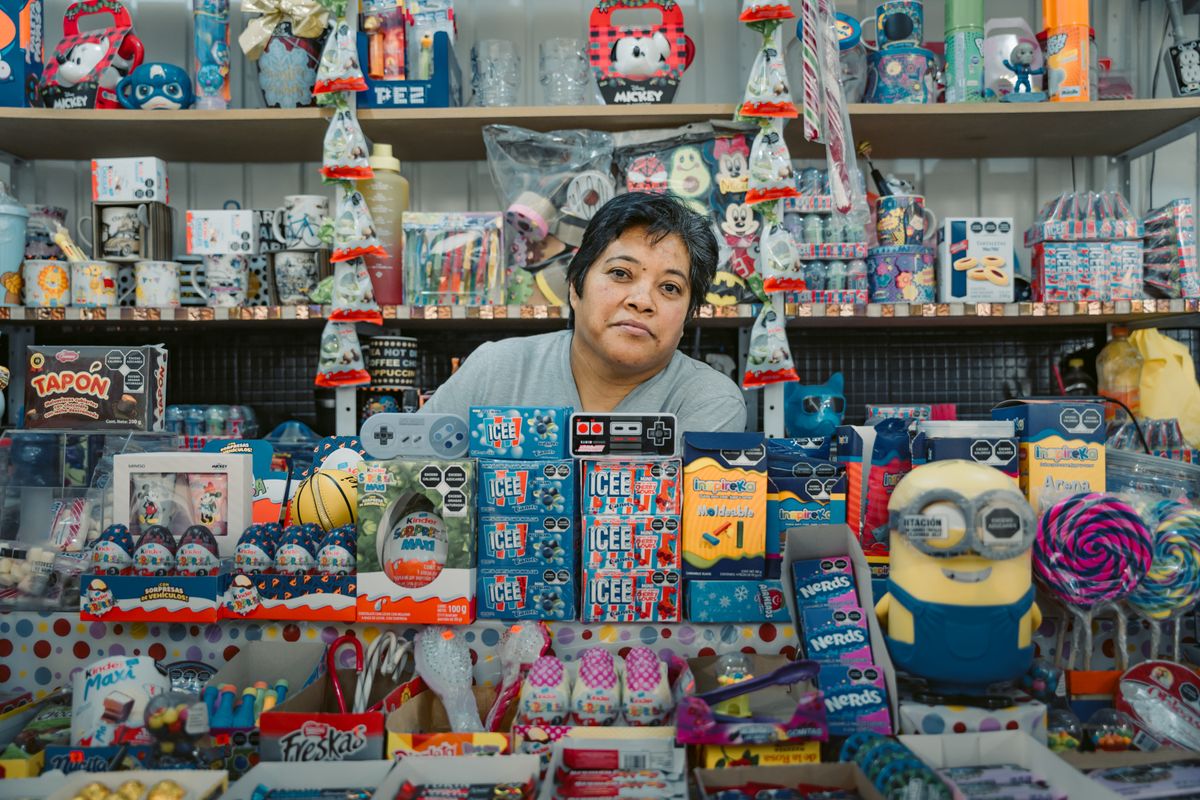
4. Traditional Trade (15% of volume): Mexico’s network of approximately 800,000 small independent retailers (tienditas, mercados, and tianguis street markets) still accounts for a meaningful share of household product sales. Distributing vacuum bags through this fragmented channel requires established relationships with regional wholesalers in Mexico’s Central de Abasto (wholesale markets).
The Latin America vacuum compression bags market is witnessing strong growth across e-commerce, travel, and home storage segments, according to industry analysis. For a broader regional perspective, see our analysis of the Brazil Vacuum Storage Bag Market 2026, which together with Mexico represents over 70% of Latin America’s vacuum bag import demand.
How Can Asian Manufacturers Leverage Mexico’s Nearshoring Advantages?
Mexico’s emergence as a nearshoring hub creates unique opportunities for Chinese vacuum bag manufacturers. By partnering with Mexican logistics and assembly partners, Asian factories can:
- Reduce U.S. Delivery Times: Ship bulk containers from China to Mexican ports (Manzanillo, Lázaro Cárdenas, Veracruz) in 18–22 days, then use Mexico-based fulfillment to deliver to U.S. customers in 2–4 days via ground transport.
- Access IMMEX Program Benefits: Mexico’s IMMEX (Manufacturing, Maquila and Export Services Industry) program allows duty-free temporary import of raw materials and components for assembly and re-export, reducing tariff costs on Chinese inputs.
- Serve Dual Markets: A single Mexico-based operation can supply both the domestic Mexican market (130 million consumers) and the U.S. market (335 million consumers) through USMCA-qualified distribution.
- Mitigate Tariff Risks: With shifting global trade policies, Mexico-based assembly provides tariff diversification. Products finished in Mexico with sufficient regional value content face lower barriers into U.S. and Canadian markets.
Qingdao Sanyuan supports this nearshoring model by shipping bulk, unpackaged vacuum bags to Mexican assembly partners who handle final packaging, Spanish-language labeling, and distribution. Contact our export team to discuss Mexico-specific OEM arrangements.
For related market intelligence, explore our analysis of the Canada Vacuum Storage Bag Import Market 2026 to complete your North American strategy. Also see our UAE & Gulf States Vacuum Storage Bag Market 2026 for emerging market comparison, and our cost comparison between vacuum bags and plastic storage bins for product positioning insights.
Mexico Vacuum Bag Import FAQ
What shipping routes are most efficient for vacuum bags from China to Mexico?
The primary sea freight route is from Shanghai/Ningbo/Qingdao to the Port of Manzanillo (Mexico’s largest Pacific port), with transit times of 18–22 days. The Port of Lázaro Cárdenas is an alternative Pacific entry point. For Gulf Coast distribution, shipments route through the Panama Canal to Veracruz (28–32 days). Air freight to Mexico City (MEX) takes 3–5 days for urgent orders.
Do vacuum bags sold in Mexico require NOM certification?
Vacuum storage bags generally do not require mandatory NOM (Norma Oficial Mexicana) certification as they are not electrical/electronic products. However, if sold with an electric pump, the pump component requires NOM-001-SCFI compliance (electronic device safety). Non-electric vacuum bags require only standard labeling with Spanish-language content as per PROFECO (Federal Consumer Protection Agency) regulations.
What is the most effective pricing strategy for vacuum bags in the Mexican market?
The sweet spot for mass-market vacuum bag sets (4–6 bags + hand pump) is MXN 199–299 (USD 10–15) at retail. Premium sets with electric pumps retail at MXN 499–799 (USD 25–40). Multi-pack value bundles (8–12 bags) at MXN 349–499 perform well during Buen Fin (Mexico’s November shopping event, equivalent to Black Friday) and Hot Sale (May online shopping festival) promotional periods.
How important is Spanish-language packaging for the Mexican market?
Critical. PROFECO regulations mandate Spanish-language product information including material composition, usage instructions, safety warnings, country of origin, and importer details. Beyond compliance, culturally relevant packaging with Mexican Spanish terminology (not Castilian Spanish) significantly improves consumer trust and conversion rates. Qingdao Sanyuan provides fully customized Mexican Spanish packaging as part of our OEM service.
Can vacuum bags imported into Mexico be re-exported to the U.S. duty-free?
Under USMCA, goods must meet Rules of Origin requirements to qualify for duty-free access. Simple repackaging or relabeling of Chinese-manufactured vacuum bags in Mexico does NOT qualify for USMCA preference. To achieve USMCA origin, substantial transformation must occur in Mexico — such as combining Chinese-sourced bag materials with regionally sourced components (pumps, packaging) and performing qualifying manufacturing operations. Consult a trade attorney for specific USMCA qualification strategies.
Ready to enter Mexico’s booming vacuum bag market? Qingdao Sanyuan provides factory-direct OEM vacuum storage bags with Spanish-language packaging, competitive FOB pricing, and logistics support to Manzanillo and Veracruz. Contact our Latin America export desk for a tailored quotation and Mexico market entry plan.