The global vacuum compression bag market reached $1.3 billion in 2025 and continues to grow at a compound annual rate of 7.2%, driven by urbanization, smaller living spaces, and the booming home organization trend. For B2B entrepreneurs, this represents a compelling opportunity — but entering the import business requires a structured approach. This roadmap covers every step from initial market research to landing your first container of vacuum bags.
Step 1: Define Your Market Niche and Product Line
Not all vacuum bags are created equal. Before contacting suppliers, determine exactly what you will sell. The vacuum compression bag market splits into several distinct segments:
Standard PE/PA vacuum bags — The most common type, using multi-layer polyethylene/nylon film. These dominate the consumer market for clothing, bedding, and general household storage. Typical retail prices range from $8-$25 per set of 6-8 bags in the US and EU markets. Gross margins for importers typically run 40-60% depending on order volume and branding.
Travel vacuum bags with roll-up valves — No pump required; users squeeze air out manually. These appeal to frequent travelers and command 15-25% price premiums over standard bags. The roll-up segment is growing fastest in the travel accessories channel.
Heavy-duty compression bags — Using 90+ micron film thickness, these target the moving and storage industry. Durability is the key selling point, and wholesale pricing per unit is 30-50% higher than standard bags.
Hanging vacuum bags — Designed for suits, dresses, and formal wear. A niche but high-margin segment popular with dry cleaners and uniform services.
Your first product line should include 3-5 SKUs spanning standard sizes (S/M/L/XL) in at least two of these categories. This gives you enough breadth to attract retail buyers without overcomplicating your initial inventory. As you scale, you can expand into specialized categories that your customers request most. For a complete overview of available product types, visit our vacuum bag product catalog.
Step 2: Supplier Sourcing and Vetting
The supplier you choose will determine your product quality, margins, and reliability. Spend significant time on this step — switching suppliers mid-stream is expensive and disruptive.
Alibaba.com remains the primary sourcing platform for vacuum bag importers. Start by searching for “vacuum compression bags” and filtering for Gold Suppliers with Trade Assurance. Narrow your list to manufacturers (not trading companies) with at least 3 years of export history and relevant certifications. A factory with 15,000m² of production space, CE/FDA/REACH certifications, and on-site QC capabilities represents the standard you should be targeting.
Beyond Alibaba, explore Made-in-China.com and GlobalSources.com for additional supplier options. Attend industry trade shows — the Canton Fair (Guangzhou, April and October) and Ambiente (Frankfurt, February) are particularly relevant for home storage products. Meeting suppliers face-to-face dramatically reduces sourcing risk.
Request quotations from 5-8 suppliers for your target specifications: bag material composition (PE/PA ratio), film thickness (microns), valve type, closure mechanism, and packaging style. Compare not just unit pricing but MOQs, payment terms, lead times, and sample policies.
Step 3: Sample Evaluation and Quality Control
Never place a production order without testing samples first. Request 3-5 pre-production samples from your shortlisted suppliers (expect to pay $50-$150 including shipping for each sample set).
Testing protocol: Fill each bag to 80% capacity with fabric items. Seal properly, evacuate air completely using the intended pump method, and leave inflated to test for air leakage over 24-48 hours. Test the zipper closure 20+ times to assess durability. Submerge sealed bags in water to check for pinhole leaks. For travel bags, test the roll-up valve mechanism repeatedly.
Document everything. Photograph and timestamp your test results. This documentation serves two purposes: it helps you compare suppliers objectively, and it creates clear specifications for your production order. Suppliers respect buyers who demonstrate technical competence during the sampling phase. For more on quality standards, read our guide on vacuum bag industry insights.
Step 4: Structuring Your First Order
Your first order should balance inventory investment against stockout risk. For standard vacuum bag sets, a typical starter order is 3,000-5,000 sets across your 3-5 SKU lineup. At wholesale prices of $1.50-$3.50 per set (depending on spec and quantity), this means a first order investment of $4,500-$17,500 for product, plus approximately $2,000-$4,000 for sea freight (FCL or LCL depending on volume) and another $500-$1,500 for customs duties, broker fees, and inland trucking.
Payment terms: Standard industry practice for first orders is 30% deposit with the purchase order, 70% balance before shipment, after third-party inspection confirms the goods meet specifications. For orders above $15,000, consider a Letter of Credit for stronger payment protection.
Incoterms: FOB (Free On Board) is the standard starting point — the supplier is responsible until goods are loaded on the vessel. As you gain experience, CIF terms can simplify logistics by including freight and insurance in the supplier’s scope.
Step 5: Logistics, Customs, and Fulfillment
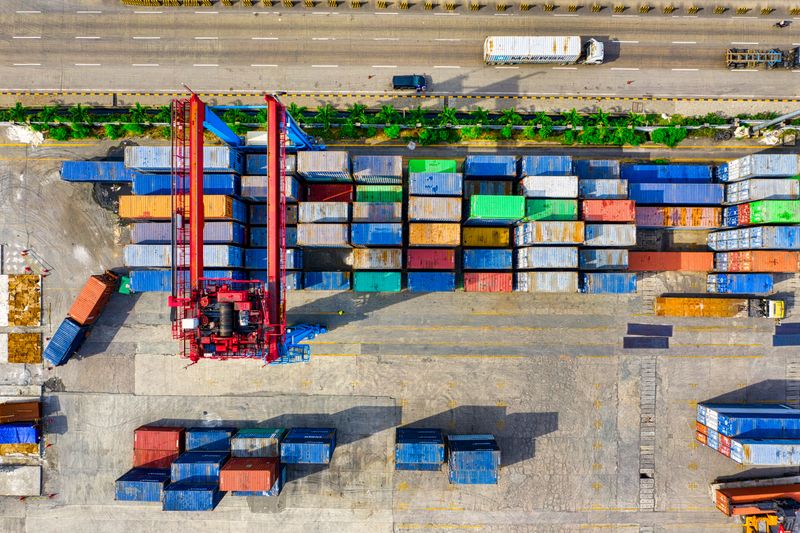
Shipping: For a typical first order of 3,000-5,000 sets, you’ll likely ship LCL (Less than Container Load) with a freight forwarder consolidating your cargo with other shipments. Transit time from major Chinese ports (Qingdao, Shanghai, Ningbo) to US West Coast ports is approximately 14-18 days; to European ports (Rotterdam, Hamburg) approximately 28-32 days. Budget $80-$150 per cubic meter for LCL ocean freight.
Customs: Vacuum compression bags generally fall under HTS code 3923.21.00 (sacks and bags of polymers of ethylene). US duty rates are typically 3-4%, EU rates 6.5%. Work with a licensed customs broker for your first shipment — errors in classification or documentation can result in costly delays.
Fulfillment options: Three common models exist: (1) Self-fulfillment from your own warehouse; (2) Amazon FBA for marketplace sellers (factor in FBA storage and fulfillment fees); (3) 3PL (third-party logistics) for e-commerce or wholesale distribution. Choose based on your sales channels — if you’re primarily selling wholesale to retailers, self-fulfillment or a 3PL makes more sense than FBA.
Step 6: Go-to-Market and Distribution
Your import business needs customers before your container arrives. Develop your distribution strategy early:
Online marketplaces: Amazon, eBay, and Walmart Marketplace provide immediate access to millions of consumers. Expect 15-25% in marketplace fees and factor these into your pricing. For Amazon specifically, vacuum bags are a moderately competitive category with 2,000-5,000 monthly searches for top keywords.
Wholesale to retailers: Target independent home goods stores, organization specialists, dollar stores, and discount retailers. Typical wholesale margins for retailers are 50-100% markup, so your wholesale price must leave room for this while still being competitive at retail.
B2B channels: Hotels, moving companies, self-storage facilities, and uniform services represent large-volume B2B opportunities with recurring order patterns. These customers typically value reliability and consistency over the lowest unit price. Contact our team if you need help with technical specifications or custom packaging for B2B accounts.
The vacuum bag import business rewards careful preparation. Invest time in supplier vetting and sample testing, structure your first order conservatively, and lock in your distribution channels before your cargo arrives. The entrepreneurs who take this systematic approach consistently outperform those who rush to market with unvetted product.
Ready to source your first container? Browse our B2B product catalog or request a quote with your target specifications and order volume.