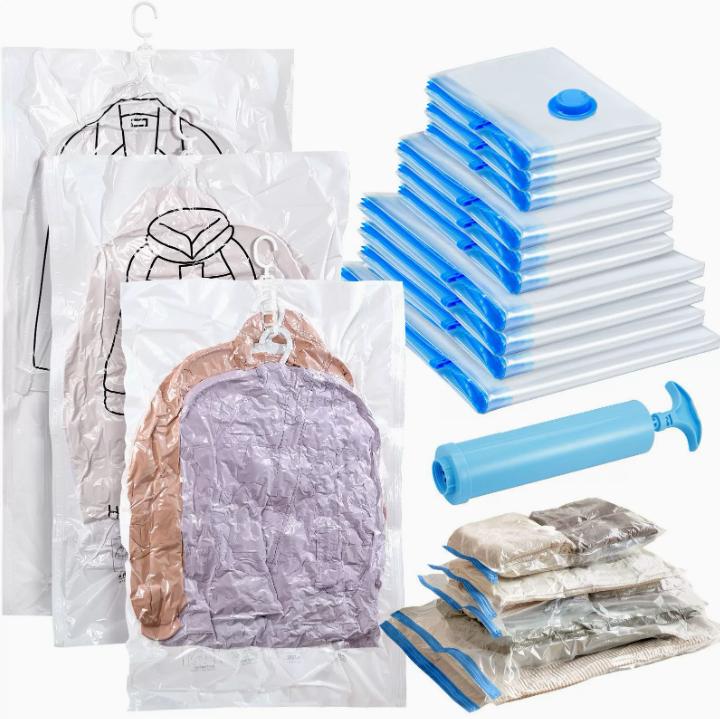
TL;DR — Quick Answer
Vacuum storage bags leak for 7 main reasons: zipper seal failure (most common), valve malfunction, punctures from sharp objects, overfilling, low-quality film, temperature changes, and improper sealing technique. The good news: 80% of leaks are preventable with proper usage and quality materials.
The 7 Most Common Causes of Vacuum Bag Leaks
1. Zipper Seal Not Fully Closed
This is the #1 cause. The double-track zipper needs to be pressed firmly along its entire length. Even a 2mm gap allows air to slowly seep back in. Use the included slider clip — it’s not optional. Run it 2-3 times across the seal. Test: after sealing, gently press the bag. If you hear air escaping, reseal immediately.
2. Valve Malfunction or Debris
The one-way valve is a precision component. Dust, fabric fibers, or plastic debris inside the valve prevents it from closing fully. Before each use, check the valve opening is clean. If your bag came compressed flat in packaging, gently work the valve with your finger to ensure the membrane is not stuck to the housing.
3. Micro-Punctures from Sharp Objects
Zippers, buttons, hooks, underwire, and even cardboard box corners can create invisible punctures. Always turn garments inside-out so buttons and zippers face inward. For bedding, fold sharp corners away from the bag surface. A single pin-prick can cause a bag to reinflate within hours.
4. Overfilling Past the Fill Line
Every vacuum bag has a maximum fill line — usually 2-3 inches below the zipper. Overfilling puts stress on the seal and prevents proper compression. The bag needs empty space at the top for the air to evacuate properly. Overfilled bags also strain the zipper, creating micro-gaps that leak over time.
5. Low-Quality Film Material
Budget bags use PET+PE film (thinner, less puncture-resistant) while quality bags use PA+PE with 70+ micron thickness. The difference: a PET+PE bag might hold its seal for 2-3 weeks; a PA+PE bag holds for 6-12 months. Check your bag’s material spec — if it doesn’t say PA+PE or thickness in microns, it’s likely the economy grade.
| Material | Seal Duration | Puncture Resistance | Reuse Cycles |
|---|---|---|---|
| PA+PE 70µ | 6-12 months | ⭐⭐⭐⭐ | 30-50 |
| PA+PE 90µ | 12+ months | ⭐⭐⭐⭐⭐ | 50-80 |
| PET+PE 50µ | 2-4 weeks | ⭐⭐ | 10-20 |
6. Temperature Fluctuations
Air expands when warm and contracts when cold. If you vacuum-seal bags in a warm room and then store them in a cold attic or basement, the pressure difference can compromise the seal. Store vacuum bags in a stable-temperature environment. Avoid attics, garages, and uninsulated storage areas.
7. Improper Vacuum Technique
If using a vacuum cleaner hose: hold the nozzle firmly against the valve for the full evacuation time (15-30 seconds for a medium bag). Don’t stop early — the bag should be rock-hard when fully compressed. If the bag feels spongy, there’s still air inside. For roll-up bags: roll slowly and evenly toward the valve, not from the valve outward.
How to Test If Your Bag Is Leaking
- The 24-hour test: Vacuum-seal the bag. Mark the compressed volume with tape. Check after 24 hours. Any visible expansion = leak.
- The water test: Seal an empty bag with a small amount of air. Submerge in water. Bubbles = leak location.
- The sound test: Hold the sealed bag to your ear and gently press. Hissing = air escaping.
FAQ
Can I fix a leaking vacuum bag?
Small punctures can be patched with clear packing tape on both sides. Valve failures generally can’t be repaired — replace the bag. Zipper seal issues are sometimes fixable by cleaning the tracks with a dry cloth and resealing. But for B2B importers: a bag that leaks once will likely leak again. It’s cheaper to replace than risk damaged stored goods.
How long should a quality vacuum bag stay sealed?
A quality PA+PE 70-micron bag should hold its seal for 6-12 months under normal storage conditions. If your bags are reinflating within days or weeks, check the 7 causes above — it’s almost always a usage issue, not a manufacturing defect.
Sources: material science data on PA+PE film; vacuum bag manufacturer QC standards; user testing reports from organizing communities.