TL;DR: The outdoor recreation economy generated $1.3 trillion in economic output in 2024, with recreational products alone valued at $144.5 billion. Yet camping gear storage remains an afterthought for most outdoor retailers — despite sleeping bags, down jackets, and tents being highly susceptible to moisture damage, compression fatigue, and off-season degradation. Vacuum storage bags engineered for outdoor equipment solve these problems while creating a high-margin accessory category for B2B buyers. This guide maps the market, specifies the product requirements, and outlines the seasonal sales playbook.
The Outdoor Recreation Market: Size, Scope, and Storage Demand
The U.S. outdoor recreation economy reached $1.3 trillion in economic output in 2024, supporting 5.2 million jobs — surpassing industries like mining, farming, and utilities combined (RV Industry Association / BEA Data, 2025). Within this massive ecosystem, the recreational and outdoor products market was estimated at $144.5 billion in 2025 and is forecast to grow at a 5.9% CAGR through 2035 (GM Insights, 2025).
What many B2B suppliers overlook: every piece of gear sold — every sleeping bag, down jacket, tent, and camp pad — needs to be stored for 8–10 months of the year when not in active use. The average outdoor enthusiast owns $2,000–$5,000 worth of gear, yet most store it in damp basements, hot attics, or overstuffed closets where moisture, pests, and compression damage take a silent toll. Vacuum storage bags designed for outdoor gear represent a natural add-on that outdoor retailers can sell at 50–70% margins.
Why Camping Gear Needs Specialized Vacuum Storage
Standard vacuum storage bags are designed for clothing — they lack the durability, moisture resistance, and valve integrity required for outdoor equipment. Here is why camping gear demands a different product specification:
How Does Compression Affect Sleeping Bag Insulation?
Sleeping bags — particularly down-filled models — lose loft when stored under sustained compression. Down clusters are three-dimensional structures that trap warm air; when crushed flat for months, the filaments break and lose their ability to re-loft. The solution is not to avoid compression entirely, but to use a vacuum bag with a controlled-compression valve that removes air and moisture without crushing the fill to zero loft. A partial vacuum — removing 60–70% of air rather than 95% — preserves insulation integrity while still reducing storage volume by half.
Why Is Moisture the #1 Enemy of Stored Outdoor Gear?
Mold, mildew, and fabric delamination are all driven by moisture. A tent stored damp for even a week can develop permanent mildew stains and polyurethane coating hydrolysis — a process where water breaks down the waterproof PU layer, leaving a sticky, peeling mess. Desiccant-integrated vacuum bags — with a silica gel packet compartment built into the valve housing — actively pull residual moisture from the enclosed air during evacuation. This dual-action (vacuum + desiccant) is the gold standard for outdoor gear storage.
What Makes a Vacuum Bag Durable Enough for Camping Gear?
Camping equipment is heavy and has sharp edges — tent poles, stove components, crampons, and trekking poles can puncture standard 70-micron vacuum bags. Outdoor-grade bags require reinforced, puncture-resistant film at 140–180 microns thickness, with a nylon outer layer and PE inner sealant layer. The valve must be dual-seal with a screw-cap lock — not the simple push-valve found on household bags — to maintain vacuum integrity through temperature fluctuations in garages and storage units.
Market Data: Outdoor Recreation and Gear Storage by the Numbers
| Metric | Value | Source |
|---|---|---|
| U.S. outdoor recreation economic output (2024) | $1.3 trillion | BEA / RVIA, 2025 |
| Outdoor recreation jobs supported | 5.2 million | BEA / RVIA, 2025 |
| Recreational products market (2025) | $144.5 billion | GM Insights, 2025 |
| Market CAGR (2026–2035) | 5.9% | GM Insights, 2025 |
| Camping participation rate (U.S., 2024) | 40.5% of population | Statista, 2025 |
| Average gear value per enthusiast | $2,000–$5,000 | Industry estimates |
| Global vacuum bag market (current) | $1.5 billion | Industry estimates |
| Vacuum bag market projection (2030) | $2.8 billion (CAGR 7.5%) | Industry projections |
Actionable insight: If just 10% of the 132 million Americans who camp annually purchased a $25 outdoor gear vacuum storage kit, that is a $330 million annual retail opportunity. Outdoor retailers currently capture near-zero share of this category — a gap that B2B vacuum bag suppliers can help them fill.
Seasonal Demand Patterns for Outdoor Gear Vacuum Bags
Understanding the seasonal purchase cycle is critical for B2B inventory planning and retailer pitch timing:
| Season | Consumer Behavior | B2B Sales Opportunity |
|---|---|---|
| Spring (Mar–May) | Gear pulled from storage, inspected; damaged items replaced | Retail restocking orders; POS displays pairing storage bags with new gear purchases |
| Summer (Jun–Aug) | Peak camping season; gear in active use | Lower volume; focus on travel-size vacuum bags for campers |
| Fall (Sep–Nov) | End-of-season gear cleaning and storage prep; peak storage bag buying window | Largest B2B order cycle; bulk shipments to retailers for Q4 merchandising |
| Winter (Dec–Feb) | Gear in storage; gift-giving season for outdoor enthusiasts | Holiday gift-pack SKUs; online marketplace fulfillment |
The fall window — September through November — is the critical sales period. Retail buyers should place orders in June–July for September shelf placement. Manufacturers like Qingdao Sanyuan (15,000㎡ capacity, 13+ years experience) can fulfill container orders with 30–45 day lead times, making the June ordering window viable for Q3 delivery.
B2B Product Specifications: Outdoor-Grade Vacuum Storage Bags
| Feature | Outdoor-Grade Spec | Rationale |
|---|---|---|
| Film construction | PA/Nylon outer + PE inner, 140–180μ | Puncture resistance for gear with hard edges |
| Valve system | Double-seal screw-cap with desiccant chamber | Maintains seal through temperature swings; active moisture control |
| Size range | M (60×80cm) to XXL (100×130cm) + jumbo sleeping bag size (120×100cm) | Covers sleeping bags, tents, jackets, pads |
| Water resistance | Valve gasket rated IPX4 | Protects against basement/garage humidity ingress |
| Compression control | Partial-vacuum indicator line on bag | Prevents over-compression of down insulation |
| Certifications | REACH, FDA, CE, BPA-free | Meets EU and North American retail compliance |
| Packaging | Peggable retail hang card or shelf-ready box | Compatible with outdoor retailer planograms |
| MOQ (private label) | 500–1,000 units per SKU | Accessible for mid-size outdoor brands |
How Outdoor Retailers Can Build a Gear Storage Category
For B2B distributors and manufacturers selling to outdoor retailers (REI, Cabela’s, Bass Pro Shops, independent outfitters), the pitch is straightforward: gear storage accessories complete the customer lifecycle. Every tent and sleeping bag sale represents a future storage need. Retailers that fail to offer storage solutions leave money on the table — and risk customers damaging expensive gear through improper off-season storage, which erodes brand loyalty.
- Cross-merchandising: Place vacuum storage bags on endcaps adjacent to sleeping bag and tent aisles during August–October.
- Bundle deals: “Buy a sleeping bag, get 20% off the storage bag” — increases attachment rate and average order value.
- Educational content: In-store signage and QR-code videos showing proper gear storage technique build trust and drive conversion.
- Private labeling: Outdoor brands can offer co-branded storage kits as part of their accessory line. MOQs of 500 units make this viable for regional chains.
Internal Links: More B2B Vacuum Bag Market Guides
- RV & Camper Vacuum Storage Bags: B2B Market Opportunity Guide
- Tiny Home & Van Life Vacuum Storage Solutions: Complete B2B Guide
- Heavy-Duty vs. Standard Vacuum Bags: Complete B2B Comparison Guide
- Sports Equipment Vacuum Storage: Seasonal Guide for B2B Retailers
- Vacation Bag Size Guide: From Travel Mini to Jumbo Mattress
Frequently Asked Questions About Camping Gear Vacuum Storage
Can I store a down sleeping bag in a vacuum bag?
Yes — but with controlled compression. Down sleeping bags should not be fully compressed to zero air, as this permanently crushes the down clusters that provide insulation. Use a vacuum bag with a partial-compression indicator and remove approximately 60–70% of the air — enough to save space but not enough to destroy loft. Always ensure the bag is completely dry before sealing, as trapped moisture can cause down to rot. Professional outdoor gear storage bags from certified manufacturers include desiccant compartments and partial-vacuum markings for this exact use case.
How do you store a tent to prevent mildew?
The cardinal rule: never store a tent damp. Even a small amount of residual moisture can trigger polyurethane coating hydrolysis — a chemical breakdown that leaves the waterproof layer sticky and peeling within weeks. After every trip, pitch the tent in a dry, shaded area until it is bone-dry (usually 24–48 hours). Then store it loosely in a breathable sack — or better yet, in a moisture-wicking vacuum storage bag that removes humidity during the sealing process. A desiccant-integrated valve provides an extra layer of protection for long-term storage.
What size vacuum bag do I need for camping gear?
Most camping gear fits in medium to extra-large vacuum bags. A standard 60×80 cm bag holds one compressed sleeping bag or two down jackets. A 100×130 cm bag accommodates a 4-person tent (without poles, which should be stored separately). For family camping kits, jumbo bags at 120×100 cm can hold multiple sleeping bags, camping pillows, and compressible pads. B2B buyers should stock a range of sizes — the most popular for outdoor retailers is the 80×100 cm mid-size, which fits one sleeping bag plus a puffy jacket.
Does vacuum storage damage waterproof coatings on outdoor gear?
Vacuum storage does not directly damage DWR (Durable Water Repellent) coatings or polyurethane waterproof layers — provided the gear is completely dry before sealing. The risk is trapped moisture, not the vacuum itself. When moisture is sealed inside an anaerobic environment, it accelerates hydrolysis and mildew growth. The solution: always dry gear thoroughly (48+ hours for tents and sleeping bags), add a silica gel desiccant packet inside the bag, and use a vacuum bag with a moisture-control valve.
When should outdoor retailers stock vacuum storage bags?
The optimal retail stocking window is August through October — the post-summer gear storage season when campers are packing away equipment for winter. A secondary stocking window exists in March–April for spring gear prep and inspection season. B2B buyers should place manufacturer orders 60–90 days ahead: May–June for fall shelf placement, and January for spring. Qingdao Sanyuan’s 30–45 day production lead time with container shipping makes these windows achievable for North American and European retailers.
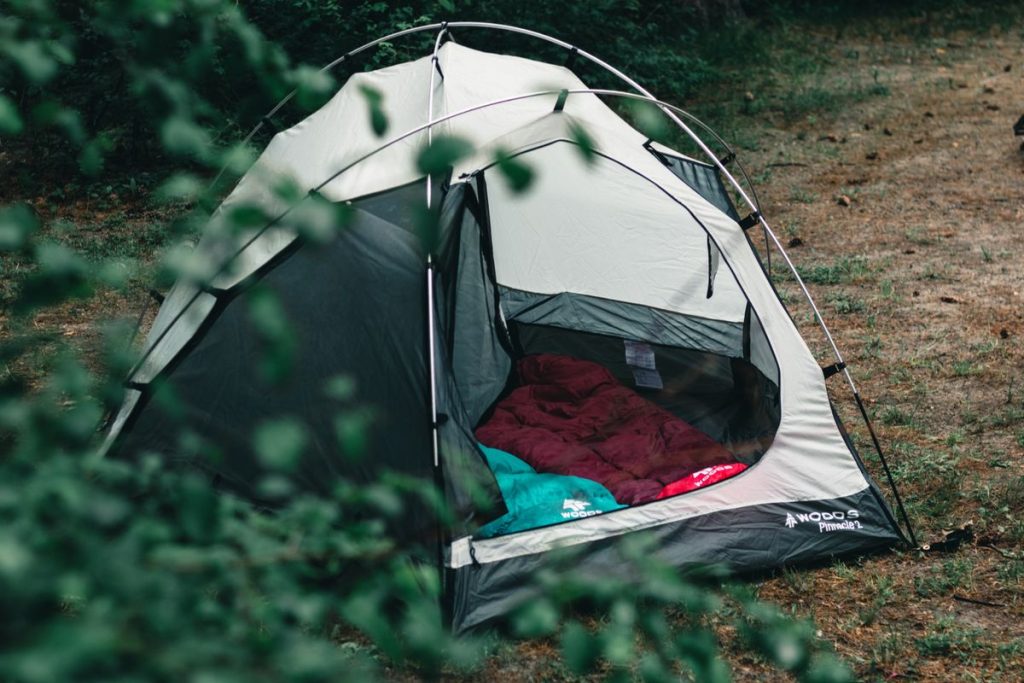
Photo by Ali Kazal via Pexels. Market data sourced from Bureau of Economic Analysis, RV Industry Association, GM Insights, and Statista (2024–2025). Qingdao Sanyuan manufactures outdoor-grade vacuum storage bags in a 15,000㎡ CE/FDA/REACH-certified facility with 13+ years of export experience. For B2B inquiries and wholesale pricing, contact our team.