TL;DR: The Canton Fair (China Import and Export Fair) is the world’s largest trade event, attracting 200,000+ buyers and 25,000+ exhibitors across three phases. For vacuum bag importers, Phase 2 (April 23–27 & October 23–27, 2026) is where packaging, household goods, and storage solution suppliers exhibit. This guide covers pre-fair preparation, on-the-ground booth navigation, supplier evaluation frameworks, real-time negotiation tactics, and post-fair follow-up strategies — everything you need to turn a 5-day trip into a year of profitable supplier relationships.
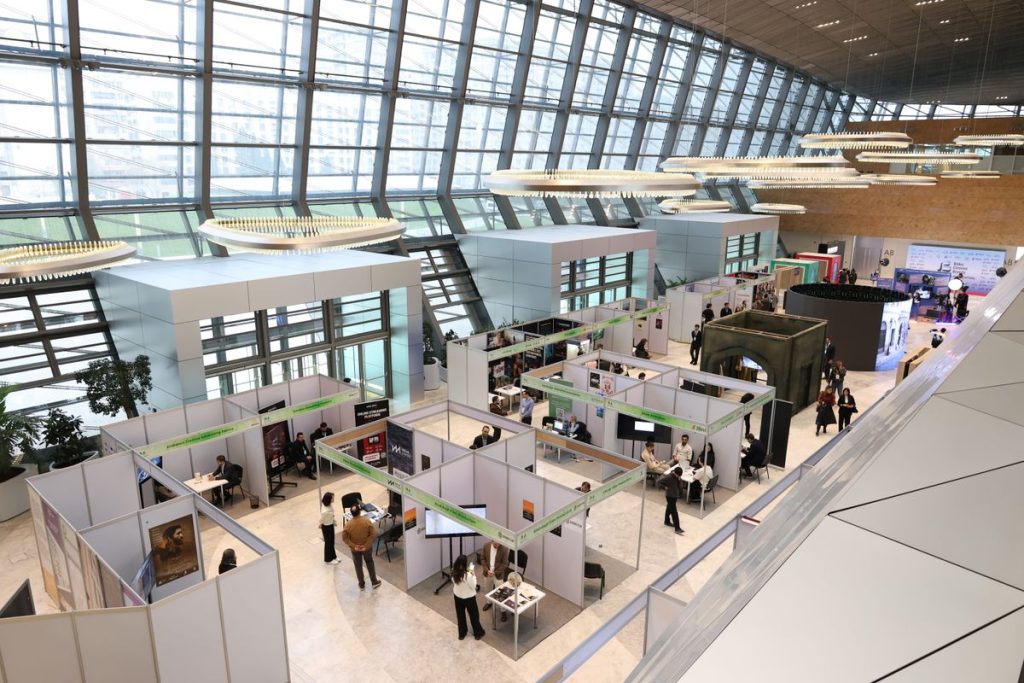
What Is the Canton Fair and Why Should Vacuum Bag Buyers Attend?
The Canton Fair, officially the China Import and Export Fair, has run since 1957 and is held twice yearly in Guangzhou, China. It’s not just another trade show — it’s a sourcing institution. With an annual exhibition area exceeding 1.18 million square meters and transaction volumes reaching $30+ billion per session, according to the official Canton Fair website, it’s the single most concentrated opportunity to meet Chinese vacuum bag manufacturers face-to-face.
For vacuum bag importers specifically, the Canton Fair offers advantages no online sourcing platform can match:
- Physical product inspection: Touch materials, test zipper quality, inspect valve mechanisms, and compare thickness across 10+ suppliers in one afternoon.
- Relationship building: The Chinese business culture places enormous value on face-to-face meetings. A handshake and tea at Canton Fair can fast-track trust that takes months to build over email.
- Competitive intelligence: Walk the aisles and you’ll understand the full competitive landscape — pricing tiers, new materials, emerging packaging trends.
- Direct price comparison: There’s no more efficient way to benchmark pricing than collecting 20 quotes in person over 3 days.
The global vacuum storage bag market’s projected growth from $1.5 billion (2024) to $2.8 billion (2033) at a 7.5% CAGR means competition for quality suppliers is intensifying. Being at Canton Fair puts you ahead of importers who rely solely on Alibaba inquiries.
When Is the Canton Fair 2026 and Which Phase Covers Vacuum Bags?
The 139th Canton Fair (Spring 2026) runs across three distinct phases. Vacuum bag and storage solution exhibitors appear primarily in Phase 2:
| Phase | Spring 2026 Dates | Autumn 2026 Dates | Product Categories | Relevance to Vacuum Bag Buyers |
|---|---|---|---|---|
| Phase 1 | April 15–19 | October 15–19 | Electronics, machinery, hardware, vehicles | Low (packaging machinery only) |
| Phase 2 | April 23–27 | October 23–27 | Household goods, gifts, home decorations | HIGH — Vacuum bags, storage, organizers |
| Phase 3 | May 1–5 | October 31–Nov 4 | Textiles, garments, shoes, office supplies | Low (travel bags/organizers only) |
Pro tip: Arrive 2 days before Phase 2 opens (April 21 for Spring). Use those days to visit nearby factories. Guangzhou is a 3-hour high-speed train ride from Shenzhen and a short flight from key manufacturing hubs. Many Qingdao-based vacuum bag manufacturers — including Qingdao Sanyuan (15,000㎡ facility, CE/FDA/REACH certified, exporting to 50+ markets) — maintain exhibition booths at Canton Fair but their factories are a flight away. Schedule factory visits for the days immediately before or after the fair.
How Should Vacuum Bag Buyers Prepare Before the Canton Fair?
Walking into Canton Fair without preparation is like navigating a warehouse blindfolded. The venue is massive — Area A, B, C, and D spread across multiple buildings connected by covered walkways. Here’s your pre-fair checklist:
1. Pre-Register and Secure Your Buyer Badge
Registration is free for international buyers but requires advance application. Visit the Canton Fair Buyer Registration portal at least 4 weeks ahead. You’ll need a passport scan, business license or company registration, and a photo. On-site registration is possible but involves 2–3 hour queues during peak days.
2. Research Exhibitors Using the Canton Fair App
The official Canton Fair app lists all confirmed exhibitors with booth numbers, product categories, and company profiles. Download it 2–3 weeks pre-fair (when exhibitor data is loaded). Search for keywords: “vacuum storage bags,” “compression bags,” “space saver bags,” “travel organizer bags.” Create a shortlist of 20–30 target booths and map them on the venue floor plan.
3. Prepare Your Supplier Evaluation Framework
Don’t rely on gut feeling. Bring a standardized evaluation sheet (digital or printed) with criteria including:
- Years in export business (minimum 3–5 years recommended)
- Certifications held (CE, FDA, REACH, ISO 9001, BSCI, SEDEX)
- Factory size and daily production capacity
- MOQ flexibility and sample turnaround time
- English proficiency of the booth representative (a proxy for export experience)
- Existing customer markets (ask for reference countries)
4. Bring Physical Samples
Carry 2–3 competitor vacuum bag samples — ones you currently sell or ones from a competitor you want to match or beat. Chinese suppliers can instantly assess material composition, thickness (measured in μm or microns), valve type, and printing quality by handling a physical sample. This is infinitely more effective than emailing specifications.
5. Book Accommodation Early
Guangzhou hotels within 5km of the Pazhou Complex book out 4–6 weeks ahead. The Westin Pazhou, Langham Place, and Shangri-La are walking distance but premium-priced during fair weeks. The Crowne Plaza Guangzhou City Centre and Holiday Inn Shifu offer reasonable alternatives with metro access. Budget $150–$350/night during fair periods.
What’s the Best Strategy for Navigating the Canton Fair Exhibition Halls?
The Canton Fair complex in Pazhou is enormous. A systematic approach saves your feet and maximizes productive meetings:
Day 1: Reconnaissance
Walk your entire target zone without committing to deep conversations. Note booth presentation quality, product display professionalism, and which booths are busy (a proxy for reputation). Take photos of booth numbers and products. You’ll process these in your hotel room that evening and prioritize top-10 suppliers for Day 2.
Day 2: Deep-Dive Meetings
Arrive at opening (9:00 AM) and hit your priority booths first — before representatives get tired or distracted. Bring your competitor samples, your evaluation sheet, and specific questions about certifications, MOQs, and lead times. Good vacuum bag suppliers will have material swatches, thickness gauges, and vacuum test demonstrations at the booth. If they don’t offer to demonstrate product integrity, that’s a red flag.
Day 3: Second-Tier & Niche Suppliers
Visit your second-tier list. By now you’ve calibrated expectations on pricing and quality from Day 2 meetings. Use this calibration to identify outliers — suppliers whose quality-to-price ratio stands out from the pack. Also explore adjacent categories: travel organizers, compression packing cubes, hanging vacuum bags, and electric pump accessories. Smart importers bundle these into container loads for freight efficiency.
Day 4–5: Negotiations & Factory Visit Scheduling
Return to your top 3–5 suppliers for second meetings. This is when pricing gets real — suppliers who see you return know you’re serious. Start negotiating MOQs, payment terms (30/70 T/T is standard; push for 30% deposit + 70% against B/L copy), and production timelines. Schedule factory visits for the following week — the best suppliers will welcome the request; those who deflect may be trading companies rather than manufacturers.
How Do You Evaluate Vacuum Bag Suppliers at the Canton Fair?
A professional-looking booth doesn’t guarantee a professional factory. Use this framework to separate genuine manufacturers from trading companies and low-quality operations:
| Evaluation Criterion | What to Look For | Red Flag |
|---|---|---|
| Product Range Depth | Multiple sizes, valve types, material options (PA+PE, PET+PE, EVOH) | Only 2–3 SKUs; “we can make anything” without samples |
| Certification Documentation | Physical copies of CE, FDA, REACH certificates; lab test reports | “We can get those” — but no current certificates on hand |
| Factory Photos/Videos | Recent photos of production lines, raw material storage, QC lab | Stock photos or refusing to share visual evidence |
| Material Knowledge | Able to discuss PA vs PE layer ratios, μm tolerances, valve specs | Can’t explain material composition or deflects to catalog |
| Export History | Specific countries, client references (anonymized ok), shipping volume | “We export everywhere” with no specifics |
| Price Consistency | Willingness to explain cost structure; realistic pricing | Price 30% below market average — materials are likely substandard |
According to a Statista report on trade fairs, 79% of trade show attendees say in-person product evaluation is the primary reason they attend — and 67% of B2B buyers make purchasing decisions within 3 months of a trade show visit. Your evaluation at the booth directly drives your procurement outcomes.
What Negotiation Tactics Work Best at the Canton Fair?
Negotiation at Canton Fair is different from email negotiation. The in-person dynamic favors prepared buyers:
- Start with relationship, not price: Spend the first 5–10 minutes building rapport. Ask about the factory’s history, which other shows they attend, what markets they’re strongest in. Chinese business culture values relationship (guanxi 关系) before transaction.
- Show competitor quotes: Having real quotes from other booths is your strongest leverage. Don’t fabricate — suppliers can often tell. Say: “I visited Booth X in Hall 15.2 and they quoted $0.32 FOB Qingdao for 100K units. Can you match or beat that?”
- Negotiate on total package, not unit price: MOQ reduction, free samples, tooling fee waivers, and expedited production often deliver more value than a $0.02 per-unit price reduction. A supplier who drops MOQ from 50,000 to 20,000 units reduces your cash commitment by $10,500 at $0.35/unit.
- Use the time pressure: Suppliers know you’re leaving Guangzhou. On Day 4–5, say: “I’m finalizing my sourcing decisions before my flight tomorrow. If you can offer X, I can confirm the order this week.” This creates urgency without being aggressive.
- Request post-fair samples: Ask your top 3 suppliers to courier counter-samples (production samples matching your specifications) to your office within 2 weeks. The quality of these samples — and whether they arrive on time — tells you more about a supplier than any booth conversation.
What Should You Do After the Canton Fair?
The 48 hours after Canton Fair are when deals are won or lost. Here’s your post-fair action plan:
- Within 24 hours: Send personalized follow-up emails to every serious supplier. Reference specific products you discussed, attach photos of the samples you liked, and outline next steps. Generic “nice to meet you” emails go to the bottom of the pile.
- Within 1 week: Request formal quotations (PI or Proforma Invoice) from your top 5 suppliers based on the specifications you discussed at the fair.
- Within 2 weeks: Evaluate counter-samples as they arrive. Test vacuum seal retention over 48–72 hours. Check seam strength, zipper durability, and printing quality.
- Within 4 weeks: Place a trial order with your top supplier. A 5,000–10,000 unit trial order lets you verify quality consistency before committing to container volumes.
- Within 8 weeks: Visit the factory. Canton Fair is the introduction; a factory visit is the commitment. See our 30-point factory visit checklist for detailed guidance.
Research from the Center for Exhibition Industry Research (CEIR) indicates that 81% of trade show attendees have buying authority, and the average cost of closing a sale from a trade show lead is 38% lower than closing a non-trade-show lead. The math is compelling: Canton Fair is your most efficient supplier acquisition channel.
FAQ: Canton Fair for Vacuum Bag Buyers
Do I need a visa to attend the Canton Fair?
Most international visitors need a Chinese business visa (M visa) or tourist visa (L visa). Your Canton Fair invitation letter (generated during online registration) supports the M visa application. Apply at least 6–8 weeks ahead. US, EU, and UK passport holders should budget $140–$200 for visa fees and 2–3 weeks processing time.
Can I bring samples back from the Canton Fair?
Yes. Exhibitors routinely give away product samples. For vacuum bags, you can typically carry 20–50 pieces in your luggage without customs issues. For larger quantities, arrange courier shipping (DHL, FedEx) from the fair’s on-site logistics center. Declare items as “product samples — no commercial value” to avoid duty complications.
How much should I budget for a Canton Fair trip?
A 5-day trip including international flights, hotel, meals, and local transport typically runs $2,500–$5,000 per person (from Europe or North America). Guangzhou is more affordable than Shanghai or Beijing — expect $30–$60/day for meals and $10–$30/day for taxis/metro. This investment is easily justified: finding one reliable supplier who saves you $0.03/unit on 300,000 bags/year generates $9,000 in annual savings.
What language barriers should I expect?
English proficiency varies significantly. Established exporters (like Qingdao Sanyuan with 13+ years’ experience across 50+ markets) will have fluent English-speaking sales staff. Smaller or newer exhibitors may have limited English. Bring visual aids — photos, samples, specification sheets — that communicate without words. A translation app (Google Translate with offline Chinese pack) is essential backup.
Is the Autumn Fair as good as the Spring Fair?
The Spring session (April) is traditionally larger, but the Autumn session (October) has several advantages: fewer crowds, more negotiation leverage (suppliers are chasing year-end targets), and comfortable weather. Both sessions feature the same Phase 2 household goods categories. Many experienced buyers attend Spring for discovery and Autumn for order placement.
Conclusion: Canton Fair Is Your Competitive Advantage
The Canton Fair remains the most efficient channel for vacuum bag importers to discover, evaluate, and negotiate with Chinese manufacturers. In an industry growing at 7.5% CAGR toward $2.8 billion, the importers who show up, build relationships, and follow through systematically will capture market share from those who rely on digital sourcing alone.
Continue your sourcing education with our related guides: