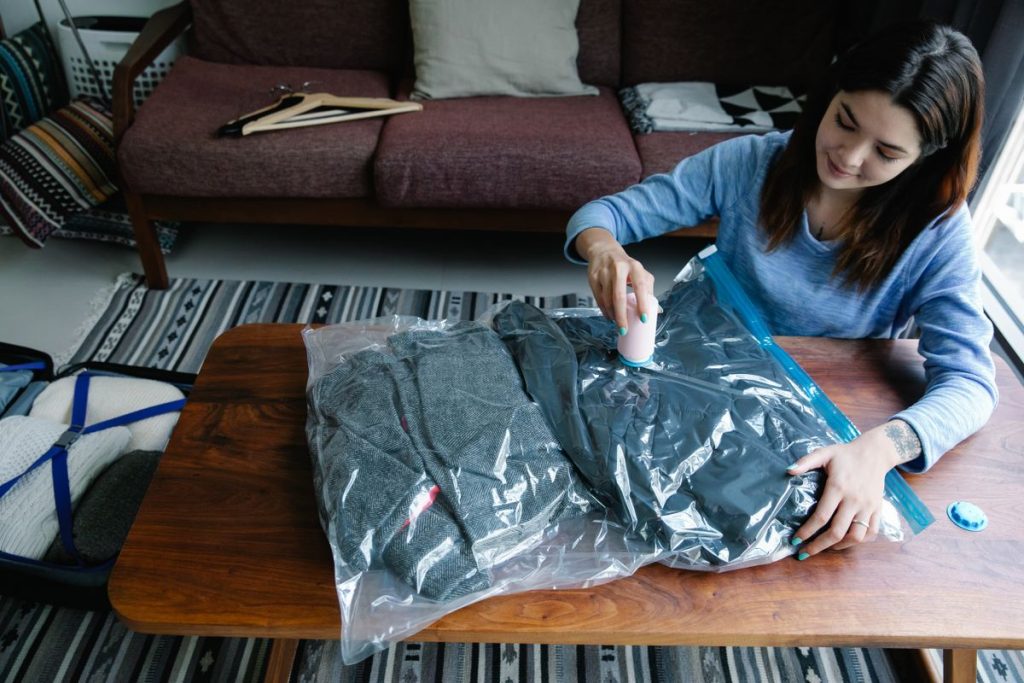
TL;DR: A mid-sized US home organization brand was spending $2.85 per unit on vacuum storage bags through a domestic trading company. By switching to direct factory sourcing, they reduced their landed cost to $1.85 per unit — a 35% reduction — while improving product quality and gaining custom branding capabilities. This case study breaks down the exact cost structure, the vetting process, and the 5-step framework any B2B importer can replicate.
The Problem: How Much Is the Middleman Really Costing Your Vacuum Bag Business?
In the B2B vacuum storage bag supply chain, a trading company — also known as a middleman or intermediary — typically adds 25% to 50% markup on top of the ex-factory price. For a product category where unit margins are thin (often $0.50–$2.00 per bag at wholesale), that markup can mean the difference between profitability and breaking even.
The subject of this case study — we’ll call them “HomeStore Pro” — is a US-based home organization brand selling vacuum compression bags through Amazon FBA, their own Shopify store, and two regional retail chains. In 2024, they were purchasing 200,000 units annually through a California-based trading company at $2.85/unit (landed). Their annual procurement spend was approximately $570,000.
After a margin review revealed that their gross margin on vacuum bags was just 22% — well below their 40% company-wide target — the founder decided to explore direct factory sourcing from China. What they found transformed their business.
“I assumed working directly with a Chinese factory would be complicated and risky. What I didn’t realize was that the trading company was charging me a 54% premium for services I could manage myself with the right factory partner.”
What Is Direct Factory Sourcing and Why Does It Matter for Vacuum Storage Bags?
Direct factory sourcing means purchasing products straight from the manufacturer — eliminating trading companies, agents, and domestic distributors from the supply chain. In the vacuum compression bag industry, where most global production is concentrated in China’s Shandong, Guangdong, and Zhejiang provinces, direct sourcing can deliver 20% to 40% landed cost savings compared to buying through intermediaries (Source: McKinsey & Company).
The vacuum storage bag market is forecast to grow from $1.33 billion in 2026 to $1.82 billion by 2030 at an 8.2% CAGR, driven by urbanization (83% of Americans now live in cities), e-commerce expansion, and the global organization/minimalism movement (Source: Research and Markets). In this competitive landscape, procurement cost advantage is the single biggest lever for profitability.
For B2B importers, the key question isn’t whether factory-direct sourcing works — it’s how to execute it without compromising quality, compliance, or delivery timelines. The following case study provides a replicable framework.
Key Terms for B2B Vacuum Bag Sourcing
- FOB (Free On Board): The seller covers all costs until goods are loaded onto the vessel at the port of origin. The buyer assumes responsibility from that point forward.
- MOQ (Minimum Order Quantity): The smallest quantity a factory will produce per order. For vacuum bags, typical MOQs range from 1,000 to 5,000 units per SKU.
- Landed Cost: The total cost of a product including ex-factory price, freight, insurance, customs duties, and port handling fees.
- PA+PE Multi-Layer Film: The industry-standard material for premium vacuum bags, combining a polyamide (nylon) outer layer for strength with a polyethylene inner layer for heat-sealing and airtightness.
The Numbers: Breaking Down the 35% Cost Reduction
Here’s the actual per-unit cost comparison for HomeStore Pro’s best-selling vacuum bag SKU — a 6-pack of medium (60×80cm) compression bags:
| Cost Component | Via Trading Company | Direct Factory Sourcing | Savings |
|---|---|---|---|
| Ex-factory / Wholesale Price | $1.40 (to trading co.) | $0.85 (direct FOB) | -$0.55 |
| Trading Company Markup | $0.75 | $0.00 | -$0.75 |
| Custom Packaging & Branding | $0.30 | $0.18 | -$0.12 |
| Ocean Freight (per unit) | $0.18 | $0.30 | +$0.12 |
| US Customs & Duties (3.5%) | $0.10 | $0.07 | -$0.03 |
| Inland Logistics (port→3PL) | $0.05 | $0.35 | +$0.30 |
| Third-Party QC Inspection | $0.07 | $0.10 | +$0.03 |
| Total Landed Cost per Unit | $2.85 | $1.85 | -$1.00 (35%) |
Annual impact at 200,000 units: $200,000 in procurement savings. When combined with improved retail margins from the custom-branded packaging (which allowed a $0.50 retail price increase), the total bottom-line improvement exceeded $300,000 in the first year.
Critically, the freight and logistics line items increased — but these were more than offset by eliminating the middleman markup. The factory-direct model also gave HomeStore Pro control over material specifications: they upgraded from standard 80-micron film to 100-micron PA+PE multi-layer film with improved oxygen barrier properties, extending vacuum retention from 30 days to 60+ days (Source: OECD Trade Statistics).
How to Find and Vet a Reliable Vacuum Bag Factory in China: A 5-Step Framework
Based on HomeStore Pro’s experience and industry best practices, here is the step-by-step framework that delivered their results:
- Source candidates from verified platforms. Use Alibaba’s Verified Supplier program, Global Sources, or Made-in-China.com. Filter by years in business (minimum 7+), export markets served, and relevant certifications (CE, FDA, ISO 9001). HomeStore Pro shortlisted 8 factories from an initial pool of 47.
- Request pre-production samples from 3–5 shortlisted factories. Ask for samples in your target specification — thickness, size, valve type, printing. Pay for samples (typically $50–$150 including courier) to signal serious intent. HomeStore Pro tested samples for seal strength, vacuum retention, odor, and print quality.
- Verify certifications independently. Don’t accept emailed PDFs — verify CE and FDA certificates through the issuing body’s online database or request a notarized copy. For critical certifications like FDA food-contact compliance, cross-reference with the FDA’s public Establishment Registration database (Source: U.S. Food & Drug Administration).
- Conduct a video factory audit or hire a third-party inspector. If you can’t visit in person, request a live video walkthrough of the production floor, raw material storage, and QC lab. Alternatively, hire a third-party inspection company (AsiaInspection/QIMA, SGS, Bureau Veritas) for a factory audit — cost is $300–$600. HomeStore Pro used QIMA for a 2-day on-site audit.
- Start with a trial order. Place a small order (10–20% of your planned volume) to validate production quality, communication, and delivery timelines before committing to full production runs. HomeStore Pro’s first order was 10,000 units — enough to test the full supply chain without risking their Q4 inventory.
What Risks Should Importers Watch for When Sourcing Directly?
Direct sourcing isn’t without risks. HomeStore Pro encountered — and solved — three common challenges:
1. Communication barriers. Language gaps can lead to specification errors. Solution: Use written technical specifications with diagrams, confirm all changes via email, and work with factories that have dedicated English-speaking export managers. HomeStore Pro created a 12-page product spec document that eliminated ambiguity.
2. Quality consistency across batches. Without a trading company acting as a quality filter, the burden of QC shifts to you. Solution: Implement AQL (Acceptable Quality Level) sampling — the international standard for batch inspection. HomeStore Pro set an AQL of 2.5 for major defects and 4.0 for minor defects, with every shipment inspected before container loading.
3. Payment terms and IP protection. Factories prefer 30% deposit / 70% against B/L, but new buyers face trust gaps on both sides. Solution: Use Alibaba Trade Assurance or a letter of credit for the first order, transition to T/T terms after 2–3 successful transactions. For custom molds and packaging designs, file trademarks in China through a local IP agent.
According to the World Economic Forum, companies that invest in supplier relationship management and build direct factory partnerships report 23% fewer supply disruptions and 11% faster time-to-market compared to those relying on intermediaries (Source: World Economic Forum).
The ROI Timeline: From First Sample to Profitability
| Phase | Timeline | Key Activities | Cost |
|---|---|---|---|
| Factory Sourcing & Vetting | Weeks 1–4 | Platform research, sample requests, certification verification | $500–$1,500 |
| Sample Testing & Spec Finalization | Weeks 5–8 | Lab testing, packaging design, mold creation | $1,000–$3,000 |
| Trial Order Production | Weeks 9–14 | 10,000-unit trial run, in-line QC, third-party inspection | $8,500–$12,000 |
| Ocean Freight & Customs | Weeks 15–19 | Container booking, documentation, customs clearance, inland delivery | $3,000–$5,000 |
| Market Launch & First Sales | Weeks 20–24 | Inventory at 3PL/FBA, listing optimization, sell-through | Revenue-generating |
HomeStore Pro reached full ROI on their initial investment by month 5 — the point at which cumulative procurement savings exceeded all setup and transition costs. By month 12, the direct sourcing program was generating net annual savings of $200,000+.
What to Look for in a Vacuum Bag Factory Partner
Not all factories are created equal. Based on industry benchmarks, here are the key criteria HomeStore Pro used to evaluate their shortlist:
- Production capacity: Minimum 5 million bags/year for reliable supply consistency
- Automation rate: 90%+ automated production lines reduce human error and improve consistency
- Material sourcing: Direct relationships with PA and PE film suppliers (not spot-market purchasing)
- Certifications: CE (EU market), FDA (US food-contact), REACH (EU chemical safety), ISO 9001 (quality management)
- Export experience: At least 5 years exporting to your target region
- R&D capability: In-house lab for material testing, new product development, and custom formulations
For example, Qingdao Sanyuan Industry & Trade Co., Ltd., established in 2010, operates a 15,000㎡ factory with a 98% automation rate and holds CE and FDA certifications. Factories at this level offer B2B importers the reliability and scale needed for long-term partnerships.
Frequently Asked Questions
How much can I realistically save by switching from a trading company to direct factory sourcing?
Most B2B vacuum bag importers achieve 20% to 40% landed cost savings when switching from trading companies to direct factory sourcing. The exact savings depend on your order volume, product complexity, and the trading company’s markup. At 100,000+ units/year, even a 25% reduction translates to five-figure annual savings.
What is the minimum order quantity for direct factory vacuum bag orders?
Typical MOQs for vacuum compression bags are 1,000 to 5,000 units per SKU for standard flat bags, and 500–2,000 units for 3D/jumbo bags. Some factories offer lower MOQs for trial orders or first-time buyers — ask during the vetting process. Custom-printed packaging may have a separate MOQ of 3,000–5,000 units.
Do I need to visit the factory in person before placing an order?
Not necessarily. While an in-person visit is ideal, a third-party factory audit ($300–$600 via QIMA, SGS, or Bureau Veritas) combined with a live video tour is a reliable alternative. Many successful B2B partnerships begin without in-person visits. If your annual order volume exceeds $100,000, an in-person visit is strongly recommended.
How long does the transition from trading company to direct sourcing typically take?
Plan for 4 to 6 months from initial factory research to receiving your first full production shipment. The timeline is: factory sourcing (4 weeks), sampling and spec finalization (4 weeks), trial production (6 weeks), and shipping (4–5 weeks). For busy seasons like Chinese New Year (January–February), add 3–4 weeks of buffer.
The Bottom Line: Direct Sourcing Works — If You Do It Right
HomeStore Pro’s case demonstrates that direct factory sourcing of vacuum storage bags is not just viable — it’s a competitive necessity. In a market growing at 8.2% CAGR, the brands that control their supply chain will control their margins.
The key insight from this case study: success doesn’t come from simply finding the cheapest factory. It comes from systematic vetting, clear specifications, and building a partnership rather than treating the factory as a transactional vendor. When done right, direct sourcing delivers cost savings, quality improvements, and supply chain resilience that no trading company can match.
Ready to explore direct factory sourcing for your vacuum bag business? Contact Qingdao Sanyuan for a no-obligation consultation and quote. We’ll walk you through our capabilities, certifications, and sample process — exactly the kind of partnership that delivered HomeStore Pro’s results.