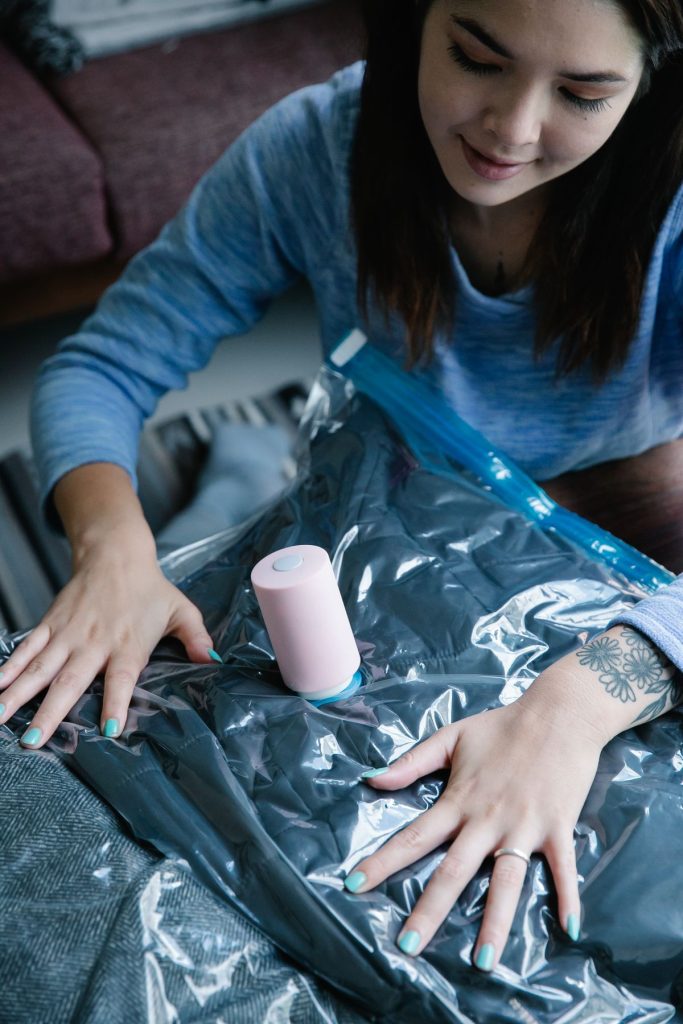
TL;DR: Flat vacuum storage bags reduce volume by up to 80% and work best for clothing, linens, and stackable storage. 3D (cube) bags offer 60-75% compression with a structured shape ideal for bulky bedding, pillows, and retail display. For B2B importers, a mixed product line — roughly 70% flat / 30% 3D — captures the broadest market demand, with flat bags driving volume sales and 3D bags commanding 20-40% price premiums. The global vacuum storage bag market is projected to reach $1.82 billion by 2030, growing at 8.2% CAGR.
What Is the Difference Between Flat and 3D Vacuum Storage Bags?
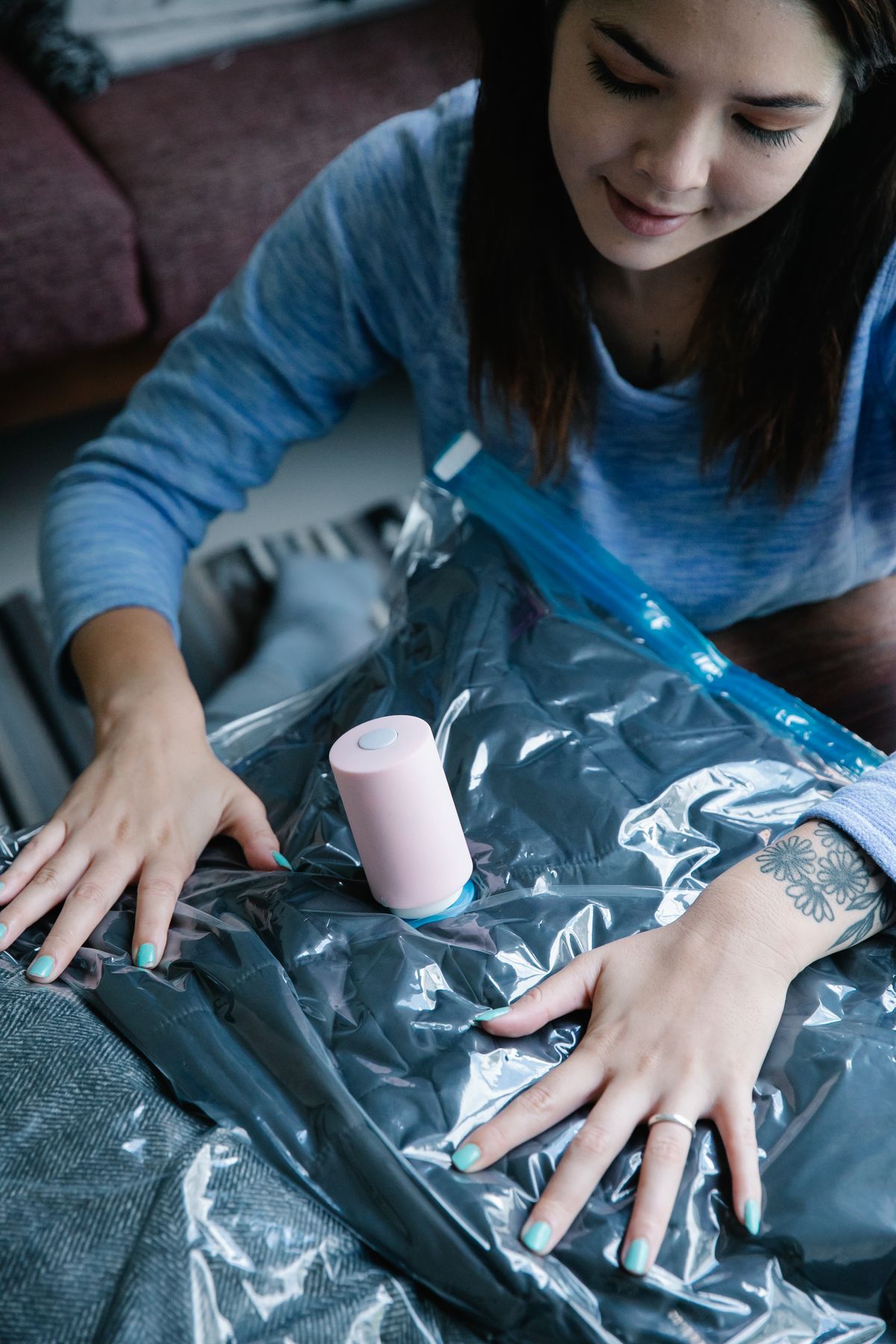
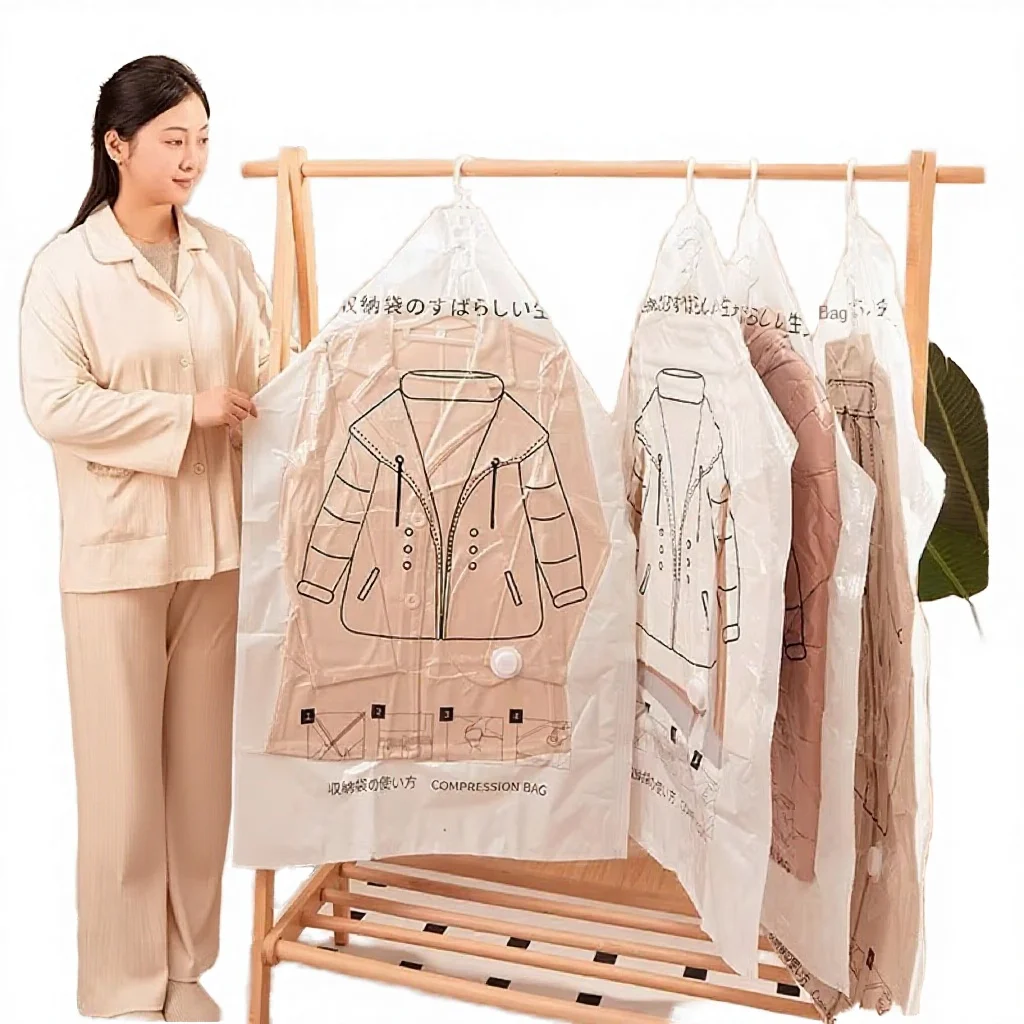
At the most basic level, the difference is structural. Flat vacuum bags are two-dimensional envelopes that compress contents into a slim, pancake-like profile. When air is extracted, the bag collapses uniformly around the contents, producing a compressed rectangle typically 2-5 cm thick. 3D vacuum bags (also called cube or立体 bags) feature gusseted side panels that expand into a box-like shape, maintaining structured dimensions even after vacuum sealing.
Both formats typically use PA+PE multi-layer coextruded film — polyamide (nylon) for tensile strength and puncture resistance, polyethylene for heat-sealing integrity and flexibility. The industry standard is 7-9 layer construction at 80-120 micron thickness, though premium variants reach 150+ microns for food-grade applications (Source: Alibaba.com Vacuum Bag Configuration Guide 2026).
Flat vs 3D Vacuum Bags: Head-to-Head Comparison
| Feature | Flat Vacuum Bags | 3D (Cube) Vacuum Bags |
|---|---|---|
| Volume Reduction | 75-80% | 60-75% |
| Compressed Shape | Flat, pancake-like (2-5 cm thick) | Structured cube/box shape |
| Best For | Clothing, linens, towels, curtains | Comforters, pillows, stuffed toys, bulky bedding |
| Stackability | Excellent — lie flat under beds, on shelves | Good — stack neatly but take more vertical space |
| Vacuum Retention | 30-90 days (PA+PE, 100+ micron) | 30-90 days (same material spec) |
| Typical Sizes | 50×70cm to 100×120cm | 50×50×30cm to 80×60×40cm |
| FOB Unit Cost (China) | $0.15-$0.45 | $0.40-$1.20 |
| Retail Price Point | $8-$20 per multi-pack | $15-$35 per multi-pack |
| Perceived Value | Standard, functional | Premium, “heavy-duty,” gift-ready |
| E-Commerce Returns | 5-8% (seal failure, size mismatch) | 3-5% (fewer size complaints, sturdier feel) |
Which Format Sells Better in Key B2B Markets?
Market demand varies significantly by region and sales channel. Based on Alibaba.com trade data, the category has seen 22.89% year-over-year buyer growth with a supply-demand ratio of 1.52 — meaning demand slightly exceeds supply for well-configured products (Source: Alibaba.com Seller Blog).
- North America (Amazon FBA / Walmart): Flat bags dominate 65-70% of listings. American consumers prioritize maximum compression for seasonal storage — winter coats, holiday bedding, and off-season clothing. 3D bags are growing in the “moving and relocation” and “college dorm” subcategories, where structured packing is preferred.
- Europe (Amazon EU / Bol.com / Otto): A more balanced split — roughly 55% flat / 45% 3D. European consumers show stronger preference for 3D bags for bedding and duvet storage. Sustainability-conscious buyers in Germany and the Nordics favor reusable 3D bags marketed as “long-term storage solutions” rather than disposable compression products.
- Middle East & Southeast Asia: Flat bags lead at 70%+. Price sensitivity is higher in these markets, and the lower per-unit cost of flat bags makes the value proposition clearer at retail.
For B2B importers building a product line, the data points to a 70/30 flat-to-3D ratio as the optimal starting mix for general-purpose inventory, with adjustments based on target region and sales channel.
How Do Margins Compare Between Flat and 3D Vacuum Bags?
3D bags cost 2-3× more at the FOB level but command proportionally higher retail prices, often yielding stronger per-unit margins for importers. Here is a representative margin breakdown for a mid-range PA+PE product:
| Metric | Flat Bag (6-pack) | 3D Bag (4-pack) |
|---|---|---|
| FOB Cost (per set) | $1.20-$2.70 | $1.60-$4.80 |
| Sea Freight (per set, LCL) | $0.15-$0.30 | $0.25-$0.50 |
| Landed Cost (per set) | $1.35-$3.00 | $1.85-$5.30 |
| Typical Amazon Retail | $12.99-$19.99 | $19.99-$34.99 |
| Gross Margin | 75-85% | 80-90% |
| FBA Fee (standard size) | $4.50-$5.50 | $5.50-$7.00 |
| Net Margin (after FBA) | 40-55% | 45-60% |
The higher perceived value of 3D bags — they look more “premium” in product photos and feel sturdier in hand — directly translates to lower return rates (3-5% vs 5-8% for flat bags). This reliability premium makes them particularly attractive for brand-building private label sellers. The global e-commerce packaging market continues to expand rapidly, with sustainability becoming a key differentiator (Source: McKinsey Sustainability in Packaging Survey).
Why Material Quality Matters More Than Format
Whether flat or 3D, the single biggest determinant of bag performance is material grade. A poorly made 3D bag with single-layer PE (60-80 microns) will fail faster than a quality flat bag with 9-layer PA+PE coextrusion at 100+ microns. Key material specifications to verify when sourcing:
- Oxygen transmission rate (OTR): Below 50 cc/m²/day ensures long-term vacuum retention
- Moisture vapor transmission rate (MVTR): Below 5 g/m²/day prevents humidity ingress
- Tensile strength: 35-55 MPa (PA+PE) vs 15-25 MPa (PE-only) — 2-3× stronger
- Puncture resistance: 3-5× higher with PA+PE vs single-layer PE
- Reusability cycles: 10-20+ for quality PA+PE vs 3-5 for budget PE
The global flexible packaging industry is increasingly focused on circular economy principles, with 40% of all plastic produced going into packaging applications (Source: Ellen MacArthur Foundation — Plastics Initiative). For vacuum bag importers, specifying recyclable or reusable PA+PE structures aligns with both European PPWR regulations and growing consumer demand for sustainable packaging.
B2B Sourcing Checklist: 7 Questions to Ask Your Vacuum Bag Supplier
Before committing to a production run — whether flat, 3D, or both — verify these seven points with your factory:
- What is the exact layer structure? Request the full coextrusion breakdown (PA/tie/core PA/tie/PE for 5-layer; ask if 7 or 9 layers are available for premium lines).
- What is the micron tolerance? Insist on ±5 micron tolerance. Bags that measure 70 microns when ordered at 100 will fail in the field.
- Which valve type is used? Slide valves, push-pull valves, and self-sealing membranes each have different failure rates. Request valve-cycle testing data (minimum 20 open/close cycles).
- Do you provide third-party lab reports? Acceptable: SGS, Intertek, or TÜV reports for OTR, MVTR, tensile strength, and heavy metal content.
- What certifications do you hold? CE marking (EU), FDA compliance (US food contact), REACH (EU chemicals), and BSCI (social compliance) are baseline expectations for Western markets.
- Can you produce both flat and 3D formats? A supplier that can manufacture both formats on the same production line offers logistical simplicity and consolidated shipping.
- What is your MOQ per format? Flat bags typically MOQ 1,000-5,000 units; 3D bags MOQ 500-2,000 units. Negotiate mixed-container MOQs to test both formats without overcommitting.
How Does Direct Factory Sourcing Affect Your Format Decision?
When sourcing directly from Chinese manufacturers — bypassing trading companies and Alibaba middlemen — the cost differential between flat and 3D bags narrows. Factory-direct pricing for flat bags can drop to $0.10-$0.30/unit, while 3D bags range $0.30-$0.90/unit at volume. This makes it economically viable to stock both formats from day one rather than starting with one and expanding later.
Leading manufacturing hubs like Qingdao (Shandong province) specialize in mid-to-high-end PA+PE vacuum bags with CE and FDA certifications. Factories in this region typically operate at 95%+ automation rates and can switch between flat and 3D formats on the same coextrusion and sealing lines — reducing changeover costs and enabling smaller minimum order quantities for mixed-format orders. For a deeper dive into evaluating suppliers, see our factory visit checklist and size selection guide.
The Bottom Line: Which Format Should You Stock?
For most B2B importers, the answer is both — but with a clear strategic split. Launch with a 70% flat / 30% 3D product mix, using flat bags as your volume SKUs (high search volume, competitive pricing) and 3D bags as your margin and differentiation SKUs (lower competition, higher perceived value). As the vacuum storage market continues its 8%+ annual growth trajectory — driven by urbanization, e-commerce expansion, and the global minimalist living movement — having both formats positions your brand to capture demand across every channel and use case.
Ready to source both flat and 3D vacuum storage bags from a certified factory? Contact Qingdao Sanyuan for mixed-format quotations, material samples, and MOQ flexibility. Or browse our full product range to see available configurations.
Frequently Asked Questions
Can flat and 3D vacuum bags use the same valve type?
Yes. Both formats can be configured with slide valves, push-pull valves, or self-sealing membranes. The valve type is independent of the bag format — it is specified separately in the bill of materials. Most factories offer the same valve options across both flat and 3D product lines, simplifying inventory management for importers who stock both formats.
Which format has better Amazon FBA fee efficiency?
Flat bags generally have an edge because their compressed packaging profile often falls into smaller FBA size tiers (small standard vs large standard). However, the difference is typically $0.50-$1.50 per unit — not enough to outweigh the margin advantage of 3D bags in premium market segments. Our dimensional weight shipping guide covers FBA fee optimization in detail.
Do European PPWR regulations affect flat vs 3D bag compliance differently?
No. The EU Packaging and Packaging Waste Regulation (PPWR) regulates material composition and recyclability, not bag geometry. Both flat and 3D formats must meet the same recyclability thresholds and chemical safety standards. The key compliance factor is material grade (recyclable mono-material or designated recyclable multi-layer), not format. See our PPWR compliance guide for the 2026-2040 timeline.
What is the minimum order quantity for a mixed flat+3D order?
Most Chinese vacuum bag factories accept mixed-format orders with combined MOQs of 3,000-5,000 total units, split across formats. For example, 2,000 flat bags + 1,000 3D bags shipped in one container is common. Negotiate this specifically during quotation — some factories default to per-format MOQs unless you ask for a combined minimum.