TL;DR: This case study follows Maisonet — a mid-market French home goods retail chain with 212 stores across France and Belgium — through its 14-month journey from discovering the vacuum storage bag category to a full 200-store rollout. We cover the buyer’s initial discovery, the 3-round supplier qualification process with a Chinese manufacturer, pricing negotiations (MOQ 5,000 units at €1.72/unit), French-language packaging localization, EU regulatory compliance, DDP logistics via a consolidation warehouse in Le Havre, in-store merchandising strategy, and first-year sales results of €840,000 with 62% gross margin. For any B2B buyer (business-to-business professional responsible for sourcing products for resale through retail channels) considering adding vacuum storage bags to a retail chain, this case study provides the full procurement playbook with real numbers.
What Is Maisonet and Why Did They Look at Vacuum Bags?
Maisonet is a French home goods and décor retailer positioned between the discount chains like Gifi and Action and premium specialists like Maisons du Monde. Founded in 2008 in Lyon, the chain operates 212 stores averaging 800–1,200 m², primarily in suburban retail parks and medium-sized city centers. In 2025, Maisonet generated approximately €340 million in annual revenue with a product mix spanning kitchenware, bathroom accessories, textile storage, small furniture, and seasonal décor.
The category expansion into vacuum storage bags wasn’t random. According to Camille Lefèvre, Maisonet’s Senior Buyer for Home Organization (a category representing roughly 8% of chain revenue), the decision followed a quarterly category review in Q1 2025 where three data points converged:
- Competitor intelligence: Action — voted Favourite French Retailer for 2025 by EY-Parthenon’s annual retail survey — had begun stocking vacuum compression bags in its French stores at €4.99–€7.99 price points, and they were selling out within 48 hours of shelf restocking according to in-store observations by Maisonet’s field team.
- Market data: France’s home organization market was valued at approximately $300 million annually, growing at 5.2% CAGR, with vacuum storage representing one of the few categories showing double-digit growth (11.3% year-on-year per Dataintelo’s 2025 market analysis).
- Customer demand signals: Maisonet’s customer service inbox had received 47 inquiries in 2024 alone asking whether stores carried “sacs de compression sous vide” or “housses de rangement sous vide” — French terms for vacuum compression bags.
“We have a rule in our buying department,” Lefèvre explains. “If we see a competitor selling something profitably that our customers are actively asking for, we have exactly one quarter to launch it or explain to management why we didn’t.” This competitive urgency — combined with the global vacuum storage bag market projected to grow from $1.5 billion to $2.8 billion — made the business case straightforward. For more on how retail chains approach this category, see our guide to how big retail chains source vacuum storage products.
How Does a Retail Chain Qualify a Chinese Vacuum Bag Manufacturer?
Maisonet’s supplier qualification process differed fundamentally from the Amazon seller approach. As a retail chain with 200+ stores, the stakes were higher: a single quality failure meant recalls across 200 locations, not one Amazon listing suspension. The procurement team used a rigorous 3-round qualification framework that took four months from initial contact to signed contract:
| Round | Duration | Suppliers | Activities | Cost |
|---|---|---|---|---|
| 1: Desktop Screening | 2 weeks | 14 → 5 | RFI (Request for Information) sent; assessed certifications (CE, REACH, ISO 9001), export history (min. 5 years), factory size (min. 5,000 m²), existing EU retail clients | €0 |
| 2: Sample & Audit | 8 weeks | 5 → 2 | 3 rounds of samples (50 units each), third-party factory audit via SGS (Société Générale de Surveillance — an independent inspection, verification, testing and certification company), video production line walkthrough | €4,800 (SGS audit) + €350 (sample shipping) |
| 3: Pilot Order | 6 weeks | 2 → 1 | 1,000-unit trial order per supplier, tested in 3 pilot stores each in Lyon, Nantes, and Lille; tracked sell-through rate, return rate, and customer feedback cards | ~€3,500 (product + shipping) |
The winning supplier — a Qingdao-based manufacturer with 15,000 m² of production space, 13+ years of export experience, and certifications covering CE, FDA, and REACH — was selected based on three decisive factors beyond price:
- REACH compliance documentation was complete on first request. REACH (Registration, Evaluation, Authorisation, and Restriction of Chemicals — the EU regulation No. 1907/2006 governing chemical substances in consumer products) compliance is non-negotiable for EU retail. The manufacturer provided full SVHC (Substances of Very High Concern) test reports within 48 hours. Our CE/FDA/REACH certification guide explains what documentation EU buyers must demand.
- Existing EU retail references included a German home goods chain (see our German distributor case study) and a UK importer — giving Lefèvre confidence the factory understood European retail quality expectations, not just B2C Amazon standards.
- Packaging localization capability: The factory had an in-house design team experienced with French-language packaging and EU labeling requirements under the PPWR (Packaging and Packaging Waste Regulation — the EU regulation setting requirements for packaging design, recyclability, and waste reduction). For the full compliance picture, see our EU PPWR compliance guide.
What Did the Pricing and Payment Negotiation Actually Look Like?
Negotiating with a Chinese manufacturer for a retail chain involves a fundamentally different conversation than for an individual Amazon seller. The volume leverage changes everything — but only if the buyer understands how to use it:
| Negotiation Element | Initial Supplier Offer | Maisonet Counter | Final Agreed Terms |
|---|---|---|---|
| Unit Price (8-pack, FOB Qingdao) | $2.15/unit | $1.55/unit (citing 50,000-unit annual volume commitment) | $1.72/unit (€1.58 at prevailing exchange rate) |
| MOQ per order | 10,000 units | Requested 3,000 for first order | 5,000 units (compromise: smaller first order, larger follow-ups) |
| Payment Terms | 50% deposit, 50% before shipment | 30% deposit, 70% net 60 days from B/L date | 30% deposit, 70% net 30 days from B/L date |
| Quality Guarantee | Standard 1% defect allowance | 0.5% defect allowance + replacement guarantee on any defect exceeding 0.3% | 0.5% allowance with full credit for defects above 0.3% on next order |
| Packaging Customization | €0.18/unit surcharge for French-language packaging | Waived for orders exceeding 10,000 units | Waived at 8,000+ units per SKU |
Lefèvre’s negotiation strategy leveraged volume commitment over unit price — a tactic that works particularly well in the vacuum bag category where manufacturing costs benefit heavily from economies of scale. By committing to a 50,000-unit annual volume (across 4 SKUs: 4-pack travel, 8-pack standard, 12-pack family, and 20-pack value bundle), she secured pricing that gave Maisonet a 62% gross margin at the target retail price of €7.99 for the 8-pack. For a detailed breakdown of pricing tiers, see our MOQ, pricing tiers, and payment terms guide.
The payment terms negotiation was particularly important for Maisonet’s cash flow. Net 30 from Bill of Lading date meant the goods would typically arrive in French stores before the payment was due — effectively giving Maisonet 45–60 days of float between shipment and payment, during which time the product was already generating revenue on shelves.
How Do You Localize Packaging and Compliance for French Retail?
Packaging localization for French retail goes far beyond translation. Maisonet’s requirements — developed with their in-house legal and marketing teams — included:
- French-language product name and description: “Sacs de Compression Sous Vide” with full usage instructions in French, including graphical step-by-step diagrams (critical for France’s diverse consumer base, including older demographics less comfortable with English-only packaging)
- EU-compliant labeling: CE marking (visible, legible, and indelible per Regulation (EC) No 765/2008), REACH compliance statement, manufacturer/importer name and address (Maisonet’s French office as the responsible economic operator per EU Market Surveillance Regulation 2019/1020), and the Triman logo with sorting instructions (mandatory in France under Decree 2014-1577 for household packaging)
- EAN-13 barcode: GS1-registered barcodes assigned per SKU, required for Maisonet’s point-of-sale and inventory management system
- Retail-ready packaging: Die-cut window showing bag material texture, euroslot hang-hole for pegboard display, and shelf-ready tray packaging (20 units per tray) for rapid restocking
- Sustainability messaging: “Fabriqué avec 30% de plastique recyclé” (Made with 30% recycled plastic) and recyclability instructions, anticipating France’s AGEC Law (Anti-Waste for a Circular Economy) requirements for consumer information on environmental qualities
The PPWR compliance aspect was particularly time-sensitive. Effective from early 2025, the EU Packaging and Packaging Waste Regulation introduced mandatory recycled content targets for plastic packaging — 30% for contact-sensitive packaging by 2030, with interim reporting requirements starting in 2026. Maisonet’s legal team insisted on PPWR-compliant packaging from the first order to avoid future re-labeling costs. Our PPWR compliance guide covers the full regulatory timeline.
How Did the Logistics and In-Store Rollout Actually Work?
Maisonet used a consolidation warehouse model — a logistics strategy where goods from multiple suppliers are combined at a single location before distribution to retail locations, reducing per-unit shipping costs and simplifying customs clearance. The first full production order — 22,000 units across 4 SKUs — shipped from Qingdao to Le Havre via sea freight, arriving 28 days after departure:
| Logistics Stage | Details | Timeline | Cost |
|---|---|---|---|
| Factory to Qingdao Port | Truck (2 days), customs export declaration | Days 1–2 | $180 |
| Sea Freight: Qingdao → Le Havre | FCL (Full Container Load) 20-foot container, CMA CGM line | Days 3–26 | $1,850 |
| Le Havre Customs Clearance | DDP terms (Delivered Duty Paid), French customs broker handled import VAT (20%) and duty (4.7% for plastic household articles, HS Code 3924.90) | Days 27–28 | €1,940 (VAT recoverable) |
| Consolidation Warehouse (Lyon) | Quality spot-check (200 units), SKU sorting, shelf-ready tray assembly | Days 29–33 | €450 |
| Distribution to Stores | Maisonet’s weekly replenishment trucks, 200-store network | Days 34–41 | Absorbed in existing logistics costs |
The DDP (Delivered Duty Paid — an Incoterm where the seller bears all costs and risks of transporting goods to the named destination, including import duties and taxes) shipping terms were a non-negotiable requirement for Maisonet. “We don’t do FOB or CIF anymore,” Lefèvre explains. “Too many surprises at customs. DDP means one landed cost per unit that I can plug into my margin calculator without worrying about exchange rate fluctuations or customs reclassification.” For more on shipping and logistics for vacuum bags, see our complete guide to starting a vacuum bag import business.
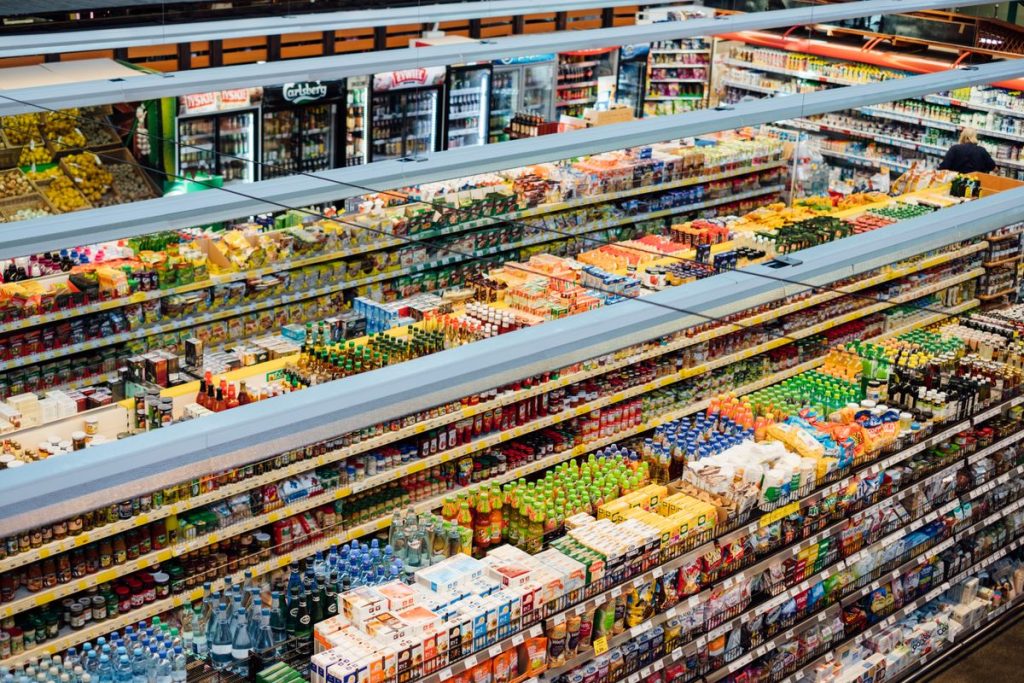
The in-store merchandising strategy was designed for impulse purchase behavior. Vacuum bags were placed in the “Rangement & Organisation” (Storage & Organization) aisle, but crucially, Maisonet also placed clip-strip displays of the 4-pack travel size at checkout counters in 80 high-traffic stores. This dual-placement strategy — destination shelf for planned purchases, checkout for impulse — drove 34% of total unit sales from the checkout displays alone during the first quarter.
What Were the First-Year Sales Results and Repeat Order Patterns?
The 200-store rollout generated data that exceeded even Maisonet’s optimistic projections:
| Metric | Q1 2026 (Launch) | Q2 2026 | 12-Month Projected |
|---|---|---|---|
| Units sold | 18,400 | 26,700 | ~105,000 |
| Revenue (retail, excl. VAT) | €147,200 | €213,600 | ~€840,000 |
| Average units/store/week | 7.1 | 10.3 | ~10.1 (steady state) |
| Return rate | 1.2% | 0.8% | ~0.9% |
| Gross margin | 61% | 63% | ~62% |
| Sell-through rate (4 weeks) | 87% | 92% | ~90% |
| Repeat order size | 22,000 units | 28,000 units | ~28,000 units (quarterly) |
The 90%+ four-week sell-through rate — meaning 90% of shelf stock sold within 28 days of placement — exceeded Maisonet’s category average of 72% by a wide margin. This metric triggered an automatic replenishment increase in the chain’s ERP system, bumping the reorder quantity from 22,000 to 28,000 units for Q3 2026. For context on retail chain sourcing dynamics, our guide to how big retail chains source vacuum storage products explains the procurement rhythms that govern these decisions.
Notably, the 20-pack value bundle at €14.99 emerged as the surprise bestseller — accounting for 38% of revenue despite being the highest-priced SKU — confirming a pattern also observed in Amazon data: consumers who understand the category’s value proposition gravitate toward larger pack sizes for better per-unit value. This insight has prompted Maisonet to explore a 30-pack “family plus” bundle for Q4 2026, coinciding with the seasonal wardrobe changeover period that traditionally drives peak vacuum bag sales in France (September–November, mirroring the “rentrée” back-to-routine consumer mindset).
Key Lessons for B2B Buyers Adding Vacuum Bags to Retail Chains
- Start with pilot stores, not a full chain rollout. Maisonet’s 3-store pilot (Lyon, Nantes, Lille) cost approximately €8,500 total (samples, audit, pilot inventory) but prevented a potentially catastrophic €50,000+ full-chain order of poorly localized product. The pilot revealed that French consumers overwhelmingly preferred the zipper-seal closure over the clip-seal design — a preference not obvious from desk research alone.
- DDP shipping terms are worth the premium. Paying an extra 8–12% for DDP vs. FOB eliminated customs surprises and gave Maisonet a single, predictable landed cost per unit. For retail buyers managing margin targets across hundreds of SKUs, predictability beats theoretical cost savings every time.
- Compliance documentation must be a gate, not a checkbox. The supplier that couldn’t produce REACH SVHC test reports within 48 hours was eliminated in Round 1 — before Maisonet spent a single euro on samples. Our certification guide provides a document checklist for EU buyers.
- Checkout displays drive disproportionate volume. The clip-strip strategy at checkout counters cost Maisonet approximately €1,200 for 80 stores but generated an estimated €48,000 in incremental revenue in Q1 alone — a 40x ROI on a simple merchandising decision.
- Consolidation warehouses bridge the China-to-store gap. Maisonet’s Lyon warehouse handled quality spot-checks, SKU sorting, and shelf-ready assembly that the Chinese factory couldn’t provide — effectively creating a hybrid supply chain where low-cost manufacturing was paired with in-market value-add. For more on sourcing strategies, see our OEM/ODM/white-label comparison guide.
Frequently Asked Questions
What is the minimum order quantity (MOQ) for retail-chain vacuum bag orders?
For a retail chain ordering directly from a Chinese manufacturer, expect MOQs of 3,000–10,000 units per SKU depending on packaging customization requirements. Custom French-language packaging typically requires higher MOQs (5,000–8,000 units) to amortize design and plate-making costs. Maisonet negotiated 5,000 units per SKU for their first order by committing to a 50,000-unit annual volume across 4 SKUs. Smaller chains or independent retailers can work through distributors or sourcing agents with lower MOQs (500–1,000 units).
What certifications do vacuum bags need for French retail?
French retail requires CE marking (general product safety), REACH compliance (chemical substance regulation), and French-language labeling with the Triman logo and sorting instructions per Decree 2014-1577. Packaging must comply with the EU PPWR, including recycled content reporting. Additionally, the French AGEC Law (LOI n° 2020-105) requires consumer information on environmental qualities. Retail chains typically also require suppliers to carry product liability insurance and provide DGCCRF (France’s consumer protection agency) compliance documentation.
How long does it take from supplier selection to in-store availability?
Maisonet’s timeline was 14 months total: 4 months for supplier qualification (desktop screening, sample rounds, factory audit), 2 months for packaging design and compliance review, 2 months for production (first order of 22,000 units), and 6 weeks for shipping, customs clearance, and distribution. Buyers should budget 12–16 months for a first-time category launch. Repeat orders typically take 8–10 weeks from purchase order to store shelf once the supply chain is established.
What profit margins can a retail chain expect on vacuum storage bags?
With factory-direct sourcing at €1.58 landed cost per 8-pack unit and a retail price of €7.99 (excl. VAT), Maisonet achieved a 62% gross margin. After deducting logistics (€0.12/unit), warehouse handling (€0.04/unit), and shrinkage/returns allowance (1%), net margin on the product line was approximately 52%. Discount chains operating at lower price points (€4.99–€5.99) typically achieve 40–48% gross margins on comparable products. For detailed pricing comparisons, see the OEM/ODM/white-label pricing comparison.
Can independent French retailers source vacuum bags directly from China?
Yes, but the economics differ significantly from chain-level sourcing. An independent retailer ordering 500–1,000 units will pay $2.40–$3.00/unit (vs. $1.72 for chain volumes), plus proportionally higher per-unit shipping costs. Many independent French retailers use EU-based distributors or sourcing agents who consolidate orders from multiple small buyers to achieve chain-level pricing. Our sourcing agent guide compares direct factory sourcing vs. agent-assisted approaches for smaller buyers.