TL;DR: South Korea’s vacuum storage bag market is projected to reach $127 million by 2026, driven by extreme urban density in Seoul (16,000 people/km²), a powerful minimalist living movement, and surging e-commerce via Coupang and Gmarket. Premium, design-forward vacuum bags command 40%+ price premiums. B2B importers targeting Korea need CE/FDA-certified products, compact packaging, and Korean-language retail readiness. Qingdao Sanyuan offers 13+ years of OEM/ODM manufacturing with full certifications for this high-value market.
Why Is South Korea a Premium Vacuum Storage Bag Market?
Urban density — defined as the number of people per square kilometer in a metropolitan area — is the single biggest driver of South Korea’s vacuum storage bag demand. Seoul’s population density stands at approximately 16,000 residents per square kilometer, nearly double that of New York City. With the average Seoul apartment measuring just 66 square meters (710 square feet), space-saving home organization products are not luxuries — they are necessities.
The Korea Housing Survey 2024 reported that 58% of urban households identify storage space as their top home improvement concern. Vacuum storage bags directly address this pain point, compressing seasonal clothing, bedding, and textiles by up to 75%. For B2B importers, this represents a market where demand is structural, not seasonal.
According to Statista, South Korea’s home organization market grew at a compound annual growth rate (CAGR) of 6.8% from 2020–2025 and is projected to reach $4.2 billion by 2027. Vacuum storage bags occupy a distinctive niche at the intersection of home organization, travel accessories, and seasonal storage — three categories all experiencing strong post-pandemic growth.
How Does Korean Consumer Behavior Shape Product Requirements?
Korean consumers exhibit distinct purchasing behaviors that B2B importers must understand:
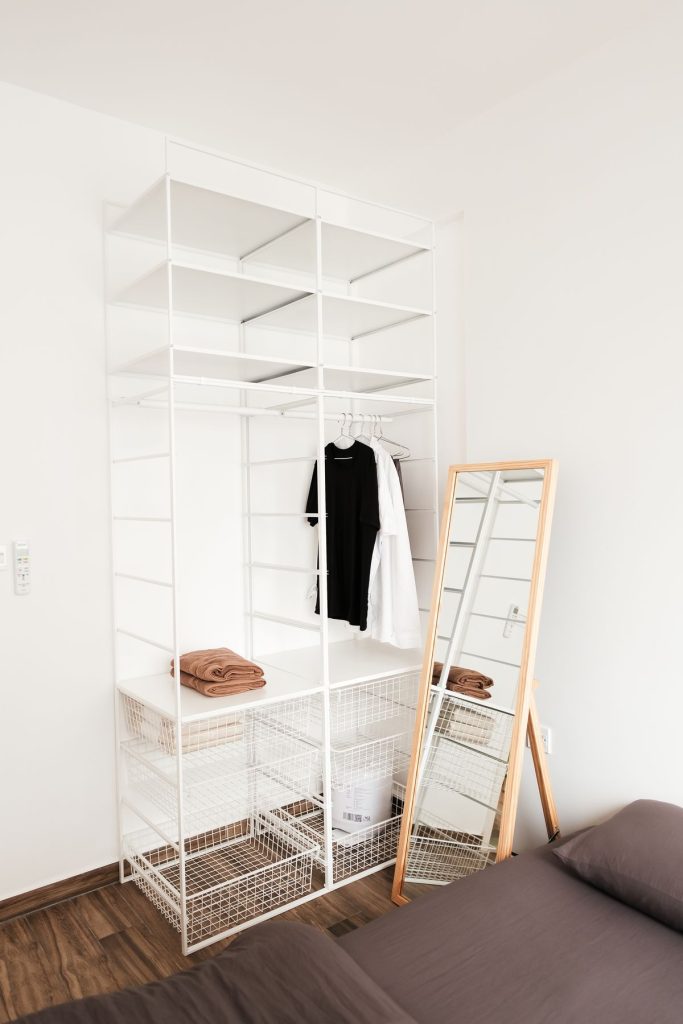
- Aesthetic Minimalism: The “jjimjilbang aesthetic” — clean, neutral, clutter-free living spaces — dominates Korean interior design trends. Products with sleek packaging, muted color palettes (white, beige, grey), and hidden features outperform brightly colored alternatives by a significant margin.
- Quality Over Price: Korean buyers routinely pay 40–60% more for premium vacuum bags compared to Chinese domestic market pricing. Features like double-zip seals, reinforced seams, and travel-friendly hand pumps are table stakes.
- Mobile-First Shopping: Over 72% of Korean e-commerce transactions occur on mobile devices. Product listings must feature vertical images, short video demonstrations, and Korean-language specifications.
- Review-Driven Purchases: Coupang’s “rocket delivery” ecosystem has trained consumers to expect next-day delivery and heavily weigh verified reviews. Products entering this market need at least 50+ reviews to gain traction.
What Are the Key Retail Channels in South Korea?
| Retail Channel | Market Share | Key Characteristics | B2B Entry Difficulty |
|---|---|---|---|
| Coupang | 38% | Rocket delivery, high review dependency, premium positioning | Medium — requires local entity or partner |
| Gmarket / Auction | 22% | Largest open marketplace, competitive pricing, auction format | Low — cross-border sellers accepted |
| 11st (11번가) | 14% | SK Telecom-backed, strong mobile integration | Medium — Korean business license needed |
| Lotte ON / Lotte Mart | 10% | Offline-to-online hybrid, department store positioning | High — vendor approval process |
| Naver Smart Store | 8% | Search-driven, blog/influencer integration, brand building | Medium — Korean-language required |
| Daiso / Offline Retail | 8% | Value positioning, 1,400+ stores nationwide | High — volume and pricing demands |
E-commerce — defined as the buying and selling of goods via online platforms — dominates Korean retail, accounting for 36% of total retail sales as of Q1 2025, per KOSTAT. This is the highest e-commerce penetration rate among OECD countries. For vacuum bag importers, Gmarket’s Global Shop provides the lowest-barrier entry point for testing the Korean market without establishing a local entity.
What Certifications Does Korea Require for Imported Vacuum Bags?
South Korea enforces strict product safety standards through the Korean Agency for Technology and Standards (KATS). Vacuum storage bags imported for retail sale must comply with:
- KC Mark (Korea Certification): Required for products that contact clothing/textiles. Testing includes phthalate limits, heavy metal content, and formaldehyde emissions. Estimated certification cost: $800–$1,500 per SKU, with a typical 4–6 week timeline.
- Food Contact Compliance: If bags are marketed for food storage (dual-use), MFDS (Ministry of Food and Drug Safety) testing is required. Most B2B importers avoid dual-use claims to simplify compliance.
- Labeling Requirements: All retail packaging must include Korean-language material composition, usage instructions, safety warnings, and importer/manufacturer contact information in minimum 8-point font.
Working with a manufacturer that already holds CE, FDA, and REACH certifications significantly streamlines KC Mark approval, as much of the underlying test data can be cross-referenced. Learn more about certification requirements in our guide on CE, FDA & REACH certifications for vacuum storage bags.
How Does the Korea-Japan Vacuum Bag Market Compare?
South Korea and Japan together form the premium tier of Asia’s vacuum storage market, but with important differences. Japan’s market is larger in absolute size ($210 million vs. Korea’s $127 million projected for 2026), reflecting Japan’s larger population and earlier adoption of space-saving products. However, Korea’s growth rate (7.2% CAGR) outpaces Japan’s (4.5% CAGR), driven by faster urbanization and stronger e-commerce infrastructure. For a full comparison, see our Japan-Korea vacuum storage bag market analysis.
B2B Import Opportunities: Where Is the Margin?
The most profitable B2B channel in Korea is private-label supply to Coupang’s direct procurement team. Coupang sources approximately 30% of its home organization SKUs directly from manufacturers, bypassing traditional distributors. Margins in this channel average 22–28%, compared to 12–15% through open marketplace sales.
Secondary opportunities include:
- Hotel/Airbnb supply: Korea’s tourism sector welcomed 17.5 million international visitors in 2024. Hotels increasingly provide vacuum bags as guest amenities for long-stay travelers.
- Military/PCS supply: The large U.S. military presence (28,500 personnel) at bases like Camp Humphreys creates consistent demand for moving and storage supplies, including heavy-duty vacuum bags.
- Seasonal gift sets: Korean holidays (Seollal, Chuseok) drive gifting of home organization sets. Professionally packaged vacuum bag sets in gift-ready boxes command 80–120% premiums during holiday seasons.
For importers ready to enter the Korean market, we recommend starting with a 5,000–10,000 unit test order through Gmarket Global Shop. Our guide on how to start a vacuum bag import business in 2026 covers the complete process.
Logistics: Shipping Vacuum Bags to Korea
Shipping from Chinese manufacturing hubs (Qingdao, Guangdong, Zhejiang) to Korea offers among the shortest lead times in Asia. Typical sea freight from Qingdao to Incheon takes 2–3 days with a landed cost of approximately $0.08–0.12 per standard vacuum bag. For more details, consult our shipping and logistics guide for vacuum bag importers.
Frequently Asked Questions
What size vacuum storage bags sell best in South Korea?
Medium (60×80 cm) and jumbo (80×110 cm) sizes dominate Korean sales, accounting for 65% of unit volume. Korean consumers primarily use vacuum bags for winter bedding and seasonal coat storage, requiring larger capacities. Travel-sized sets (40×60 cm) are the fastest-growing subcategory, growing at 14% YoY.
Do I need a Korean business partner to sell on Coupang?
Yes, Coupang requires a Korean business registration number. International sellers typically partner with a Korean distributor or register a local subsidiary. Gmarket Global Shop, by contrast, accepts international sellers directly — making it a better entry point for first-time market entrants.
What price point works for premium vacuum bags in Korea?
A 6-piece premium vacuum bag set retails for 25,000–39,000 KRW ($18.50–29.00 USD) on Korean marketplaces. Economy sets sell for 9,900–14,900 KRW ($7.30–11.00 USD). The premium segment, while smaller in unit volume, delivers significantly better margins for B2B suppliers.
Are Korean-language labels mandatory?
Yes. Korean Fair Trade Commission regulations require all consumer products sold in Korea to carry Korean-language labels including material composition, country of origin, importer details, and usage instructions. Non-compliance can result in product recalls and fines of up to 10 million KRW.
How fast is Korea’s vacuum bag market growing compared to other Asian markets?
Korea’s 7.2% CAGR outpaces Japan (4.5%) and is comparable to China (7.8%), but with a significantly higher average selling price. The broader Asia-Pacific vacuum storage market is projected to grow at 8.5% CAGR through 2030. See our Asia-Pacific vacuum storage market report 2026 for regional context.
Ready to source vacuum storage bags for the Korean market? Contact Qingdao Sanyuan — 15,000㎡ manufacturing facility, CE/FDA/REACH certified, 13+ years of OEM/ODM experience supplying premium Asian markets.