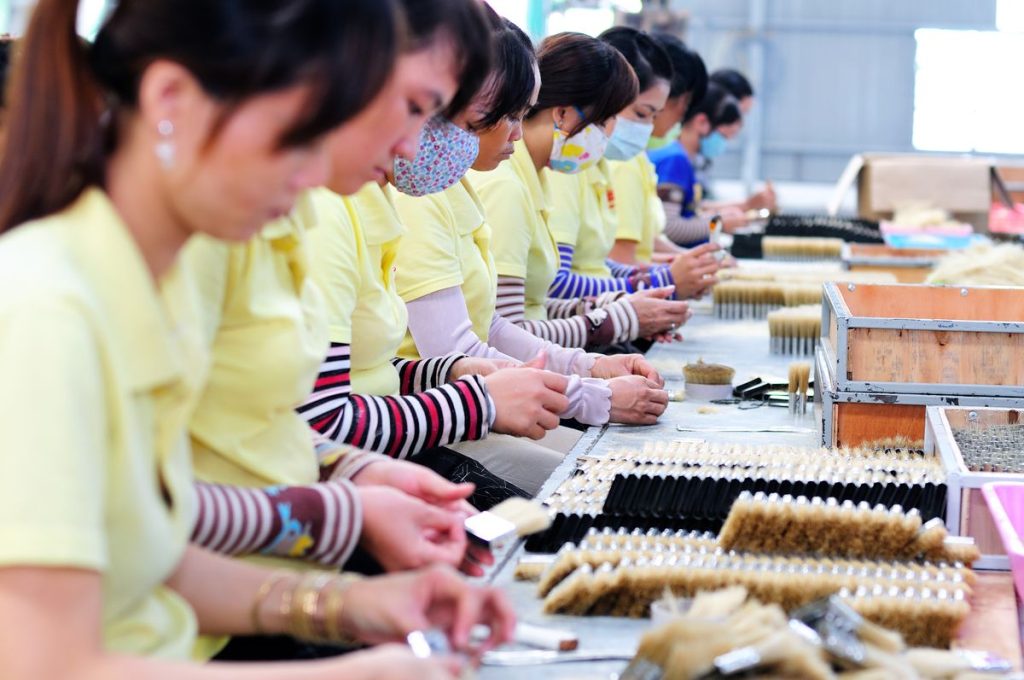
TL;DR: Southeast Asia’s vacuum bag manufacturing sector is undergoing rapid transformation as global importers embrace the China+1 strategy (a supply chain diversification approach where companies maintain Chinese manufacturing while developing secondary production bases in at least one other country). Vietnam leads with estimated 15–20% annual growth in plastics manufacturing FDI, followed by Thailand’s mature industrial base and Indonesia’s emerging capacity. However, China remains dominant with 65–70% of global vacuum bag production. This guide compares the manufacturing capabilities, labor costs, regulatory environments, and practical sourcing considerations across all three Southeast Asian hubs for B2B vacuum bag importers in 2026.
Why Is the China+1 Strategy Reshaping Vacuum Bag Manufacturing?
The China+1 strategy has accelerated dramatically since 2023, driven by three converging forces: US-China trade tensions and tariff escalation (Section 301 tariffs now cover many consumer plastic goods), COVID-era supply chain disruptions that exposed over-concentration risks, and rising Chinese manufacturing costs. For vacuum bag importers, China+1 is no longer theoretical—it’s a procurement imperative.
According to a 2025 survey by QIMA, 51% of US-based importers and 44% of EU-based importers reported actively diversifying sourcing away from China in the past 12 months. Vietnam captured approximately 40% of this redirected sourcing volume for consumer goods, making it the primary China+1 destination for vacuum bag manufacturing.
However, the reality is nuanced. Southeast Asian factories currently manufacture an estimated 12–15% of globally traded vacuum storage bags, with the remaining 65–70% still produced in China and 15–20% in other regions (Turkey, India, Eastern Europe). The gap stems from China’s unmatched ecosystem advantages: raw material supply chains (PE/PA film extrusion), mold-making capability, and a deep pool of experienced technicians. (Source: IMARC Engineering)
How Does Vietnam’s Vacuum Bag Manufacturing Capability Compare?
Vietnam has emerged as Southeast Asia’s most compelling vacuum bag manufacturing alternative, with approximately 25–35 dedicated plastics packaging factories capable of producing vacuum compression bags at export quality. The country’s advantages are substantial:
| Factor | Vietnam | China (Benchmark) | Notes |
|---|---|---|---|
| Monthly manufacturing labor cost (per worker) | $280–380 | $650–900 | Vietnam ~55–60% cheaper |
| Factory rental (per m²/month) | $2.50–4.50 | $3.50–6.50 | Competitive, varies by zone |
| PE/PA film raw material cost (per ton) | $1,350–1,550 | $1,100–1,350 | China 15–20% cheaper materials |
| MOQ per SKU (vacuum bags) | 5,000–10,000 | 3,000–5,000 | Higher MOQs due to smaller supplier base |
| Lead time (FOB, sea-ready) | 25–40 days | 15–25 days | Longer lead times in Vietnam |
| Export infrastructure quality | Improving (Cat Lai, Hai Phong) | World-class | Vietnam ports expanding rapidly |
Vietnam’s key manufacturing clusters for vacuum bags are concentrated around Ho Chi Minh City (Binh Duong, Dong Nai provinces) and Hai Phong/Hanoi in the north. The country benefits from 15 Free Trade Agreements (FTAs), including the EU-Vietnam FTA (EVFTA), which eliminates duties on qualifying Vietnamese-origin plastic products exported to the EU—potentially saving importers 6.5% compared to Chinese-origin goods.
However, Vietnam faces notable constraints. Rules of Origin (ROO, the criteria used to determine the national source of a product for trade purposes) under EVFTA require substantial transformation in Vietnam. Since most PE/PA film is imported from China or South Korea, meeting the 40–50% local value-add threshold can be challenging for basic vacuum bags where raw materials constitute 55–65% of COGS. (Source: Source of Asia)
What Role Do Thailand and Indonesia Play in Vacuum Bag Production?
Thailand offers the most developed alternative manufacturing base in Southeast Asia, with an established plastics processing sector that has served Japanese and Western OEMs for decades. Thailand’s vacuum bag manufacturing capacity is concentrated in the Eastern Economic Corridor (EEC), an advanced industrial zone spanning Chonburi, Rayong, and Chachoengsao provinces.
Thailand’s manufacturing advantages include:
- Higher automation levels: Thai factories average 40–50% automated production lines vs. 25–35% in Vietnam, resulting in more consistent quality
- Established quality certifications: ISO 9001, BRC, and ISO 14001 are common among Thai plastics exporters
- Skilled workforce: Thailand’s labor force has higher manufacturing experience per capita than Vietnam or Indonesia
- Competitive duty access: Thailand benefits from the ASEAN-China FTA and has applied for GSP renewal with the US
The trade-off is cost: Thai manufacturing labor averages $450–550/month, roughly 60–80% higher than Vietnam’s. Thailand is best suited for premium textile vacuum bags and branded product lines where quality consistency justifies the cost premium.
Indonesia represents the emerging market play. With a population of 280 million, the largest domestic market in Southeast Asia, and manufacturing labor costs of $200–300/month (the lowest in the region), Indonesia has long-term potential. However, current vacuum bag production capacity is limited to an estimated 8–12 factories with meaningful export capability. Infrastructure bottlenecks—particularly port congestion at Tanjung Priok (Jakarta) and inconsistent electricity supply in industrial zones—add 7–14 days to typical lead times compared to Vietnam.
For B2B importers, the most pragmatic approach is often hybrid sourcing: maintain core volumes with established Chinese suppliers while developing Vietnam as a 15–25% secondary source, then evaluate Thailand for premium lines once stable volume exists. Our guide to starting a vacuum bag import business covers sourcing strategy in depth.
How Do Southeast Asian Production Costs Compare to Chinese Manufacturing?
The total landed cost comparison between China and Southeast Asian origins reveals that the labor savings are partially offset by higher raw material costs and logistics inefficiencies. Here’s a comparison for a standard 10-pack vacuum compression bag set (FOB basis):
| Cost Component | China (FOB Shanghai) | Vietnam (FOB HCMC) | Thailand (FOB Laem Chabang) | Indonesia (FOB Jakarta) |
|---|---|---|---|---|
| Raw materials (PE/PA film + valve + zipper) | $0.58 | $0.67 | $0.64 | $0.68 |
| Direct labor | $0.12 | $0.07 | $0.09 | $0.06 |
| Manufacturing overhead | $0.10 | $0.12 | $0.13 | $0.11 |
| Packaging & labeling | $0.08 | $0.08 | $0.08 | $0.09 |
| Factory margin | $0.12 | $0.14 | $0.15 | $0.13 |
| Total FOB unit cost | $1.00 | $1.08 | $1.09 | $1.07 |
As the data shows, Vietnam’s FOB cost is approximately 8% higher than China’s despite 55–60% cheaper labor. The delta is driven by raw material imports—Vietnam imports 70–80% of its PE/PA film from China, South Korea, and Taiwan, adding logistics and intermediary costs. This gap narrows for products with higher labor content (e.g., textile vacuum bags with reinforced seams) and widens for commodity plastic bags. For a deeper cost analysis, see our vacuum bag manufacturing cost breakdown.
What Are the Quality and Compliance Considerations for Southeast Asian Factories?
Quality control maturity varies significantly across Southeast Asia. Chinese vacuum bag factories, particularly established exporters like Qingdao Sanyuan (15,000m², 13+ years export experience, CE/FDA/REACH certified, 50+ markets), have decades of export-oriented quality system development. Southeast Asian factories are earlier in this journey.
Key compliance considerations when sourcing from Southeast Asia:
- CE/UKCA certification: Most Vietnamese and Thai export factories now maintain CE documentation, but depth of technical files varies. Request full technical documentation—not just the certificate—before committing.
- REACH compliance: EU REACH compliance for phthalates and SVHCs is less systematically implemented in Southeast Asia than in China’s established export sector. Independent lab testing is strongly recommended for first shipments.
- Social compliance audits: Vietnam’s manufacturing sector has matured significantly on social compliance (SMETA, BSCI audits are increasingly common), while Indonesian factories show wider variance.
- Factory auditing: Third-party audits are essential; our factory audit report decoder applies equally to Southeast Asian assessments.
The CE, FDA, and REACH certifications guide provides a complete compliance framework applicable to both Chinese and Southeast Asian sourcing.
FAQ
Is Vietnam ready to replace China for vacuum bag manufacturing?
Not entirely. Vietnam can serve as a strong complementary source for 15–30% of volume, but China retains advantages in raw material cost, mold-making capability, production speed, and supplier ecosystem depth that Vietnam cannot yet match. A dual-sourcing strategy is recommended. (Source: Source of Asia)
What are the MOQ differences between Chinese and Vietnamese vacuum bag factories?
Chinese vacuum bag factories typically offer MOQs of 3,000–5,000 units per SKU. Vietnamese factories generally require 5,000–10,000 units per SKU due to a smaller supplier base and higher raw material procurement minimums. Thai MOQs are similar to Vietnam’s, while Indonesian factories may accept 2,000–5,000 units to attract new export business.
How much can I save on tariffs by sourcing vacuum bags from Vietnam instead of China?
For EU imports, Vietnam-origin vacuum bags under EVFTA can qualify for 0% duty compared to 6.5% from China—a significant saving. However, meeting Rules of Origin requirements (40–50% local value-add) can be challenging when raw materials are imported. For US imports, both China and Vietnam face Section 301 tariffs on plastic goods, though the rates differ by specific HTS code. (Source: DocShipper)
Are Southeast Asian vacuum bag factories as reliable for export as Chinese ones?
Vietnam’s export-oriented manufacturers are increasingly reliable, but the supplier pool is smaller and lead times average 25–40 days vs. 15–25 days from China. Thailand’s factories are highly reliable but at a cost premium. Indonesia’s export infrastructure is still maturing. Third-party factory audits and supplier verification remain essential regardless of origin country.
What certifications should I look for in a Southeast Asian vacuum bag factory?
Minimum expectations: ISO 9001 (quality management), CE certification (for EU/UK markets), and a recognized social compliance audit (BSCI, SMETA, or SA8000). For US markets, FDA food-contact compliance may be relevant if vacuum bags are marketed for food storage. REACH compliance documentation should be verified through independent lab testing on first production runs.