TL;DR: Sea freight costs $50–$80 per cubic meter from China to the U.S. and takes 25–35 days, while air freight costs $800–$2,000 per cubic meter but delivers in 3–7 days. For vacuum bag importers, the 12–25x cost premium of air freight means it should be reserved for urgent restocking, samples, and seasonal emergency orders — not routine supply. This guide breaks down real shipping costs by mode, explains volumetric weight calculations, compares LCL and FCL options, and provides a decision framework for when air freight actually makes financial sense for your vacuum bag business.
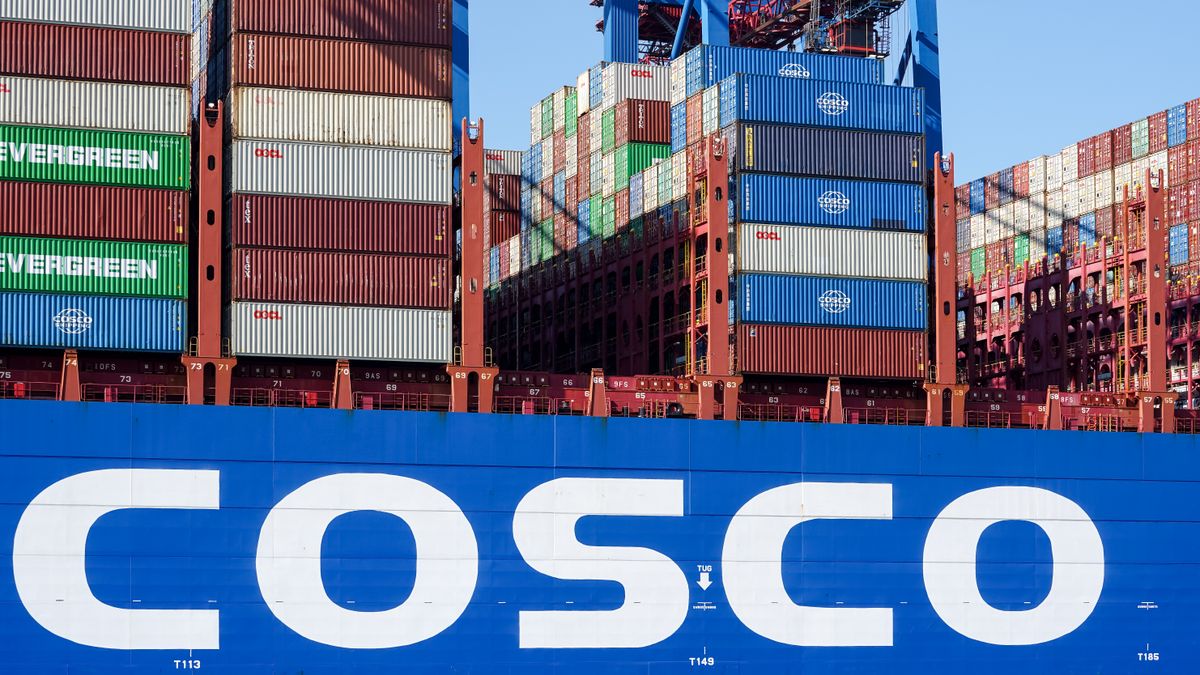
How Much Does It Really Cost to Ship Vacuum Bags by Sea vs. Air?
The single most important financial decision in vacuum bag importing — after choosing your factory — is selecting your freight mode. The cost difference between sea and air freight is not incremental; it’s transformational. A poor freight decision can erase your entire margin on a shipment. Let’s break down the real numbers.
First, some essential terminology:
Volumetric Weight (Chargeable Weight) — The weight used for freight pricing when a shipment’s volume exceeds its actual weight. Air freight uses the formula: (Length × Width × Height in cm) ÷ 6000 = volumetric weight in kg. Ocean freight uses cubic meters (CBM): Length × Width × Height in meters. Carriers charge based on whichever is higher — actual weight or volumetric weight.
LCL (Less than Container Load) — A shipping method where your goods share container space with other importers’ cargo. You pay only for the cubic meters you use, typically $50–$80 per CBM from China to the U.S. West Coast.
FCL (Full Container Load) — You rent an entire container. A 20-foot container holds approximately 28–30 CBM; a 40-foot High Cube (40’HC) holds 65–68 CBM. FCL rates from China to U.S. West Coast ports currently range from $1,800–$3,500 for a 20-foot and $2,800–$5,000 for a 40’HC, depending on the shipping season.
Real-World Cost Comparison: 10 CBM of Vacuum Bags
A typical pallet of retail-packaged vacuum bags occupies approximately 1.5–2.0 CBM and weighs 200–350 kg (vacuum bags are light — the packaging and cartons create the volume). A mid-sized shipment of 5–7 pallets equals roughly 10 CBM. Let’s compare:
| Cost Component | Sea Freight (LCL, 10 CBM) | Air Freight (10 CBM, ~1,670 kg vol.) |
|---|---|---|
| Base freight | $500–$800 ($50–$80/CBM) | $8,350–$13,360 ($5–$8/kg vol.) |
| Origin charges (China) | $150–$300 | $200–$400 |
| Destination charges (USA) | $400–$700 | $300–$600 |
| Customs clearance | $150–$300 | $150–$300 |
| Last-mile delivery | $300–$600 | $200–$400 |
| Total landed cost | $1,500–$2,700 | $9,200–$15,060 |
| Cost per CBM | $150–$270 | $920–$1,506 |
| Transit time | 25–35 days | 3–7 days |
The math is stark: air freight costs 5–8x more than sea freight for the same shipment. For a 10 CBM shipment of vacuum bags with a wholesale value of $10,000–$15,000, air freight adds $7,700–$12,360 in shipping costs that must be absorbed or passed on — often impossible in the competitive vacuum bag market where retail price points hover between $15–$35 per set.
Freight rates fluctuate significantly. For current container shipping rates, consult the Freightos Container Shipping Calculator. For long-term freight trend analysis, the World Bank Global Trade Indicators provide valuable context.

When Does Air Freight Actually Make Sense for Vacuum Bag Importers?
Despite the cost disparity, there are specific scenarios where air freight is not just viable but strategically necessary. The key is identifying them before you’re forced into panic mode.
Scenario 1: Emergency Stock-Out Recovery
If you’ve miscalculated demand and face a stock-out during peak season (March–May spring cleaning), the cost of lost sales often dwarfs air freight premiums. Consider: if you sell 500 vacuum bag sets daily at $20 each with 40% gross margin, each day out of stock costs you $4,000 in lost profit. Air freighting 2,000 sets (roughly 1 CBM) for $1,200–$2,000 to recover from a 5-day stock-out restores $20,000 in gross profit — a 10:1 return on the air freight investment.
Scenario 2: Amazon FBA Replenishment Windows
Amazon’s Inventory Performance Index (IPI) penalizes sellers who run out of stock. Dropping below Amazon’s threshold (typically 400–500 IPI score) can trigger storage limits that affect your entire catalog. If a sea freight shipment is delayed by 2 weeks and your FBA inventory reaches zero, the downstream impact on your Amazon business may justify air freighting a partial shipment (2–3 CBM) to maintain IPI scores. Learn more about Amazon compliance in our Container Loading Optimization Guide.
Scenario 3: Product Launch Samples and Quality Verification
When launching a new vacuum bag SKU — say, a premium travel compression set with a new valve design — you need physical samples for photography, influencer seeding, and quality verification before committing to a full production run. Air freighting 50–100 sample sets (0.05–0.1 CBM) costs $80–$200 and delivers in 5–7 days versus 30+ days by sea. At this micro-scale, the absolute dollar difference is negligible, and the time saved accelerates your go-to-market timeline by 3–4 weeks.
Scenario 4: High-Value Specialty Orders
Some vacuum bag products command premium prices — heavy-duty compression bags for winter clothing, commercial-grade storage for hotels, or custom-branded corporate gift sets with per-unit wholesale values above $15–$20. For these high-margin products, air freight’s per-unit cost impact ($0.50–$1.00 per bag for a 1 CBM shipment) is absorbable within the margin structure. Our Quality Control Guide explains how to ensure premium products meet specifications before shipping.
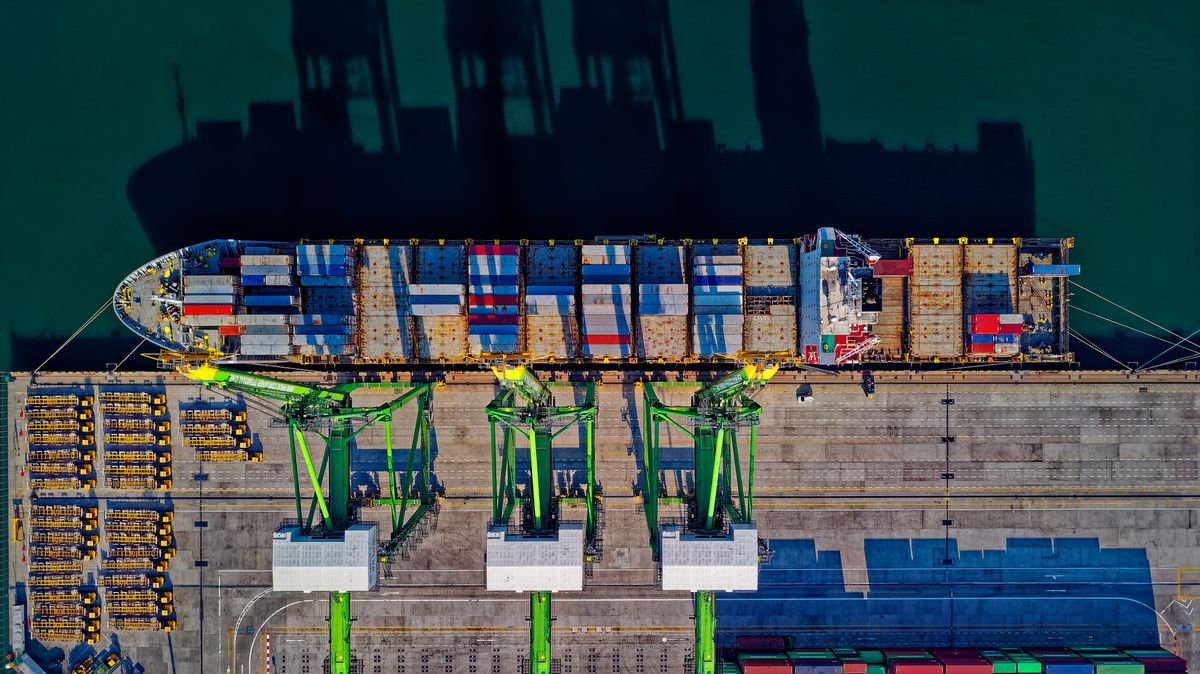
LCL vs. FCL: Which Container Option Delivers Better Value for Vacuum Bags?
The LCL vs. FCL decision is fundamentally a volume equation with a clear breakpoint, but many importers get it wrong because they only look at freight cost — not total landed cost per unit.
| Factor | LCL (Less than Container Load) | FCL (Full Container Load) |
|---|---|---|
| Volume range | 1–15 CBM | 15–68 CBM (20ft or 40ft HC) |
| Cost per CBM | $50–$80 | $45–$65 (effective, at full utilization) |
| Cargo handling | Multiple touchpoints; higher damage risk | Sealed at factory; minimal handling |
| Transit time | Adds 3–7 days (consolidation/deconsolidation) | Direct port-to-port; no consolidation delay |
| Customs complexity | Shared container; more documentation | Single consignment; simpler clearance |
| Minimum charge | 1 CBM (some forwarders: 2–3 CBM minimum) | Full container rate applies regardless of fill |
The break-even calculation: At approximately 12–15 CBM, FCL becomes cheaper on a per-CBM basis than LCL, assuming a 20-foot container rate of $2,000–$2,500. But here’s the nuance most guides miss: vacuum bags are lightweight, meaning you’ll “cube out” (fill the container’s volume) long before you “weigh out” (hit weight limits). A 20-foot container packed with retail-ready vacuum bags typically holds 26–28 CBM of product weighing only 4,000–6,000 kg — well below the 20,000+ kg weight capacity. This makes FCL exceptionally efficient for vacuum bags compared to dense goods like furniture or machinery.
For importers moving 2–3 pallets monthly (3–6 CBM), LCL is the clear choice. At 5–8 pallets (8–12 CBM), you’re in the transition zone where requesting both LCL and FCL quotes from your freight forwarder is essential. At 10+ pallets (15+ CBM), FCL almost always wins. For guidance on selecting the right freight partner, see our Freight Forwarder Selection Guide.
How Do Incoterms Affect Your Freight Cost Comparison?
Your chosen Incoterm dramatically shifts which party bears freight costs and risks. Importers often compare sea vs. air freight rates in a vacuum (no pun intended) without accounting for the Incoterm they’ve negotiated with the factory.
- FOB (Free On Board): The factory (Qingdao Sanyuan) delivers goods to the port and clears export customs. You control and pay for main carriage — meaning you choose sea vs. air and manage the freight forwarder. FOB gives you maximum control to optimize the sea vs. air decision.
- CIF (Cost, Insurance, Freight): The factory arranges and pays for main carriage to your destination port. Many Chinese factories default to CIF, but this removes your ability to choose the freight mode or negotiate rates directly with carriers.
- DDP (Delivered Duty Paid): The factory handles everything door-to-door. Convenient but typically most expensive, and you lose all visibility into freight cost components.
For importers serious about optimizing sea vs. air freight costs, FOB terms are essential. They allow you to build relationships with multiple freight forwarders, compare rates quarterly, and make mode-switching decisions autonomously. Our detailed Incoterms Guide for Vacuum Bag Imports walks through all 11 Incoterms with vacuum-bag-specific examples.
FAQ: Sea Freight vs. Air Freight for Vacuum Bags
What is the volumetric weight of a typical vacuum bag carton?
A standard vacuum bag master carton (containing 24–48 retail packs) typically measures 60 × 40 × 40 cm = 0.096 CBM, with an actual weight of 8–12 kg. The volumetric weight for air freight would be (60×40×40)÷6000 = 16 kg — so you pay for 16 kg even though the carton weighs only 10 kg. This volumetric penalty means air freight is disproportionately expensive for bulky, lightweight products like vacuum bags.
Can I split a shipment — part sea, part air?
Yes. Many importers ship 70–80% of their order by sea (the base inventory) and 20–30% by air (the rapid-replenishment buffer). This hybrid strategy balances cost efficiency with speed-to-shelf. Qingdao Sanyuan routinely handles split shipments — contact our team to coordinate pick-pack for dual-mode dispatch.
How much does freight insurance add to each mode?
Marine cargo insurance typically costs 0.3–0.5% of the insured value for sea freight and 0.5–0.8% for air freight. On a $15,000 shipment, expect $45–$75 for sea or $75–$120 for air. Given that vacuum bags are relatively low-risk (non-fragile, non-perishable), many importers self-insure smaller shipments but insure FCL shipments above $20,000.
Are there seasonal rate fluctuations I should plan around?
Sea freight rates spike 20–40% in August–October (pre-holiday peak season) and again before Chinese New Year (January–February). Air freight rates surge 30–50% in Q4 (October–December). Smart importers book Q4 shipments by August and pre-CNY shipments by November to lock in lower rates.
Does air freight reduce customs clearance time?
Air freight customs clearance is typically 1–2 days versus 3–5 days for sea freight, but the difference is minor relative to the overall transit time savings (3–7 days by air vs. 25–35 days by sea). Customs delays affect both modes similarly — proper documentation is the real determinant. See our Customs Clearance Guide for documentation best practices.
Ready to optimize your vacuum bag shipping strategy? Qingdao Sanyuan offers FOB shipping from Qingdao Port with flexible sea and air freight coordination. Our team provides container loading plans that maximize cube utilization, reducing your effective cost per CBM. Contact us today for a shipping consultation and factory-direct pricing.