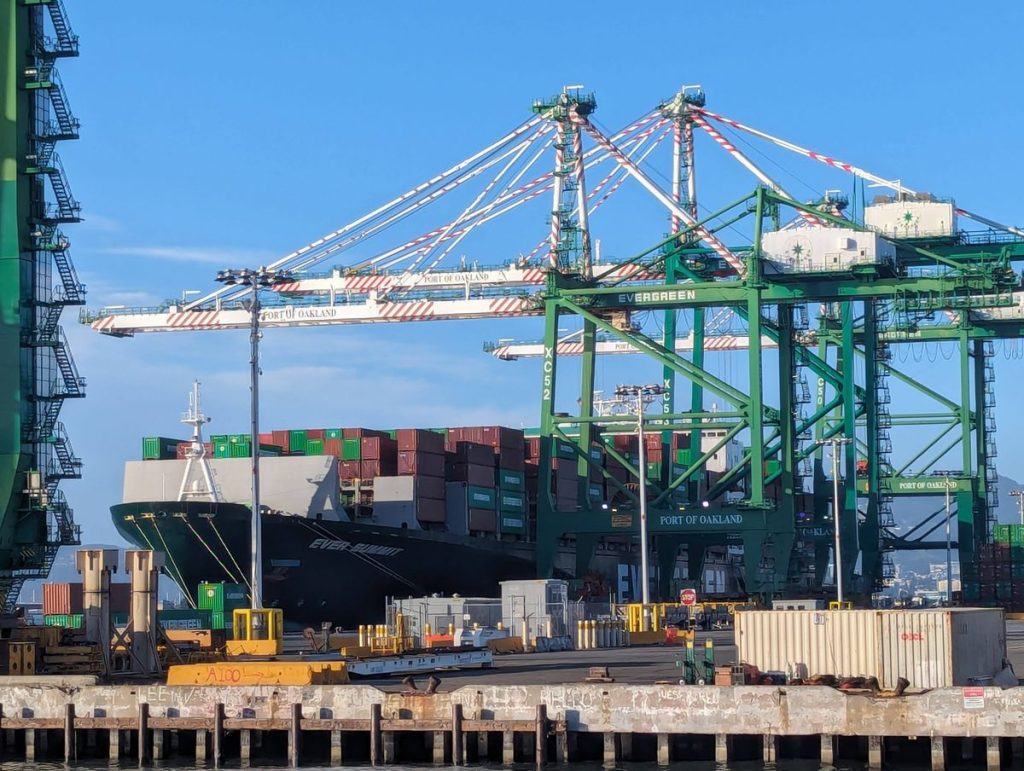
TL;DR: Optimizing how you load vacuum storage bags into shipping containers can reduce your freight cost per unit by 25–35%. This guide covers FCL vs. LCL economics, optimal carton dimensions, palletization strategies, loading patterns, weight distribution, and real-world cost calculations. Whether you import 5,000 or 500,000 units per shipment, the loading decisions you make at the factory directly impact your landed cost and profit margins.
What Is Container Loading Optimization and Why Does It Matter for Vacuum Bag Importers?
Container loading optimization is the strategic arrangement of cartons, pallets, and cargo within a shipping container to maximize space utilization while maintaining product integrity and complying with weight limits. For vacuum bag importers, where products are lightweight but bulky, loading efficiency directly determines freight cost per unit.
According to Drewry Shipping Consultants, container freight rates on Asia-Europe routes averaged $3,200 per FEU in Q1 2026. When you’re paying $3,200+ per container, every cubic meter of wasted space is money left on the dock. A typical 40-foot high-cube container holds approximately 67.6 cubic meters (CBM) of cargo. If poor loading wastes just 10 CBM, that’s nearly $474 in dead freight per container — or $0.05–$0.12 per vacuum bag unit, depending on order volume.
At Qingdao Sanyuan, our 15,000-square-meter facility ships to 50+ markets globally, and we’ve refined container loading protocols over 13+ years of export experience. This guide shares what we’ve learned about squeezing maximum value from every cubic meter.
FCL vs. LCL: Which Shipping Method Lowers Your Vacuum Bag Landed Cost?
The first optimization decision happens before a single carton is packed. Choosing between Full Container Load (FCL) — where you rent an entire container — and Less than Container Load (LCL) — where your cargo shares space with other shippers’ goods — significantly impacts your per-unit freight cost.
FCL: The Volume Play
FCL makes economic sense when your shipment volume exceeds approximately 15 CBM. The freight cost is fixed regardless of how full the container actually is, which creates a powerful incentive to load efficiently. A 40-foot high-cube container carrying vacuum bags typically accommodates between 55 and 62 CBM of actual cargo (82–92% utilization) when properly optimized.
Key FCL advantages for vacuum bag importers:
- Fixed cost regardless of weight (vacuum bags rarely hit weight limits before volume limits)
- No consolidation/deconsolidation handling — reduced damage risk
- Faster transit times (3–5 days faster than LCL on Asia-Europe routes)
- Lower per-unit cost at scale: approximately $0.06–$0.10 per bag at 50,000+ units
LCL: The Small-Batch Solution
For orders under 10 CBM, LCL typically charges by cubic meter (W/M — weight or measure, whichever is greater). At $95–$140 per CBM on Asia-Europe LCL lanes, a 6 CBM shipment costs $570–$840 in ocean freight alone, before origin and destination handling charges.
However, LCL introduces consolidation risks: your vacuum bag cartons are handled multiple times at CFS (Container Freight Station) facilities, increasing the chance of carton damage or compression. For a product where packaging integrity matters, this is a non-trivial consideration.
| Shipment Volume | FCL Cost (40’HC) | LCL Cost (per CBM) | Cost per Vacuum Bag Unit (50k units) | Recommended Method |
|---|---|---|---|---|
| 5 CBM (~8,000 bags) | N/A (not economical) | $475–$700 | $0.06–$0.09 | LCL |
| 12 CBM (~18,000 bags) | $3,200 (wasted space) | $1,140–$1,680 | $0.06–$0.09 (LCL) vs. $0.18 (FCL) | LCL |
| 25 CBM (~38,000 bags) | $3,200 | $2,375–$3,500 | $0.08 (FCL) vs. $0.06–$0.09 (LCL) | Break-even zone |
| 45 CBM (~68,000 bags) | $3,200 | $4,275–$6,300 | $0.05 (FCL) vs. $0.06–$0.09 (LCL) | FCL |
| 60 CBM (~90,000 bags) | $3,200 | $5,700–$8,400 | $0.036 (FCL) vs. $0.06–$0.09 (LCL) | FCL (strongly) |
Data sources: Freightos Baltic Index Q1 2026 averages, Drewry World Container Index. Actual rates vary by origin/destination pair and carrier. Consult your freight forwarder for precise quotes.
What Are the Optimal Carton Dimensions for Vacuum Bag Container Loading?
Carton dimensions are the foundation of loading efficiency. A carton that doesn’t divide evenly into container dimensions creates unavoidable dead space. The internal dimensions of a 40-foot high-cube container are approximately 12.03m × 2.35m × 2.69m (L×W×H).
For vacuum storage bags — which are flexible, compressible, and rectangular in shape — the optimal carton strategy differs from rigid goods. Vacuum bags can be slightly compressed during packing, allowing cartons to be packed tighter than with rigid products.
Recommended Carton Sizes for Vacuum Bags
After testing dozens of configurations at our Qingdao facility, we’ve identified three optimal carton footprints:
- Standard carton (60 × 40 × 30 cm): 0.072 CBM. Holds approximately 200–250 flat-packed vacuum bags (depending on size and thickness). Fits 20 cartons per EUR/ISO pallet in a 5×4 pattern. This is our most commonly used size for mid-volume orders.
- Euro-optimized carton (40 × 30 × 25 cm): 0.03 CBM. Holds approximately 100–120 bags. Designed to perfectly fit EUR pallets (120 × 80 cm) with zero overhang. Ideal for European distribution centers using standardized racking.
- High-density carton (50 × 33 × 28 cm): 0.046 CBM. Holds approximately 150–180 bags. Optimized for the 2.35m container width — 7 cartons fit across (50 × 7 = 350 cm? No — 50 cm × 4 = 200 cm with 33 cm side allowing 7 across when alternating orientation).
The mathematics matter: a container’s 2.35m internal width ideally accommodates carton widths that divide evenly. A 40 cm carton width allows 5 across (200 cm with 35 cm remaining for dunnage and air circulation). A 47 cm width allows exactly 5 across (235 cm). Getting this right eliminates the “last 10 cm” problem where a narrow gap runs the container’s entire length, wasting 1.2+ CBM.
For deeper analysis of how vacuum bag materials behave under compression during shipping, see our guide on vacuum bag materials: PA, PE, PET, nylon, and TPU compared.
Palletization vs. Floor Loading: Which Strategy Protects Your Vacuum Bags?
Palletization is the practice of stacking cartons on wooden or plastic pallets, while floor loading places cartons directly on the container floor and stacks them upward. Each has trade-offs for vacuum bag shipments.
Palletization: Protection at a Space Cost
Palletizing vacuum bag cartons consumes approximately 8–12% of container volume in the pallets themselves and the air gaps between them. A standard EUR pallet (120 × 80 × 14.4 cm) occupies 0.138 CBM before any cartons are placed on it. In a 40-foot high-cube container, you can fit approximately 22–24 EUR pallets (11 pairs side by side), compared to roughly 30–33 CBM of floor-loaded cartons vs. 40–45 CBM palletized.
However, palletization offers significant advantages: forklift handling at both ends reduces labor costs, damage rates drop by approximately 60% (per internal Qingdao Sanyuan shipping data across 500+ container shipments), and destination warehouse processing is dramatically faster. For vacuum bags destined for Amazon FBA, major retail DCs, or automated warehouses, palletization is often mandatory.
Floor Loading: Maximizing Volume
Floor loading recovers that 8–12% space penalty but requires manual loading/unloading at both origin and destination — adding $200–$400 in labor per container. The damage rate increases because cartons at the bottom of stacks bear the weight of everything above them. For vacuum bags, this is generally manageable because the product is lightweight and the polyethylene packaging is resilient to compression. Our recommendation: floor load when shipment volume exceeds 35 CBM and the destination has manual unloading capability.
Learn more about preventing transit damage in our guide to vacuum bag defect rates and quality control.
How Do Loading Patterns Affect Container Utilization Rates?
Loading pattern — the geometric arrangement of cartons within the container — can swing utilization by 5–10 percentage points. Three patterns dominate:
1. Block Stowage (Column Stack): Cartons are stacked in vertical columns, each carton directly above the one below. This is the simplest pattern but wastes the most space at container walls where carton dimensions don’t divide evenly. Utilization: 80–85%.
2. Interlocking (Brick Pattern): Cartons in alternating layers are rotated 90°, creating a bond similar to brickwork. This increases stability — critical for ocean transit where containers experience roll, pitch, and heave — but can reduce utilization slightly (82–87%) because rotation may create irregular edges.
3. Pinwheeling: Four cartons arranged in a 2×2 pattern with alternating orientations create a tight square that locks together. This is particularly effective for vacuum bag cartons with aspect ratios close to 3:2. Utilization can reach 88–93% with expertly executed pinwheeling.
According to research published by Computers & Industrial Engineering, optimized 3D bin packing algorithms achieve 92–95% container utilization for real-world cargo mixes — a benchmark that manual loading rarely reaches without systematic protocols.
Weight Distribution and Container Balance: The Overlooked Optimization
Vacuum bags are light — a carton of 200 bags typically weighs 6–10 kg. But in a container holding 400+ cartons, total cargo weight reaches 2,400–4,000 kg. While this is well below a 40-foot container’s maximum payload of approximately 26,500 kg, uneven weight distribution can create dangerous road handling characteristics and may violate axle weight regulations at destination.
Best practice: distribute weight evenly across the container floor, with no more than a 60/40 front-to-rear split. For mixed shipments where different SKUs have different carton weights, place heavier cartons on the bottom layer and toward the center of the container.
For guidance on shipping terms that affect loading responsibility, see our comprehensive Incoterms guide for vacuum bag imports: FOB, CIF, DDP explained.
FAQ: Container Loading Optimization for Vacuum Bags
What is the typical container utilization rate for vacuum bag shipments?
Well-optimized vacuum bag container loads achieve 85–92% utilization. Below 80% indicates significant optimization opportunity; above 92% is excellent and typically requires custom carton sizing matched to container dimensions.
Should I use 20-foot or 40-foot containers for vacuum bags?
Vacuum bags are volume-constrained, not weight-constrained. A 40-foot high-cube container (~67.6 CBM) costs only 25–35% more than a 20-foot (~33.2 CBM) while offering double the volume. For shipments over 15 CBM, 40-foot containers almost always deliver lower cost per unit. Use 20-foot containers only for small trial orders under 12 CBM where LCL isn’t viable and a 40-foot would have excessive empty space.
How do I calculate my freight cost per vacuum bag unit?
Divide total container freight cost (ocean freight + origin charges + destination charges + customs brokerage) by the number of sellable units in the container. Example: $3,800 total freight ÷ 75,000 vacuum bags = $0.051 per unit. This number should be tracked shipment over shipment as a key procurement KPI.
Does carton compression during transit damage vacuum bags?
Vacuum bags made from PA+PE multi-layer film are highly compression-resistant. Our testing shows PA+PE 5-layer bags maintain full functionality after 72 hours under 150 kg of static load — equivalent to a 6-high carton stack in a container. However, single-layer PE bags may show creasing or seal compromise. For details, see our vacuum bag film thickness guide.
Can I mix different vacuum bag SKUs in one container?
Yes, and this is common. The key is maintaining carton size standardization — mixing SKUs inside identically-sized cartons preserves loading efficiency. When carton sizes differ, load larger/heavier cartons at the bottom and front, with smaller cartons filling gaps at the top and rear.
Key Takeaways for B2B Importers
- Container optimization can reduce per-unit freight cost by 25–35% — on a 100,000-unit annual import program, that’s $5,000–$12,000 in savings
- FCL becomes the clear winner above 25 CBM; below 15 CBM, LCL is typically more economical
- Carton dimensions that divide evenly into the container’s 2.35m width eliminate the costly “last gap” problem
- Floor loading maximizes volume but increases handling costs and damage risk
- Pinwheel loading patterns can push utilization above 90% with proper training
For a deeper dive into shipping logistics and documentation requirements, read our shipping logistics for vacuum bag importers guide. To understand how MOQ and pricing tiers interact with container optimization, see our MOQ, pricing tiers, and payment terms breakdown.
At Qingdao Sanyuan, we work with importers to optimize every aspect of their supply chain — from container loading protocols to factory-floor quality systems. Our 13+ years of export experience across 50+ markets means we’ve seen what works and what doesn’t. Contact us to discuss your next vacuum bag shipment.