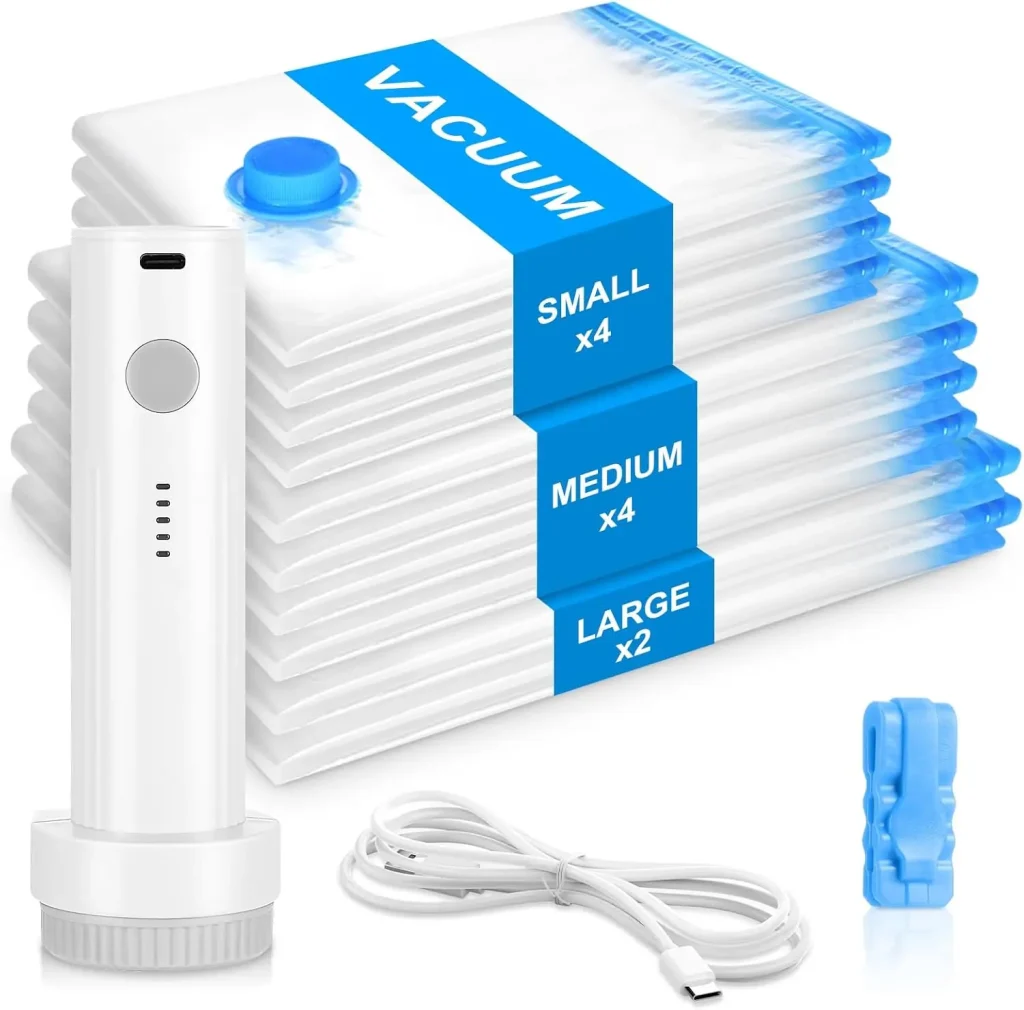
TL;DR: Vacuum bag valve technology is the single most critical quality determinant for B2B importers — yet it’s also the #1 source of customer returns. This guide compares slide valves, push-pull valves, and roll-up/self-sealing systems across five technical dimensions: seal integrity, cycle durability, pump compatibility, per-unit cost, and real-world failure rates. Slide valves with screw-cap secondary seals deliver 10-20+ cycles of reliable vacuum retention, while basic push-pull designs often begin leaking within 3-4 months. For importers sourcing from China, understanding valve grading is the difference between a 2% return rate and a 15% return rate.
Why Do Vacuum Bag Valves Matter More Than the Film Itself?
Most importers focus on film thickness and material composition when evaluating vacuum bags. That’s understandable — PA+PE multi-layer film (polyamide + polyethylene coextrusion) is what you can see and feel. But the data tells a different story: across major B2B platforms and consumer reviews, valve failure accounts for roughly 60-70% of all vacuum bag returns, far outpacing film punctures or zipper/seal failures.
Here’s why: a vacuum bag’s film experiences static pressure — it just sits there. The valve, by contrast, undergoes mechanical stress every single cycle. It must open to allow evacuation, then seal instantly and absolutely against atmospheric pressure (14.7 psi at sea level). Any micro-gap in the valve mechanism becomes a slow leak path, and the bag re-inflates over days or weeks.
The global vacuum storage bag market reached an estimated $1.33 billion in 2026, growing at 8.2% CAGR (Source: Alibaba.com B2B Market Analysis). As the market expands, the gap between premium valve designs and budget alternatives creates a clear quality tier that smart B2B buyers exploit for competitive advantage.
What Are the Three Main Types of Vacuum Bag Valves?
The vacuum storage bag industry has converged on three primary valve architectures. Each represents a different trade-off between cost, reliability, and user experience:
1. Slide Valve (Screw-Cap Secondary Seal)
The most reliable design in production today. A slide valve uses a flat rubber or silicone diaphragm that opens under vacuum suction and snaps closed when suction stops. The critical differentiator is the screw-cap secondary seal — a threaded outer cap with inner and outer O-rings that provides two additional sealing barriers beyond the primary diaphragm.
This three-layer sealing architecture (diaphragm + inner O-ring + outer O-ring) delivers 30-90+ days of continuous vacuum retention in PA+PE bags with oxygen transmission rates below 50 cc/m²/day. The trade-off: higher per-unit cost ($0.05-0.12 premium vs. basic valves) and the need for a separate vacuum pump or vacuum cleaner attachment.
2. Push-Pull Valve (Integrated Pump)
The fastest to use but with higher failure rates. A push-pull valve incorporates a small manual pump mechanism directly into the valve body — users push and pull a plunger to evacuate air without external equipment. This is popular in consumer retail packs (especially on Amazon) because it removes the “I don’t have a vacuum cleaner” barrier.
However, the integrated pump mechanism introduces multiple moving parts — springs, plunger seals, and check valves — each a potential failure point. Real-world data suggests push-pull valves begin leaking after 5-8 cycles on average, compared to 10-20+ for quality slide valves. The Alibaba B2B guide explicitly identifies push-pull valves as having “higher failure rate” despite being “faster” (Source: Alibaba.com Closet Storage Guide).
3. Roll-Up / Self-Sealing Valve
The lowest-cost option, primarily used in travel-size bags. Roll-up bags have no mechanical valve at all — users fill the bag, roll it from the sealed end toward the opening to push air out through a one-way flap or channel, then seal the zipper. Some designs incorporate a simple flap valve that passively blocks air re-entry.
These are the least effective at compression (50-60% volume reduction vs. 75-80% for vacuum bags) and lose their seal fastest (typically 2-7 days). They’re adequate for weekend travel or short-term storage but unsuitable for seasonal or long-term applications. Per-unit cost is roughly $0.10-0.25, making them attractive only for promotional or entry-level SKUs.
Vacuum Bag Valve Technology: Complete B2B Comparison Table
| Feature | Slide Valve + Screw Cap | Push-Pull Valve | Roll-Up / Self-Sealing |
|---|---|---|---|
| Compression Efficiency | 75-80% volume reduction | 70-75% volume reduction | 50-60% volume reduction |
| Vacuum Retention | 30-90+ days | 14-30 days | 2-7 days |
| Cycle Durability | 10-20+ cycles | 5-8 cycles | 3-5 cycles |
| Seal Mechanism | Diaphragm + dual O-ring | Spring plunger + check valve | Passive flap or channel |
| Equipment Required | Vacuum cleaner or pump | None (built-in pump) | None (manual rolling) |
| Failure Rate (6-month) | ~2-5% | ~8-15% | ~15-25% |
| Per-Unit Cost Premium | +$0.05-$0.12 vs. basic | +$0.03-$0.08 vs. basic | Baseline ($0.10-$0.25) |
| Best Application | Seasonal storage, bedding, long-term | Consumer retail, Amazon FBA | Travel kits, promotional giveaways |
How Can B2B Importers Test Valve Quality Before Placing Orders?
Factory specifications for valve performance are only as good as their quality control enforcement. Here is a five-point valve inspection protocol that importers should use during pre-production sample evaluation and third-party QC inspections:
- Vacuum Retention Test — Fill the bag to 80% capacity with clothing. Evacuate to full compression. Mark the bag dimensions with a permanent marker. Re-check dimensions at 24 hours, 7 days, and 30 days. More than 5% re-expansion at 7 days = valve failure.
- Cycle Fatigue Test — Evacuate and re-inflate the same bag 20 consecutive times. The valve should maintain full seal integrity through all cycles. Listen for changes in the “click” or suction sound — degradation in sound quality precedes visible leakage.
- Submersion Leak Test — After evacuation, fully submerge the sealed bag in water for 60 seconds. Any bubble stream from the valve area indicates a leak path. This catches micro-leaks invisible to visual inspection.
- Screw-Cap Torque Test (slide valves only) — The screw cap should require 2-3 full rotations to seat fully. Caps that seat in less than one rotation have inadequate thread engagement and will back off under vibration during shipping.
- Material Compatibility Check — Verify that valve components (rubber diaphragm, plastic body) are specified as phthalate-free and REACH-compliant for EU markets. Request material composition certificates from the valve supplier — many factories source valves from third-party component makers.
What Does Valve Quality Cost — and Is It Worth the Premium?
At the factory-gate level in Qingdao, China — one of the world’s primary vacuum bag manufacturing hubs — valve cost differentials are surprisingly modest. A premium slide valve with screw cap adds approximately $0.05-$0.12 per unit compared to a basic push-pull or roll-up design on flat vacuum bags (FOB pricing, MOQ 1,000-5,000 units).
Let’s put that in context: if a B2B importer orders 10,000 units, the valve upgrade costs $500-$1,200 extra — roughly the cost of processing 3-5 customer returns when you factor in refund processing, replacement shipping, and lost customer lifetime value. The economics are unambiguous: the premium valve pays for itself at a return-rate reduction of just 1%.
The OECD projects global plastic packaging waste will reach 353 million tonnes annually by 2060 if current trends continue (Source: OECD Global Plastics Outlook). Durable, reusable vacuum bags with quality valves directly counter this trend — each bag that survives 20 cycles instead of 5 prevents 15 disposable-bag equivalents of waste. For European importers facing tightening regulations under the EU Packaging and Packaging Waste Regulation (PPWR), valve durability is becoming a compliance issue, not just a quality one (Source: EU Commission — Packaging Waste).
How Should B2B Importers Specify Valve Requirements to Chinese Factories?
Too many import requests read: “vacuum bags with good valve.” That’s not a specification — it’s a wish. Here is a specification template you can include directly in your RFQ or purchase order:
- Valve type: Slide valve with threaded screw-cap secondary seal
- Diaphragm material: Food-grade silicone rubber, Shore A 40-50 hardness
- Cap material: PP (polypropylene), UV-stabilized for color retention
- Inner O-ring: NBR (nitrile butadiene rubber), 1.5mm cross-section
- Outer O-ring: NBR, 2.0mm cross-section
- Thread engagement: Minimum 2.5 full rotations to seated position
- Vacuum retention spec: Less than 5% volume re-expansion after 30 days at 23°C
- Cycle durability: Maintain seal through minimum 15 evacuation/inflation cycles
- Certifications: REACH, RoHS, phthalate-free certificate from valve component supplier
If your factory cannot provide material composition certificates for the valve components, assume they are sourcing from the lowest-cost component market and adjust your QC sampling rate upward accordingly (from AQL 2.5 to AQL 1.5 or even 1.0).
Frequently Asked Questions About Vacuum Bag Valve Technology
Why do my vacuum bags re-inflate after a few months — even when the film looks perfect?
This is the hallmark of valve micro-leakage, not film failure. The valve diaphragm or O-ring develops microscopic gaps over time, allowing atmospheric air to slowly seep back in. A bag that re-inflates over 2-4 months almost certainly has a valve issue, not a puncture. Upgrade to a slide valve with screw-cap secondary seal to eliminate this failure mode.
Can I mix valve types within a single product line for different market segments?
Yes — and this is a sophisticated B2B strategy. Offer slide valve bags for your premium/home-storage SKUs (higher margin, lower return rate) and push-pull or roll-up valves for travel/promotional SKUs (lower price point, acceptable failure rate for short-duration use). Just be explicit in your product descriptions — managing customer expectations by valve tier prevents cross-contamination of reviews.
What is the most overlooked valve QC issue that causes bulk returns?
Screw-cap thread stripping during automated assembly. When factories assemble thousands of bags per day, cap-applicator torque settings can drift, cross-threading caps that feel tight but have no genuine seal. This passes visual inspection but fails within days of use. Insist on manual torque verification on 100% of pre-production samples and at least 20 random units from the first production run.
Which valve type is best for Amazon FBA sellers worried about returns?
Slide valve with screw cap — no question. Amazon’s return algorithm penalizes SKUs with above-category-average return rates, and vacuum bags as a category already sit at 8-12% returns (Source: Amazon Seller Central — Customer Returns). A premium valve can bring your return rate down to 2-5%, which not only saves on reverse logistics but keeps your Buy Box eligibility intact. For FBA sellers, the valve is your single highest-ROI quality investment.
Looking for factory-direct vacuum bags with premium valve technology? Contact Qingdao Sanyuan — 15,000m² automated facility, CE/FDA certified, slide valve and screw-cap secondary seal standard on all premium product lines. Request a pre-production valve sample with your next inquiry.
Related reading:
- Vacuum Bag Materials Explained: PA+PE vs PET+PE vs Nylon vs TPU
- Vacuum Bag Defect Rates & QC: A B2B Importer’s Complete Testing Guide
- Vacuum Bag Manufacturing Cost Breakdown (2026 Data)
- Vacuum Bag Glossary: 50+ Technical Terms Every Importer Must Know
- Why Do Vacuum Storage Bags Leak? 7 Common Causes & Prevention