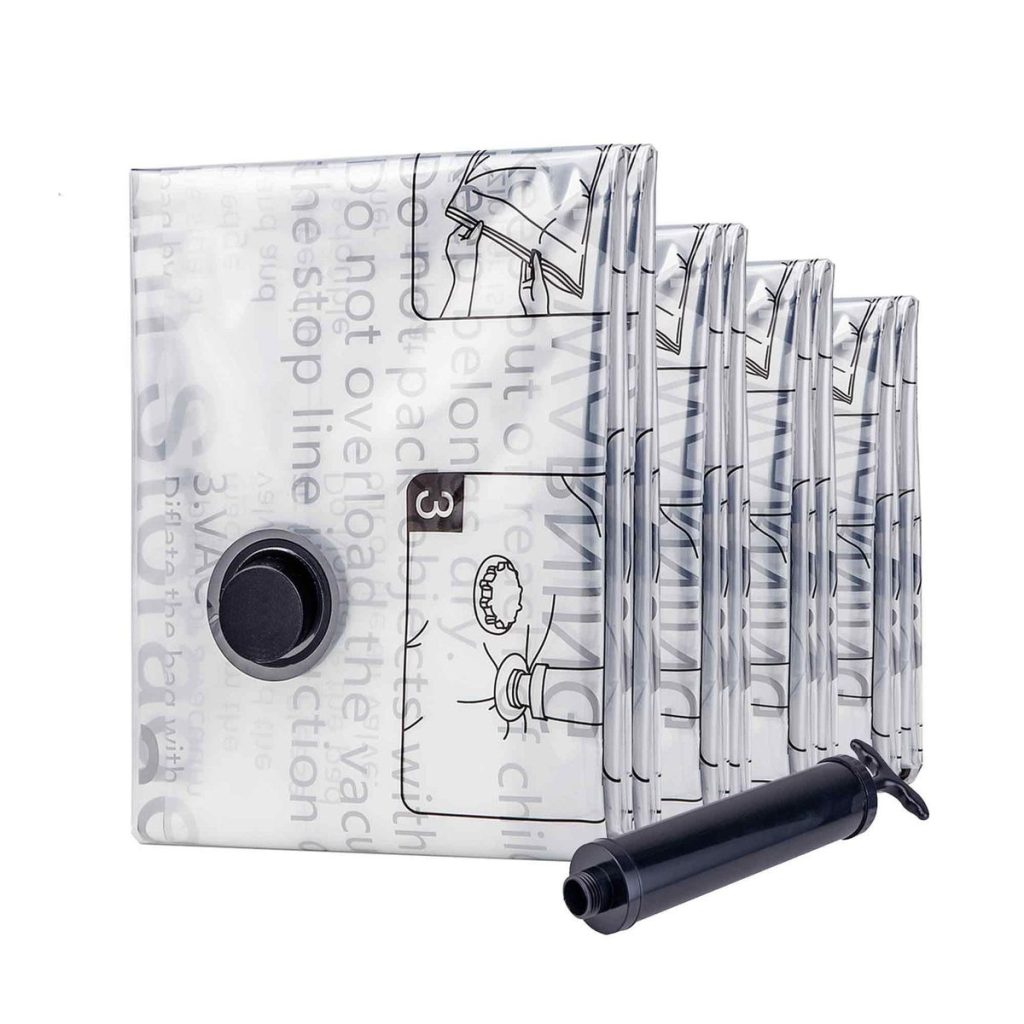
Why Your Choice of Vacuum Compression Bag Supplier Matters
For B2B importers, distributors, and Amazon sellers, selecting the right vacuum compression bag is not just about product quality — it’s about margin structure, supply chain reliability, and regulatory compliance. A poorly chosen product line can result in returns, negative reviews, customs delays, or lost retail partnerships. A well-chosen one becomes a reliable revenue engine.
See also: Complete Guide to Importing Vacuum Compression Bags from.
The global vacuum packaging market was valued at $28.4 billion in 2024 and is projected to grow at a CAGR of 4.8% through 2030, driven by e-commerce expansion, urbanization, and demand for space-saving home organization products in North America and Europe. For B2B buyers, this means the window for establishing supplier relationships is now.
This guide walks you through every factor that matters when sourcing vacuum compression bags at scale — from material science and valve design to packaging options and factory qualifications.
1. Material: The Foundation of Product Quality
The performance and durability of a vacuum compression bag depend almost entirely on its film composition. There are three main material categories:
See also: How Direct Factory Sourcing Reduces Vacuum Bag Costs.
PA+PE (Polyamide + Polyethylene) — The Industry Standard
- Structure: 5-7 layer co-extruded film with PA (nylon) providing strength and PE providing sealability
- Thickness range: 70–120 microns
- Best for: Premium B2B product lines, heavy-duty storage, repeat-use applications
- Oxygen Transmission Rate (OTR): <15 cc/m²·day — excellent air barrier
- Typical wholesale cost: $0.12–0.25/unit at MOQ 5,000
PET+PE (Polyester + Polyethylene) — The Budget Option
- Structure: 3-5 layer film with good clarity but lower puncture resistance
- Thickness range: 60–90 microns
- Best for: Entry-level retail products, single-use applications, price-sensitive markets
- OTR: ~25 cc/m²·day — adequate but not premium
- Typical wholesale cost: $0.08–0.15/unit at MOQ 5,000
Multi-Layer Nylon Composite — Premium Performance
- Structure: 7-9 layers with EVOH barrier core for near-zero oxygen transmission
- Thickness range: 100–150 microns
- Best for: Long-term storage (12+ months), professional moving/storage companies
- OTR: <5 cc/m²·day — best-in-class
- Typical wholesale cost: $0.20–0.40/unit at MOQ 5,000
B2B tip: PA+PE strikes the best balance of performance and cost for most importers. Request a material composition certificate (MCC) from your supplier and verify with a third-party lab test on your first shipment.
2. Valve Type: The User Experience Factor
The valve is the most common failure point. Your choice here directly impacts return rates:
- Standard one-way valve: Simple, reliable, works with most household vacuums. 2-5% failure rate in premium bags.
- Double-check valve: Redundant seal for heavy-duty applications. <1% failure rate. Slightly higher unit cost.
- Quick-press valve (no pump): Roll-to-expel-air design for travel bags. Growing market segment (+15% YoY search volume).
- Electric pump port: Compatible with USB-rechargeable mini pumps. Emerging premium category with 30-40% higher retail price point.
For Amazon FBA sellers: Standard one-way valves are fine for budget packs. For premium listings (4+ star target), specify double-check valves — the cost difference is negligible ($0.02/unit) compared to the return cost of a single leak complaint.
See also: Vacuum Compression Bag Materials Compared: PA+PE vs PET+PE.
3. Size Range and SKU Strategy
A well-structured product line should cover 4-5 sizes to capture different use cases:
| Size | Dimensions | Primary Use | % of Sales |
|---|---|---|---|
| Small | 50×70 cm | Sweaters, shirts, travel | 20% |
| Medium | 60×80 cm | Jackets, towels, bedding | 35% |
| Large | 70×100 cm | Blankets, pillows, bulk storage | 25% |
| XL | 80×110 cm | Comforters, winter coats | 15% |
| Jumbo | 100×120 cm | Mattress toppers, bulk textiles | 5% |
4. Certifications and Compliance
For import into the EU and North America, these certifications are non-negotiable:
- CE Marking (EU): Required for consumer products. Covers health, safety, and environmental standards.
- FDA Compliance (USA): Required if bags are marketed for food storage applications. Even if not, FDA-compliant materials signal quality.
- REACH (EU): Chemical substance regulation. Your supplier should provide REACH compliance documentation for all raw materials.
- ISO 9001:2015: Quality management system certification. Indicates process maturity at the factory level.
- BSCI / SEDEX: Social compliance audits increasingly required by European retail chains.
Red flag: A supplier that cannot provide third-party lab test reports for their materials within 48 hours is not ready for serious B2B partnerships.
See also: Vacuum Bag Quality Control: The B2B Importers 15-Point.
5. Packaging and Private Label Options
Retail-ready packaging can double your per-unit margin. Key options:
- Header card with euro slot: Standard for retail pegboard displays. Add $0.03-0.05/unit.
- Full-color box: Premium presentation for department stores and gift markets. Add $0.10-0.20/unit.
- Custom printing on bag surface: Logo, instructions, size markings. Add $0.02-0.04/unit.
- Multi-pack bundles: 6-pack, 8-pack, 12-pack configurations with unified retail packaging. Highest margin structure.
6. Supplier Evaluation Checklist
When vetting a vacuum compression bag factory, verify these 7 points:
- Factory age: 10+ years preferred — indicates stability and accumulated process knowledge
- Production capacity: Minimum 2 million units/month for reliable lead times
- In-house film extrusion: Factory that produces its own PA+PE film has better quality control and 15-20% cost advantage
- Lab testing capability: On-site tensile strength, thickness gauge, and seal integrity testing
- Export experience: Familiarity with FOB/CIF/DDP terms, HS code 3923.21, and destination-country documentation
- OEM/ODM capability: Can they custom-develop a new size or material configuration for your market?
- Sample policy: Free samples with freight collect is standard. Beware of suppliers who charge for samples.
Why Source from Qingdao Sanyuan?
Qingdao Sanyuan Industry & Trade Co., Ltd. operates a 15,000m² manufacturing facility with 13+ years of vacuum compression bag production expertise. Our in-house PA+PE film extrusion line gives us direct control over material quality and a 15-20% cost advantage over factories that purchase pre-made film. We ship to 50+ markets worldwide with full CE, FDA, and REACH compliance documentation provided with every order. Our minimum order quantity starts at just 1,000 pieces, with 15-30 day lead times and free pre-production samples.
See also: Vacuum Storage Bags for Amazon FBA Sellers: Product.
Ready to build your vacuum bag product line? Contact our sales team for a customized quotation, free samples, and a material composition report tailored to your target market’s regulatory requirements.
Sources: EU REACH Regulation — European Commission | ISO 9001:2015 Quality Management — ISO | FDA Food Contact Substances — FDA