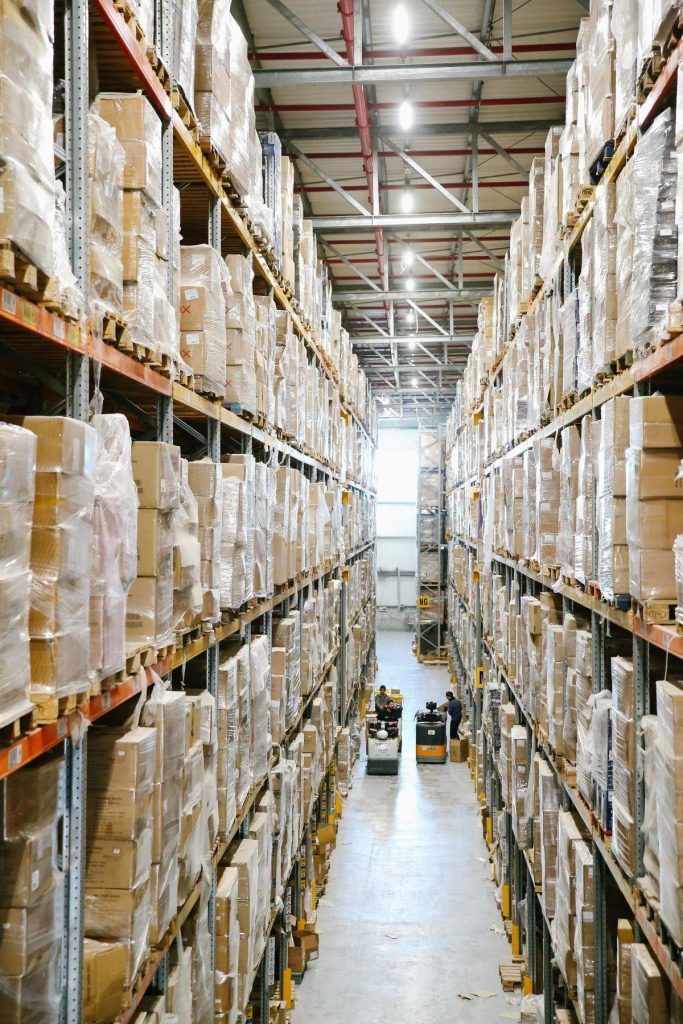
The Storage Advantage: Why Vacuum Bags Are an Inventory Manager’s Dream
Vacuum compression bags have one logistical superpower: they can be compressed to 25-30% of their unpacked volume during shipping and warehousing. A pallet that holds 5,000 retail-packaged vacuum bags can hold 15,000-20,000 when the bags are vacuum-sealed in master packs. For B2B importers, this directly translates to 60-70% lower storage costs per unit compared to similarly-priced but bulkier products like plastic storage bins or fabric organizers.
See also: Complete Guide to Importing Vacuum Compression Bags from.
This guide covers the end-to-end inventory management strategy for vacuum bag importers: warehouse setup, FBA prep optimization, 3PL selection, demand forecasting, and the specific numbers that matter.
See also: Vacuum Storage Bags for Amazon FBA Sellers: Product.
Master Pack Configuration: The Foundation of Efficient Storage
| Master Pack Type | Units Per Pack | Volume | Pallet Count | Storage Cost/Unit |
|---|---|---|---|---|
| Vacuum-sealed (compressed) | 100 | 0.08 CBM | 160 packs | $0.002 |
| Standard carton (uncompressed) | 50 | 0.12 CBM | 80 packs | $0.005 |
| Retail-ready display carton | 24 | 0.10 CBM | 64 cartons | $0.008 |
Specify vacuum-sealed master packs in your PO. The cost adder is negligible ($0.01-0.02/unit) and pays back 3-5× in storage savings.
FBA Prep Optimization: Every Inch Counts
Amazon FBA storage fees are calculated on cubic feet. For vacuum bags, the difference between Small Standard and Large Standard tier is ~$3.00/unit in fees:
See also: Vacuum Bag Quality Control: The B2B Importers 15-Point.
- Design packaging to fit Small Standard tier: 15×12×0.75 inches max. A 6-pack of 60×80cm bags CAN fit in this tier with proper vacuum compression of the retail package.
- FBA Label placement: Flat surface, not across folds. One unscannable label = entire shipment may be rejected.
- Case-packed vs. individual: Case-packed shipments process faster at Amazon FCs and have lower receive-error rates.
- IPI score optimization: Vacuum bags’ high sell-through rate and compact storage profile naturally boost your Inventory Performance Index — use this to increase your FBA storage limits.
3PL vs. Self-Fulfillment: The Breakpoint Analysis
| Volume | Monthly Orders | Recommendation |
|---|---|---|
| Startup | 0-200 | FBA only — no warehouse needed |
| Growth | 200-1,000 | FBA + small 3PL for wholesale orders |
| Scale | 1,000-5,000 | Dedicated 3PL with FBA prep services |
| Enterprise | 5,000+ | Own warehouse + 3PL overflow |
Demand Forecasting for Seasonal Products
Vacuum bags have four seasonal peaks (spring cleaning, summer moving, back-to-school, holidays — covered in detail in our Seasonal Storage Strategy article). Your inventory planning must account for:
See also: Seasonal Storage Strategies for Vacuum Bag Importers: How.
- Lead time from factory: 15-30 days production + 21-35 days ocean freight + 3-7 days FBA check-in = 39-72 days total
- Safety stock: Maintain 4-6 weeks of baseline demand as buffer
- Peak stock: Build to 10-12 weeks of demand before each seasonal peak
- Cash flow impact: A 20,000-unit order at $0.12/unit landed ties up $2,400 in inventory — manageable for most B2B importers
Qingdao Sanyuan: Logistics-Optimized From the Factory Floor
Our 15,000m² factory includes dedicated FBA-prep services: vacuum-sealed master packs, FNSKU labeling, poly-bagging to Amazon specifications, and pallet configuration optimized for Amazon FC receive efficiency. We ship DDP to Amazon warehouses across the US, UK, and EU with full tracking visibility.
Optimize your supply chain: Contact us for a logistics consultation including master pack optimization, FBA prep specifications, and freight cost modeling for your target marketplace.
See also: How Direct Factory Sourcing Reduces Vacuum Bag Costs.
Sources: Amazon FBA Inventory Requirements (DA 96) | Ocean Freight Transit Times — Freightos