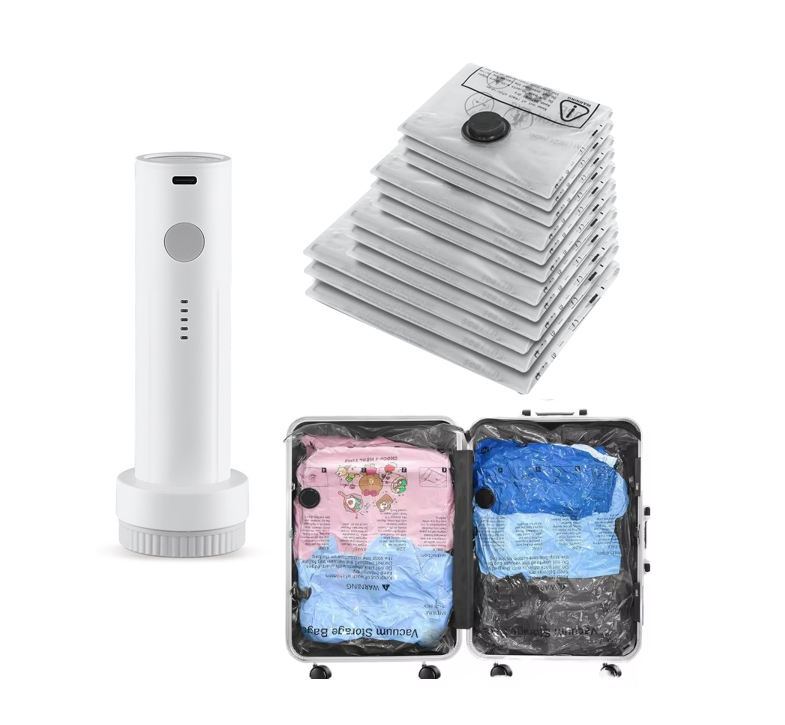
Most vacuum bag importers treat Chinese factories as transactional vendors: send RFQ, negotiate price, place order, repeat. This approach leaves 20–30% in hidden value on the table — priority production slots, R&D collaboration, exclusive designs, flexible payment terms, and market intelligence that factories only share with trusted partners. Here is how to build factory relationships that compound in value with every order.
The Transactional vs. Relational Importer
| Aspect | Transactional Importer | Relational Importer |
|---|---|---|
| Communication frequency | Only during orders | Monthly check-ins, even when not ordering |
| Factory visits | Once, during initial audit | 2–3× per year, including non-order visits |
| Pricing approach | Always pushes for lowest | Seeks fair price, discusses cost structure openly |
| Problem resolution | Blames factory, demands compensation | Collaborates on root cause, shares responsibility |
| New product development | Provides specs, awaits samples | Co-develops with factory R&D team |
| Payment terms | Strict 30/70 T/T | Graduates to OA 30–60 days after trust built |
The Relationship Timeline: Year 1 Through Year 5
Year 1: Prove Reliability
- Place 3–4 orders. Pay on time, every time. Never delay T/T transfers.
- Provide clear, consistent specs. Don’t change requirements mid-production.
- Handle minor quality issues professionally — flag them, but don’t escalate a 2% zipper defect rate into a crisis.
- Visit the factory at least twice. Meet the owner, not just the sales rep.
Year 2–3: Deepen the Partnership
- Share your sales forecasts. If you’re planning a 50% volume increase, tell them 3 months ahead so they can reserve production capacity.
- Bring them market intelligence: “German buyers are asking for 100% recyclable packaging. Can we develop a mono-material bag together?”
- Give them first right of refusal on new product lines before quoting to competitors.
- Introduce them to your other industry contacts (distributors, designers) — become a value-adding node in their network.
Year 4–5: Strategic Partnership
- Negotiate an annual supply agreement with volume commitments and price bands linked to raw material indexes.
- Co-invest in tooling or production line improvements (e.g., a dedicated bag-making machine for your SKUs).
- Receive priority production scheduling — your orders go to the front of the queue during peak season.
- Access to factory’s R&D pipeline: new materials, valve technologies, sustainable packaging innovations before they hit the market.
Cultural Intelligence: What Chinese Factory Owners Value
- 面子 (Face / Reputation): Never criticize a factory owner in front of their staff or other clients. Give negative feedback privately, preferably over dinner rather than in the factory office.
- 关系 (Guanxi / Relationship): Business is personal. Remember birthdays, bring small gifts when visiting (regional specialties from your country), ask about their children. These gestures have outsized impact.
- 长期合作 (Long-term cooperation): The phrase “we’re here for the long term, not just one order” is music to a factory owner’s ears. Chinese factories have been burned by hundreds of one-order foreign buyers who disappear.
- Holiday calendar: Send red envelopes (微信红包) during Chinese New Year. Never schedule production that lands in the 2 weeks before CNY — quality drops as workers rush to finish before going home.
The ROI of a Strong Factory Relationship
| Benefit | Estimated Value | When It Kicks In |
|---|---|---|
| Priority production during peak season | Avoids 2–4 week delays that cost sales | Year 2+ |
| Flexible payment terms (OA 30–60 days) | Frees $20K–$100K in working capital | Year 3+ |
| Exclusive designs / first access to new tech | 6–12 month market advantage | Year 3+ |
| Cost-down collaboration (material optimization) | 5–10% unit cost reduction | Year 2+ |
| Willingness to hold safety stock for you | Reduces lead time from 30 days to 7 days | Year 2+ |
| Problem-solving during crises | Priceless — the factory that re-runs a defective batch at cost is one you’ve built trust with | Year 1+ |
FAQ
What if my factory relationship goes bad — how do I switch?
Always maintain a qualified backup factory. Visit and audit them annually even if you don’t place orders. When you switch, give the outgoing factory honest feedback about why — they may fix the issue and win you back, and you preserve the relationship for future possibilities.
How often should I visit the factory?
Minimum twice per year. Once during a production run (to observe real conditions, not the sanitized tour) and once during the off-season (to discuss strategy, new products, next year’s planning). The off-season visit is actually more valuable for relationship building.
Sources: Cross-cultural business negotiation research; Chinese manufacturing industry practices; supply chain relationship management studies.